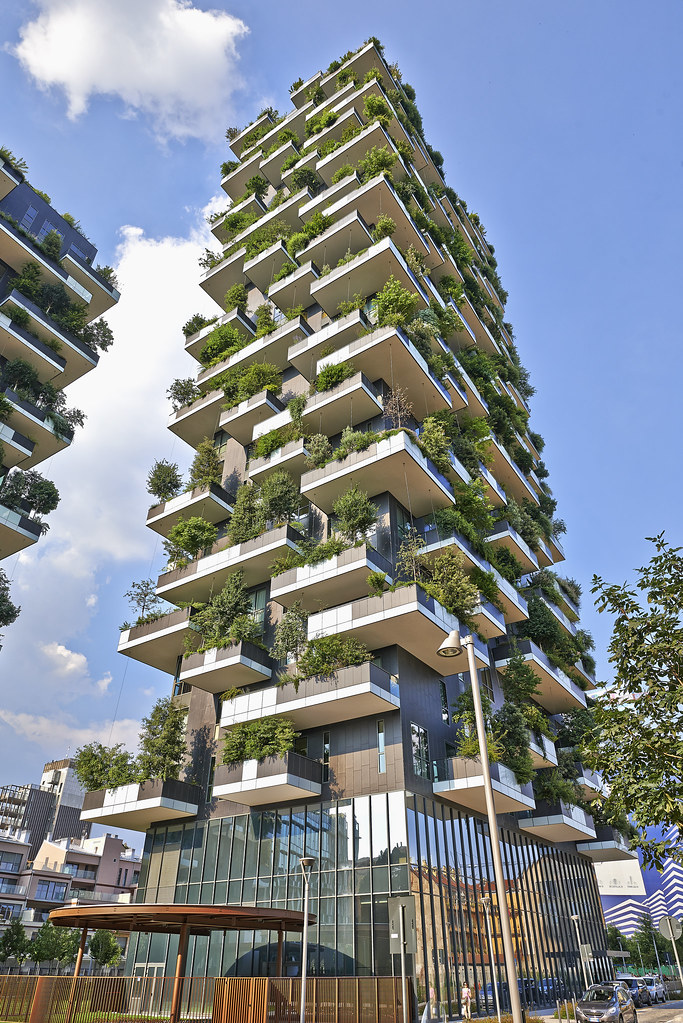
by Patrick Bombaert. CC Licensed Image.
Continuing with our Earth Month theme, I’m back to talk more about the genre/movement our world desperately needs—Solarpunk! A genre which depicts humanity, nature, and technology living in harmony. To learn more about the genre itself, check out my Solarpunk Worldbuilding Guide here!
On this post, I wanted to share some potential real life examples of solarpunk to help get you inspired, and to show that these ideas are potentially possible in real life if we dare to dream big. However, let there be emphasis on the word potential and the fact that I used a question mark in the title.
Caveat: By sharing these examples, I’m not claiming they are 100% representative of solarpunk values. Indeed we still live in a world dominated by late stage capitalism, so there are most likely flaws in these examples, as they are part of an inherently flawed system. Yet I still decided to share these because they are an example of attempts to go in a solarpunk direction.
I’m also not claiming these are the only examples. If you can think of some better ones, please let me know in the comments.
Earthships! – Where The Hobbit Meets Bladerunner

Described as “The Hobbit meets Bladerunner”, Earthships are a creative experiment in sustainable living. Often built from recycled materials (like old tires and aluminum cans) Earthships are created to operate off-grid, generate their own electricity, collect water, and manage waste on-site. This reduces dependence on external utilities and significantly lowers their environmental footprint. Such a structure that doesn’t depend on external resources of oversight can often function well in a more localized/anarchist society.
The Greater World Earthship Community in Taos, New Mexico, is recognized as the first Earthship community, according to Taos.org and Earthship Biotecture. It was founded near the Rio Grande by architect Michael Reynolds (the visionary behind the Earthship concept). The 113 homes in the community feature construction using repurposed items and are designed to generate their own water, electricity, and food.
For example, Earthships can have mini-hydroponic planters in suspended buckets that have added vertical growing space in the greenhouses and have yields of herbs, peppers, tomatoes, kale, beets, cucumbers, and more, allowing residents to pull their food straight off the vine if they like. Earthships can also have a composting toilet that reuses waste for a greenhouse. There may be cisterns and water distillation systems to produce clean water from rainwater sitting on the roof. Energy can be produced with solar, wind, biodiesel, and micro hydro. Just keep in mind the off the grid solarpanel systems may require a battery pack to store power, so that the power can be used at night.
To learn more about earthships, go here!
Tiny Homes, Big Impact

Tiny homes bring together minimalism and sustainability, while offering a compelling alternative to traditional housing. Tiny homes are small-scale residences designed to maximize space efficiency and minimize environmental impact. They come in a variety of forms: stationary structures, mobile units on wheels, and even from repurposed shipping containers! Despite their size, they come equipped with full kitchens, bathrooms, and sleeping areas. Learn more here!
Real Life Examples of Tiny Home Communities Include:
WeeCasa: WeeCasa, located in the mountains of Colorado, offers tiny living for short-stays and vacations. The largest tiny home they have sleeps five—and all homes are equipped with essentials for a comfortable stay. This could be an option for those who want to experience tiny home living temporarily. But don’t take it from me! Do your own research.
Caravan: This is another rental option for those wanting to try but not buy a tiny home. Caravan is located in the Alberta Arts District of Portland, Oregon. All six tiny homes, ranging in size from 120-170 square feet, are constructed by local builders and decorated with Portland art, as well as fair-trade, sustainable products. Using the homes to create a circle, Caravan cultivates a gathering space for music, games, and conversation. Guests can even roast vegan marshmallows over the fire pit!
Community First Village – Austin Texas: Community First Village, Located in Austin Texas, is a collection of 140 micro homes, 100 RVs, and 20 canvas-sided cottages offering affordable, permanent housing and supportive community to the disabled, chronically homeless in Central Texas. Tiny homes on the 27-acre grounds are designed by architects from around the world and furnishings are obtained through generous donors. Property amenities include a medical facility, walking trails and gardens, outdoor movie theater, community market, wireless internet, bed & breakfast for visiting guests, and convenient access to the metro. It’s also a place for those who are hurting to heal and rediscover hope with the support of the community.
Cedar Springs Tiny Village: “Simple Living on the Lake” is the motto for Ohio’s first full-fledged tiny home community. There are up to 30 lots – some water-front. Walking paths, community gardens, a recycling program, mature trees, and close proximately to the Natural Springs Resort.
Orlando Lakefront At College Park: This is a revitalization of a 1950’s trailer park. Re-use and repurpose is totally the right solarpunk spirit! Orlando Lakefront at College Park offers permanent parking space for tiny homeowners, as well as short and long-term rentals on Lake Fairview – just outside Orlando, Florida.
6 Tiny Home Communities Inspiring Minimal And Collective Living (The Good Trade)
Green City Innovations

The concept of a “green city” is one of city working actively to foster the wellbeing of its people and environment. There are many facets of what makes a city “green.” And there is still much more work that needs to be done.
Green Cities Can Have The Following Factors:
- The availability of green spaces and parks
- Public transportation options
- Bikeability
- Renewable energy options
- Reduced carbon footprint
- Recycling programs
- Sustainable buildings
- Community gardens and farms
- Urban agriculture
- Ethically sourced goods
- Divesting from fossil fuels
Top Four Cities With Lowest Carbon Emissions:
- São Paulo, Brazil
- Rio de Janeiro, Brazil
- Bogotá, Colombia
- Jakarta, Indonesia
Potential Examples of Green Cities:
Notice the word “potential.” I know some of these cities may not be where they need to be on carbon emissions or ethics, but they have examples of innovations where they are trying to go in a more green direction.
Singapore: Nicknamed the “City in a Garden,” more than 40% of Singapore is covered in greenery in the form of nature reserves, parks, gardens, roadside greenery, skyrise greenery, and vacant state land.
Copenhagen Denmark: Considered one of the most sustainable cities in the world, Copenhagen has ambitious climate goals, extensive cycling infrastructure, wind energy, green roofs, and harbor water clean enough to swim in.
Reykjavík, Iceland is an example of a city where geothermal energy provides almost all of the city’s heating needs. Green City Times also calls them one of the leading renewable energy capitals in the world.
Curbita, Brazil has an extensive mass transportation system, where 60% of commuters use the “bus rapid transmit” (BRT) system. The BRT bus network of Curitiba operates like an above-ground subway. Many Curitiba bus routes have their own express lanes on highways. They have biofuel only buses along with hybrid electric buses. Curitiba also has almost 600 square feet of green space per resident, mostly in the form of municipal parks.
Freiburg, Germany is Europe’s “solar city.” Vauban is a city district in Freiburg in which the majority of homes run on solar energy generated on-site, mostly in the form of rooftop solar photovoltaic (PV) panels (as well as a supply of bioenergy). Some of the homes are are “plus-energy buildings,” meaning the extra energy from plus-energy buildings can be sold back to and used by the local electricity grid.
Vertical Gardens- Going Green at New Heights!
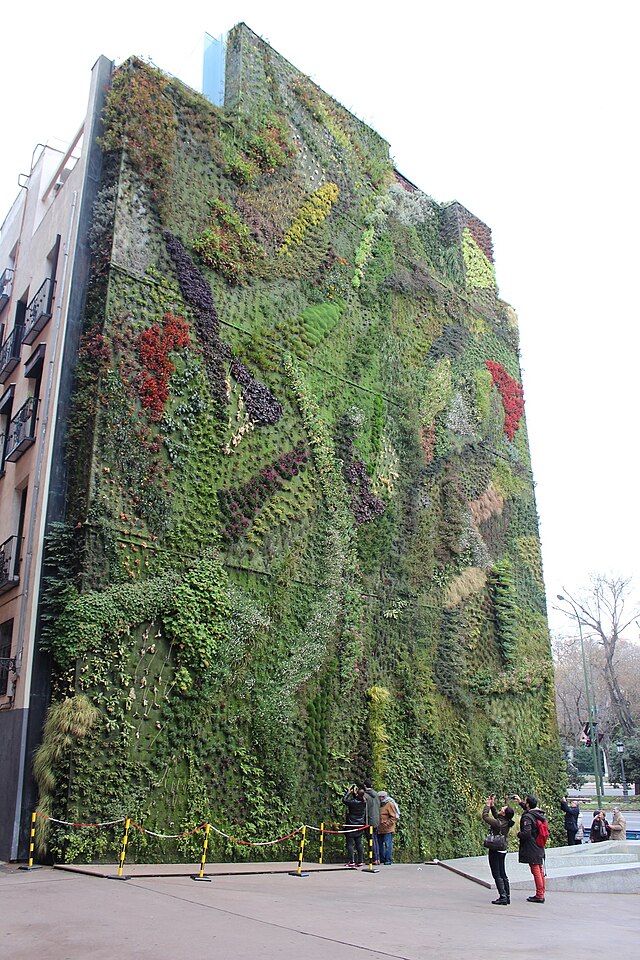
Vertical gardens are an iconic image of the solarpunk world. And they also exist in real life! As urban areas grow more dense, there is an increasing need for sustainable, eco-friendly architecture that lowers CO2 emissions and integrates spaces for growing fresh produce. Thus vertical gardens have gained attention for their potential to transform urban environments. These are structures that incorporate vegetation into the facades of buildings (the exterior face or front of a structure).
In addition to looking cool, these green towers offer tangible benefits to both city residents and the environment.
The advantages of vertical gardens include:
Energy Efficiency: Vertical gardens help with insulation and can cut down on energy use in a big way. One study showed that green facades can reduce heating and cooling needs by up to 30%. Plants act like natural shade and help regulate temperature, so buildings don’t have to rely as much on AC or heating systems.
Improved Wellbeing: Living near greenery just makes people feel better—it’s been shown to reduce stress and boost overall happiness. In fact, folks who live close to vertical gardens report a 15% jump in well-being. Plus, these green walls help quiet things down in noisy cities by cutting noise levels by 5 to 10 decibels. So they’re good for your mood and your ears.
Environmental Benefits: Vertical gardens are like natural air filters—they soak up pollution and CO2 and give us back fresh oxygen. They also help cool things down; studies show green spaces can drop local temps by up to 2°C, which is a big deal for fighting the urban heat island effect. And as if that wasn’t enough, vertical gardens also help manage rainwater by soaking it up, which means less runoff and less strain on storm drains.
However, despite their many benefits, there are some challenges.
Maintenance Costs for these vertical spaces can be higher than traditional gardens.
Not Always Compatible With Older Structures: It may also be hard to apply these vertical gardens to older buildings, requiring the construction of new buildings—which goes against the solarpunk ethos of reusing and recycling what already exists.
Climate: Not all climates are suitable for vertical gardens. In climates with extreme heat or cold, the costs of maintaining these gardens would become very high.
Green Gentrification? When sustainable innovations are super expensive and only accessible to the wealthy, it leaves lower-income communities out of the picture. This is often called exclusionary sustainability—or “green gentrification.” Indeed we’re seeing some green gentrification now with vertical gardens. Because of their high cost, and the fact that they work better on newer buildings, they are difficult to access for low-income folk.
Vertical Farming in Low Income Communities:
Above I mentioned the problem of green gentrification. However, there has been discussion about using vertical farming to help low income communities. Indeed, in places like Milwaukee and New York City, vertical gardens are being planted in low-income communities in order to combat the problem of food deserts, address food insecurity, create job opportunities, and fund sustainable agriculture.
Currently there is a cost barrier because the upfront cost to implement these gardens are high. In the low-income communities, they often need grants or other forms of financial aid to make these projects happen, which doesn’t quite fit into the sustainable or DIY solarpunk world.
However, there is hope that as the technology to create these gardens gets better, the costs will decrease, and access will hopefully increase.
Vertical Farming in Low-Income Communities (Green.org)
Famous Vertical Gardens:

Bosco Verticale, Milan, Italy: One of the famous vertical garden projects out there is the Bosco Verticale—or “Vertical Forest”—in Milan. Finished in 2014, these two residential towers are packed with around 900 trees, 5,000 shrubs, and 11,000 plants across 20,000 square meters. Designed by architect Stefano Boeri, the towers have brought birds and other wildlife into the city, boosting local biodiversity. They also do some serious environmental work—soaking up about 30 tons of CO2 each year and producing 19 tons of oxygen. Fun fact: the apartments are also super pricey and often owned by celebrities and soccer stars, thanks to their prime location and the cost of maintaining all that greenery. While the environmental benefits are great, the lack of affordability and access doesn’t quite fit into solarpunk values.
One Central Park, Sydney, Australia: One Central Park in Sydney was constructed in 2014. This residential building features a lush green design by world-famous botanist Patrick Blanc. It’s got over 35,000 plants covering half the building’s exterior. Thanks to all that greenery, the building uses about 25% less energy and stays noticeably cooler during those hot summers down under.
Nanjing Green Towers, China: The Nanjing Green Towers in China were designed by Stefano Boeri Architetti (yup, the same guy behind Milan’s Vertical Forest). These towers are home to over 1,100 trees and 2,500 cascading shrubs. Together, they soak up around 25 tons of CO2 every year and pump out about 60 kg of oxygen a day. That’s a solid boost for cleaner city air and local biodiversity.
Oasia Hotel Downtown, Singapore: Singapore’s Oasia Hotel Downtown is unique. The 27-story facade is wrapped in over 21 different plant species, creating a biodiversity rich green space that supports birds, bugs, and all kinds of urban wildlife. The greenery helps keep the building cool and cuts down on energy use. It’s an example of why Singapore is called a “City in a Garden.”
Vertical Gardens: On to New Heights (Solarpunk Cities)
Solar Islands – Floating on Sunshine
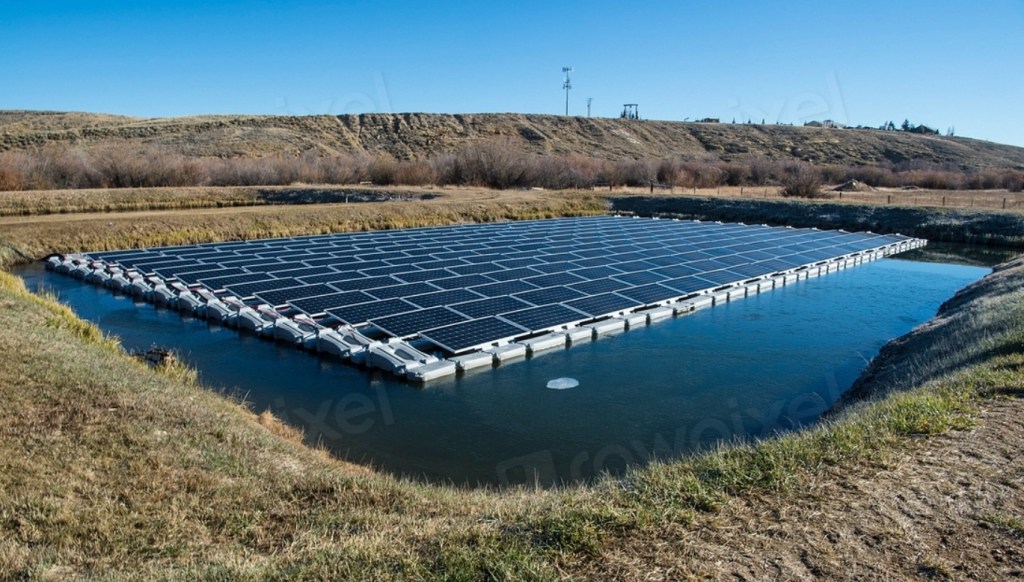
Solar islands are essentially floating solar farms. Instead of taking up land, they’re installed on lakes, reservoirs, ponds, or even oceans They can consist of:
- Floating structures (plastic pontoons or other buoyant materials)
- Photovoltaic panels mounted on top
- Anchoring and mooring systems to keep them in place
- Underwater cables to transmit power to the grid or nearby facilities
Why Build Solar Islands?
- Efficient use of space. They are a potential solution for densely populated areas with little available land. They free up land for agriculture, housing, or nature.
- Improved Solar Panel Efficiency. The cooling effect of water can boost panel performance by preventing overheating.
- Reduces Water Evaporation. They are particularly useful on reservoirs in hot climates—the solar panels can help conserve water by shading it.
- Less Ecosystem Disruption. Compared to land-based solar farms, they often require less environmental disruption.
However, there are currently some limitations. Floating solar farms need to be installed in areas with weaker tides and better weather, confining their roll out to certain areas.
Where Are They Being Used?
Netherlands – Proteus – Sun-Tracking Floating Solar Island. Designed by SolarisFloat, Proteus is a circular floating solar island that tracks the sun to maximize energy absorption. “It chases the sun like a flower,” says Solaris Float. This innovative design enhances efficiency and represents a world-first in floating solar technology. (Source)
Singapore – Sembcorp Tengeh Floating Solar Farm. Spanning 45 hectares with over 122,000 solar panels, this facility is one of the world’s largest inland floating solar systems. It generates enough electricity to power about 12,500 households annually. (Source)
Japan – Yamakura Dam Floating Solar Plant. Kyocera TCL Solar developed this floating solar power plant on the Yamakura Dam reservoir in Chiba Prefecture. It is capable of powering around 5,000 households (Source).
India – Seven Solar Power Plants to Note. I’m going to share an article that will discuss seven large floating solar power plants to note in India. Read more here.
Related Stories From Tomorrow Content:
If you enjoyed this article, feel free to check out the following below.
World Building Guide for Writing Solarpunk
A guide to those interested in writing or learning more about solarpunk.
Solarpunk Ireland, Druids, Celts – Art and Worldbuilding Ideas
This is a collection of digital art and ideas that captures the vision of a solarpunk Ireland, along with images of a futuristic world inspired by the ancient Celts.
Solarpunk Spain & Al-Andalus – Art and Worldbuilding Ideas
This is a collection of digital art and ideas that capture the vision of a solarpunk Spain, along with images of a futuristic Al-Andalus from an alternative timeline in which the Moors were never thrown out.
“The Spider and the Stars” – A Review of a Short Story About Insect Farming
A new, controversial idea for saving the climate has been getting press lately: Insect farming. Check out the article above to read more.
 Stories From Tomorrow - Jessica Brook's Author Site


