
Why write a story in a swamp? Aren’t they smelly places full of mosquitoes, gators, and Florida Men?
Last month I put together a comprehensive guide on the fiction genre our world desperately needs—solarpunk! A genre of fiction that envisions humanity, technology, and nature all coexisting in a utopian way.
As an add on to the previous article, I wanted to write another guide geared toward writers or gamers depicting a solarpunk world in a swamp-like, or wetland setting.
Why? I don’t know. Maybe it’s my Florida Woman side shining through? Or maybe it’s because the solarpunk genre recognizes that the beauty of the natural world takes on many diverse forms. As someone who spent summers as a child canoeing through wetland environments, I am intrigued by these landscapes full of above ground roots, alligators, colorful water lilies, and towering cypress trees.
But here’s a more indepth response to the question, Why create a story in a swamp?
- Swamps as a Place of Refuge: Throughout U.S. history for example, swamps have been a place of refuge for both Native Americans, and run away slaves. While swamps are not ideal places to live, both of these populations found creative ways to make it work. In a solarpunk story, this could take the form of a band of anarchists taking refuge in a swamp in order to resist the corruption of a surrounding capitalist society.
- Exotic Swamp Worlds: Given that swamps and wetlands have an exotic, otherworldly quality, they can be a great way to also create an exotic world on another planet.
- Natural Hazards: Swamps can be a way to create conflict in a story, given their many hazards. They can be a perilous transition zone a character goes through on a journey.
- The Darker (Sludgier) Side of Nature: Solarpunk is typically sunny and full of optimism, but perhaps “Swamp Punk” could represent another necessary side of nature, the sludgy not so pleasant side that is full of peril, darkness, death, decay, and mystery. A group of humans learning to live in harmony with a swamp, or wetland environment, could show the human endeavor to coexist, and even celebrate nature’s more macabre side, not as an evil thing, but in understanding that death and decay are necessary parts of life.
So without further adieu, here you go!
First off, does “Swamp Punk” as a subgenre of solarpunk actually exist?

There aren’t many well-known “solarpunk” stories specifically set in swamps, but there are a few stories of varying genres that touch on similar ecological and aesthetic territory—lush, humid, waterlogged environments where nature is powerful and human systems must adapt.
- The Drowned Cities by Paolo Bacigalupi: This book is YA dystopia. So it does not have the sunny, optimistic, utopian setting of the solarpunk genre. But it does touch on the themes of ecology and survival in a swamp or jungle-like setting. “In a dark future America where violence, terror, and grief touch everyone, young refugees Mahlia and Mouse have managed to leave behind the war-torn lands of the Drowned Cities by escaping into the jungle outskirts. But when they discover a wounded half-man—a bioengineered war beast named Tool—who is being hunted by a vengeful band of soldiers, their fragile existence quickly collapses.”
- Anthologies like Sunvault: Stories of Solarpunk and Eco-Speculation: While this book is not definitively focused on swamps, it is a collection of solarpunk stories focused on survival in different types of climates and situations.
- Books like A Land Remembered or Forever Island by Patrick D Smith are historical fiction, rather than sci-fi. But in absolutely beautiful and intricate language, they bring the Florida wetlands to life. These books also depict the ingenuity and courage of the Seminole Indians who built a life in the swamps, engaged in a resistance against the Trail of Tears, and then later, resisted efforts of developers to steal and destroy their land. Thematically, that is quite solarpunk indeed!
- There are quite a few stories written in the turn of the century by the sci-fi author, Robert A Heinlein, in which he depicted swamps on Venus. As I discussed in my World Building Science Fiction – Venus guide, early pulp science fiction (1930 -1950) often portrayed Venus as a lush paradise full of jungles, swamps, Amazonian women, and even dinosaurs. It wasn’t until the 1960s that scientists discovered that Venus was super hot and that the clouds are made out of sulfuric acid.
Key Ecological Features of Swamps:

To write fiction in a swamp, one should be aware of what specifically constitutes a swamp, and what some of its key ecological features are.
A swamp is a type of wetland. A wetland (true to its name) is a very wet land where the ground is saturated in water either permanently or seasonably. A swamp is a forested wetland. This is the key difference between a swamp and a marsh. Swamps are dominated by trees while marshes are dominated by grasses and other non-woody plants. Swamps also have deeper standing water (a great breeding ground for mosquitoes and other fun six-legged friends!)
Swamps are considered transition zones because both water and land play a key role in this environment.
While I have to be careful to prevent this from turning into a Wikipedia entry, I just want to cover some basic, core features of a swamp.
Tree roots that protrude from the ground: A particularly interesting, and visually distinctive feature of swamps is that they have tree roots that protrude from the ground. These above the ground roots are an adaptation to waterlogged, low-oxygen soil, where normal roots wouldn’t get enough air to function. An example of this are the knobby looking “knees” of bald cypress trees (commonly seen in Florida), the vertical “snorkel” roots of Black Mangrove trees (which protrude out of the ground like a snorkel), the stilt roots of Red Mangroves, and the Buttress Roots (large, wide roots on all sides of a shallowly rooted tree) seen in African and Amazonian swamp forests.
Bugs and lots of them! You are probably already aware that these water logged environments make a great home to mosquitoes and dragonflies. Other common bugs are water striders (that skim or walk on the surface of water), deer flies (painful biters active in daylight), ants, termites, beetles, butterflies, moths, gnats, and a type of insects commonly called “No-See-Ums,” incredibly small, almost impossible to see sand flies that swarm in the humid air and love to bite. But while people may call them no-see-ums, you’ll certainly feel them when they bite!
Hammocks. No, not the kind you lie in. A hammock is a slightly elevated area of dry land—often just a few inches to a few feet higher than the surrounding wetlands—that allows different types of plants and trees to grow, usually hardwoods. These areas act as ecological islands within the swamp or marsh.
Food: For those who live in or near swamps or other types of wetlands, they can eat catfish, tilapia, frogs, alligators, crocodiles, crawfish, mussels, clams, honey, snails, duck, herons, egret, or game birds. Edible plants include cattails, wild rice, pickerelweed & arrowhead (duck potato), palmetto hearts, muscadine grapes, pecans or hickory nuts, mayhaws, and swamp apples (wild crab apples).
WARNING!!!: Some fruits, like pond apples, have poison seeds. So this is obviously not a real life survival guide. Do research elsewhere if you are going to figure out what you can eat in a swamp…Yet the poison seeds could make a great source of tension in a story.
If you are curious about traditional dishes someone might make from content they have collected from a swamp, look into Cajun/Creole cuisine, or the diets of indigenous groups that have historically lived in or near swamps.
Medicinal plants include elderberry (a great immune system booster), along with swamp milkweed which thrives in clay soil and is poisonous, but has historically been used in small amounts for purging and killing parasites…once again, don’t use this article as your guide before signing up for the Florida Redneck version of the Naked and Afraid, this is for fiction only, people!
Human activities in a swamp include hunting, trapping, and fishing. However, swamps historically have had low property values compared to fields, prairies, or woodlands because they have a reputation for being “unproductive land” that cannot be easily used for human living or farming activities.
Thus farmers commonly drain the swamps next to their fields to gain more usable land for crops. Human development has often resulted in the destruction of swamps, destroying ecologically biodiverse habitats that are home to a wide variety of plant and animal life.
Real World Places Where a Swamp Punk Story Could Take Place:
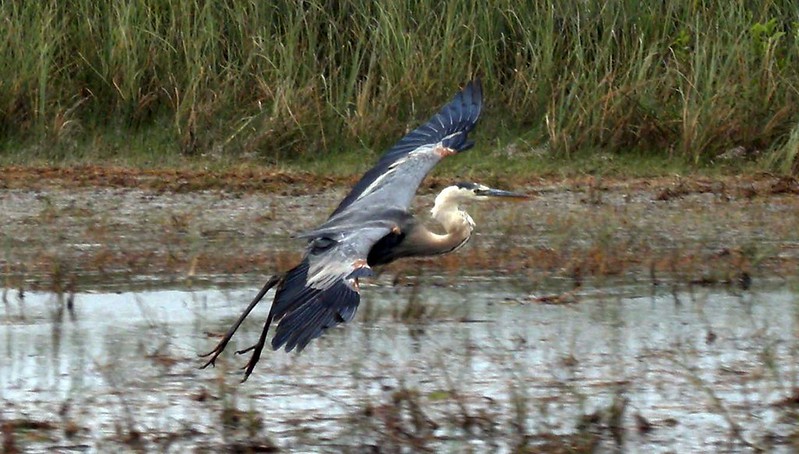
- Bayou Country USA: An ecological landscape of slow-moving rivers, swamps, and cypress groves along the Gulf. The term “Bayou Country” is closely associated with Cajun, Creole, and French settler cultural groups. The term may also be associated with the homelands of certain Choctaw tribal groups.
- The Everglades (Florida, U.S.) A vast subtropical wetland of sawgrass prairies, mangrove forests, and slow-moving waters stretching across southern Florida. The Everglades are home to a wide array of wildlife (such as panthers, manatees, alligators, turtles, ibis, etc.) There area is tied to the histories of the Miccosukee and Seminole peoples.
- The Okavango Delta (Botswana) A sprawling inland delta of winding waterways, seasonal floodplains, and papyrus reed beds in northern Botswana. The Okavango is a rich African ecosystem that is home to elephants, hippos, crocodiles, and countless bird species. The Okavango Delta peoples consist of five ethnic groups: The Hambukushu, Dceriku, Wayeyi, Bugakhwe, and ǁanikhwe.
- The Sundarbans (India/Bangladesh) A mangrove forest area in the Ganges Delta straddling the border of India and Bangladesh. This region is home to dense networks of rivers, mudflats, and salt-tolerant mangrove forests, as well as Bengal tigers, crocodiles, and migratory birds. People who live in the Sundarbans include Bengali communities, the Munda, and Mahato. Life involves adapting to the region’s shifting tides and monsoon rhythms.
- The Pantanal (Brazil) The Pantanal encompasses the world’s largest tropical wetland area. It is located mostly within Brazil, but also extends to parts of Bolivia and Paraguay. The region is home to jaguars, capybaras, caimans, giant otters, and several bird species. The Pantanal has been home to a variety of different indigenous peoples who have historically been resourceful at adapting to this semi-aquatic environment. This includes the Paiaguá “Canoe Indians”, the Terena who were accomplished farmers, and the Guaicurú.
Powerful Uses of Swamps and Other Wetlands in a Solarpunk World:

- Anti-flooding defense: Swamps and other wetlands are a natural defense against flooding and provide great flood management. For instance, when flooding occurs, swamps are like a natural sponge that absorbs and use the excess water in the wetland, preventing it from spreading to the surrounding areas. Thus in a solarpunk story, it could be interesting to show a more advanced and empathetic humanity cultivating swamps as a defense against flooding (especially flooding caused by global warming).
- Water, pollution, and carbon purification: Wetlands act as natural water purifiers. They filter sediment and absorb pollution. Development and agriculture contribute extra nutrients, pesticides, and silt to local waterways. Wetlands trap and filter these impurities, helping to maintain healthy rivers, bays, and beaches. Salt marshes, seagrass beds, and mangroves also play an important role in addressing climate change by removing greenhouse gases like carbon dioxide from the atmosphere and storing them in plants and in the soil. “Coastal blue carbon” is the term used for carbon that is stored in these coastal habitats.
- Sustainable fisheries: If you love seafood, thank a coastal wetland for your favorite dish. Coastal wetlands are some of the most productive ecosystems on Earth when it comes to seafood. In 2018, U.S. commercial and recreational fisheries supported 1.7 million jobs and contributed $238 billion in sales. Thus in a solarpunk setting, wetlands could be a useful source of sustainable seafood.
- Tourism, Recreation, and Spiritual Reflection: In a solarpunk world, the natural world isn’t seen a tool for human use. Humans and the natural world learn to coexist. Humans in this setting would also learn to appreciate the deep awe and beauty of a place like the Everglades. They’d find ways to explore and engage with that beauty without harming the ecosystem. This could include canoeing along quiet waterways, hiking on raised boardwalks, birdwatching among mangroves, or sitting in stillness beneath moss-draped cypress trees.
Tech, Infrastructure, Clothing, and Other Useful Items in a Swamp Punk Setting:
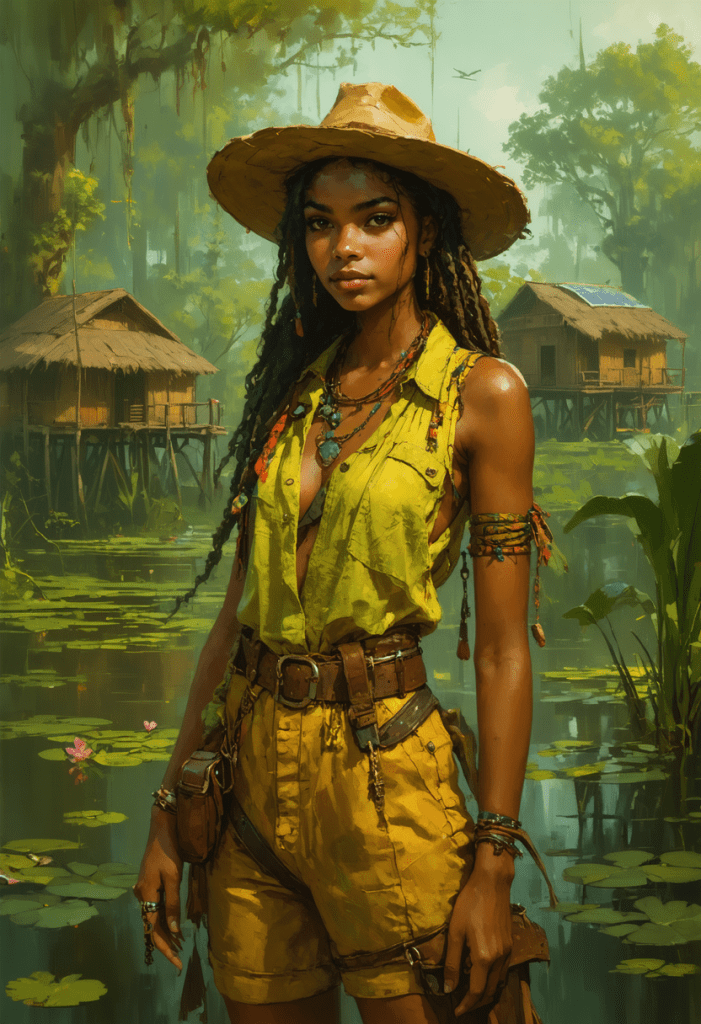
As I mentioned in my original Solarpunk Worldbuilding Guide, solarpunk doesn’t have to be high tech. It can often come in the form of a “low-tech renaissance,” or “cottage core.” If there is a simple, low tech way for people to live in harmony with the environment without exploiting too many resources, then all the better.
So some of these are not high-tech solutions. They are simply looking at what has worked for cultures that were historically connected to wetland areas. However, there is also some high tech thrown in here as well.
🛖 Housing and Settlement
Stilt Houses and Raised Platforms
- Built on stilts or mounds to stay above seasonal floodwaters.
- Found among the Bayou tribes (e.g., Chitimacha) and in Amazonian wetland cultures.
- In the Sundarbans, people build homes on slightly elevated earthen platforms.
Dealing With Mosquitoes
- In any wetland setting, mosquito netting will be essential for preserving a character’s sanity.
- Mosquito-Repelling Gardens: Swamp homes could be surrounded by plants like citronella, lemongrass, marigold, lavender, and basil to create natural bug buffers.
- Bioluminescent Bug Lures: Lights powered by algae or fungi could draw bugs away from dwellings and toward trap zones or pollinator gardens.
- According to the Orlando Sentinel, the Seminole Indians (the indigenous people of Florida) used a variety of methods to repel mosquitoes which included throwing certain plants into a fire and standing in the smoke, rubbing gar fish oil on the skin, migrating during peak mosquito season (May and June), and potentially developed a tolerance over time.
Solar Canopy Roofs
- Broad, angled roofs equipped with solar panels that double as shade structures and water collectors. Panels could be bifacial to absorb light from above and the reflected water below.
Rainwater Harvesting and Filtration
- Gutter systems feed into cisterns below the house, paired with natural filtration units using sand, charcoal, and local wetland plants.
Chinampas (Floating Gardens)
- Used by the Aztecs in swampy areas of central Mexico.
- Constructed from layers of mud, vegetation, and reeds to create fertile floating plots.
Alligator or Crocodile Farms
- Alligator or crocodile farms would be a way to breed and raise alligators/crocodiles for meat, leather, and other goods. In the solarpunk story, “A Field of Sapphires and Sunshine” by Jaymee Goh, published in Glass and Gardens: Solarpunk Summers, a crocodile farm is used in a controversial way to dispose of bodies (great tension!).
Mound Building
- Tribes like the Muskogee (Creek) and Mississippian cultures created large earthen mounds for ceremonial and residential use in flood-prone areas. The mounds could also be used to preserve important items from flooding, such as seed libraries or conventional book libraries.
🛶 Transportation and Mobility
Canoes and Dugouts
- Swamps are naturally difficult to traverse by foot, so canoes built from hollowed logs or woven reeds are useful for transport. The Miccosukee and Seminole people of Florida are known for using dugout canoes in the Everglades.
Airboats:
- Many people today in wetland areas also use airboats, which glide over the waterline. Gliding allows them to do less damage to the environment and animal life.
Solar Powered Boats:
- Since 2016, the Indigenous Achuar people have navigated solar-powered boats along the Amazonian waters of eastern Ecuador. These boats are large canoes covered with a roof of glossy black solar panels that soaks up the bright light of the Amazonian sun. The solar panels on these boats also help power the electricity in Amazonian rainforest villages. This has been a critical way to offer development without deforestation, because the people can travel by river instead of cutting down trees to build roads.
Raised Walkways or Log Paths
- Temporary or seasonal paths laid with logs, brush, or woven mats made out of palmetto fronds to allow foot travel across wet areas.
🧵 Swamp Punk Clothing: Materials & Features
- Woven reeds or cattails – for belts, sandals, basket-armor, or lightweight hats.
- Palm or palmetto fibers – used like raffia to make breathable skirts, wraps, or hooded capes.
- Moss-dyed linen or hemp – cool, breathable plant-based fabric grown on hammocks or traded from highland zones.
- Mycelium leather – water-resistant, compostable, and grown from fungi—used for boots, satchels, or armor plating.
- Water hyacinth fibers – invasive in many swamp areas, but can be spun into rope, mats, or textiles.
- Layered wraps and drapes – allow airflow while protecting from bugs and sun.
- Arm and leg gaiters – made from waxed cloth, moss-treated fiber, or mycelium to keep leeches, mosquitoes, and swamp debris off.
- Wide-brimmed hats and neck veils – woven from palm fronds or reed fibers, often coated in natural insect repellents.
- Knee-high boots or foot wraps – made from sealed plant fibers, fish skin, or upcycled rubber for navigating muck.
- Gator or snake hide for leather clothing, hats, and boots.
- Scavenged animal feathers, teeth, and claws for decoration.
⚡ Energy
Floating Solar Rafts
- In my article, Five Real Life Examples of Solarpunk?, I discussed the real life use of solar islands, floating solar islands that collect sunshine and convert it to energy. Wetlands areas with vast waterways, and plenty of sun exposure, could use these to collect energy.
Biogas from Anaerobic Soil and Swamp Grass
- As mentioned above in this article, swamps and other wetlands have been often dubbed as poor areas for human development due to the fact the soil is low in oxygen, or is anaerobic. Thus, not much traditional agricultural activity can take place. However, this would make swamps a great place for a process called anaerobic digestion, which can be used to produce biogas. This is a process in which microbes break down organic matter and release methane. Methane gas can be used for used for cooking, heating, and even small-scale electricity generation.
- Swamp grasses like elephant grass, cattails, and giant reeds are excellent resources for biogas production. They produce a large amount of biomass per unit area, which translates to a significant amount of biogas. The organic matter in these grasses is easily broken down by anaerobic microorganisms, resulting in efficient biogas production. They also don’t compete with food crops for land, making them a sustainable option for bioenergy production.
- Compact, dome-shaped biogas collectors could be nestled near homes or community kitchens, and fueled by compost, swamp vegetation, swamp grass, or waste.
Turn Mud Into Energy! Plant Microbial Fuel Cells
- Plant-Microbial Fuel Cells create electricity using living plants and the bacteria in the soil. As plants grow, they make food through photosynthesis. Some of that food—up to 70%—is sent out through their roots into the soil. Bacteria eat this leftover material and, in the process, release tiny electric charges called electrons. Scientists place special electrodes near the roots to collect those electrons and turn them into usable electricity.
- Swamps are especially well-suited for Plant-Microbial Fuel Cells (PMFCs) because their natural conditions already support the key elements these systems need to work well. They are wet, which provides good electron conductivity and bacterial growth. The anaerobic soil in swamps is also great for bacterial production. See more at Turn Mud into Energy With a Microbial Fuel Cell.
Kinetic and Water-Based Systems
- Canoe docks, fishing platforms, and suspended walkways could be outfitted with kinetic pads or treadle-powered devices that convert foot traffic and movement into usable energy.
- Micro-hydro turbines hidden in slow-moving creeks could provide continuous trickles of power without disturbing aquatic life.
I hope you enjoyed this guide!
Feel free to comment if you feel like there are any important points I missed or should add.
If there are other solarpunk biomes you’d like me to create guides for, please suggest some.
And as always, don’t forget to share, like, and subscribe.
 Stories From Tomorrow - Jessica Brook's Author Site