The Future of Writing Fiction in the AI Revolution

(Image Made with AI at PlaygroundAI)

Right now many writers are freaking out about the advent of AI that can also write fiction.

Yet before you start freaking out too much, remember that technology is amoral. The AI we have right now is not sentient. It’s not Skynet. It’s actually a very simple tool that is as good or bad as the people using it, and as good or bad as the input it gets. So whether it puts people out of a job, or gives them more opportunities, is not dependent on the technology, it’s dependent on us and our choices.

It can become a corporate tool to generate mass amounts of cookie cutter content, or it can give a refugee the ability to tell their story to the world. Maybe it’ll do both.

I am aware there was a controversial article published in the New York Times about an AI that tried to get a journalist to leave his marriage. But if you look closely at the article, you’ll see that the journalist was asking the AI to respond as if it had a Jungian concept of the Shadow. I am sure the AI simply combed the internet for dark ideas, and replied in kind.


Basic Tools AI Can Provide Fiction Authors According to ChatGPT Itself

If you want to know something about someone, the best way is to go and ask them. It’s Journalism 101. When I asked ChatGPT how it can help authors write fiction, it told me the following:

AI can help fiction authors in several ways, including:

Idea generation: AI can be used to generate ideas for stories, characters, and settings. There are various AI-powered tools available that can generate prompts and ideas for authors to build on.

Writing assistance: AI can assist authors in writing by providing suggestions for sentence structures, grammar corrections, and even predicting the next word in a sentence. These tools can help authors improve their writing and catch mistakes they might have missed.

Character development: AI can help authors develop more complex and dynamic characters by providing insights into their motivations and personality traits. There are tools that use machine learning algorithms to analyze large amounts of data to provide personality insights.

Plotting: AI can help authors create more compelling plots by analyzing existing stories and identifying patterns that work well. AI can also help generate story arcs and plot outlines based on a set of criteria.

Translation: AI can help authors reach a wider audience by translating their works into different languages. There are translation tools that use machine learning algorithms to provide accurate translations.

Overall, AI can help fiction authors by providing new ideas, improving their writing, and assisting in character and plot development.

Thanks ChatGPT.


Generating Fiction Content with ChatGPT

I have spent much time messing around with ChatGPT. As someone who makes my living through writing, what do I think about it?

A tool like ChatGPT functions as an aggregator of data and information. It cannot have creative thoughts, wisdom and personal insight like a human being can, but it can comb the data it was given to aggregate the creative thoughts and insights of already existing texts.

Here is more detail about how it works: ChatGPT is a transformer-based neural network that provides answers and data with human writing patterns. The AI has been programmed with endless amounts of text data to understand context, relevancy and how to generate human-like responses to questions. (Entrepreneur.com)

I have asked ChatGPT to write me a few short stories. These stories tend to read like a synopsis rather than a story itself. They don’t go into much depth. Or when they do get into emotional details, they read as very cliche. But it makes sense that the language is cliche, because instead of providing something fresh, it’s making a composite from the existing content of the however many thousand stories it read to generate my request.


I’ll share with you a 500 word story I had ChatGPT write about pirate romance to demonstrate how it works:

As the sun began to set over the vast ocean, the sails of the ship caught the warm, orange glow of the sun, making it look like it was on fire. The crew aboard the ship was made up of rough and tumble pirates, men and women who had spent most of their lives on the open sea. Among them, there was a young woman named Isabella, who had joined the crew to escape her mundane life on land.


Isabella was the youngest and only woman on the ship. She had always been drawn to the sea, and the pirate’s life seemed like an adventure that she couldn’t resist. Her life on the ship was rough, but she loved it nonetheless. The crew, at first, was hesitant to accept her, but as they saw her determination and skill, they began to welcome her as one of their own.

One day, as they were raiding a merchant ship, Isabella was tasked with keeping watch on deck. As she stood there, scanning the horizon, she heard a voice behind her.
“Beautiful night, isn’t it?” The voice belonged to the captain, a rugged and handsome man named Jack.

Isabella turned to face him and was taken aback by his piercing blue eyes and his rugged features. She had seen him around the ship, but they had never spoken before.

“Yes, it is,” she replied, feeling her heart flutter in her chest.

Jack stepped closer to her, and she could feel the warmth of his body. “You know, Isabella, you’re not like the other crew members. You have a spirit and a fire that’s rare to find in someone.”

Isabella’s heart skipped a beat as she heard his words. She had never thought that someone like Jack would pay attention to her. “Thank you,” she replied, her voice barely above a whisper.

They stood there in silence for a moment, watching the stars above them. Isabella couldn’t help but feel drawn to Jack, and she could sense that he felt the same way.
As the night went on, they found themselves stealing glances at each other, their eyes locking for a moment before quickly looking away. They knew that they couldn’t act on their feelings, for fear of the crew finding out and causing trouble.

But as they sailed on, Isabella and Jack found themselves drawn together, unable to resist the magnetic pull between them. They stole moments together when they could, stealing kisses and sharing secrets.

As their ship sailed into the sunset, with Isabella and Jack holding hands on deck, they both knew that their love was forbidden, but they also knew that they couldn’t resist it. They were pirates, after all, living life on their own terms, and they were willing to risk everything for the love that they had found.

It’s not bad for something written by a computer in less than a minute. But it would definitely not be accepted for publication by any quality short story fiction publisher. In addition to part of it reading like a synopsis, there are a lot of cliches, including Captain Jack’s “piercing blue eyes.”

For now, I think the technology will function in conjunction with authors, rather than replacing them. Just like a calculator doesn’t get rid of the need for mathematicians, it has just increased the amount and sophistication of math that is done by mathematicians, while decreasing the grunt work.


The Current Rise of Slush For Publishers

Neil Clarke recently released an article discussing how the number of submitters Clarkesworld magazine has had to ban has escalated to an all time high this year because of people submitting stories written by AI.

When it comes to paid publishers, people are going to be more tempted to just copy paste an AI written story, submit it and see how far they can get.

Publishers may be challenged to think of new ways to prove that the story wasn’t entirely written by AI. Or the process of verifying the writer and building a relationship with them as a person might get more thorough.

My writer friends aren’t going to like this, but another reality is that publishers might become less open to the public. They might develop a team or network of writers they already know in order to decrease slush and output human written content.


Predicting The AI Revolution By What Has Come Before:

If we want to understand the future, we must understand the past.

Ever since the beginning of the Industrial Revolution, we have found ways to use technology to decrease the time it takes to do a task and to rapidly increase output. The thinking at the time was that this would decrease the number of people doing labor. Instead, we’ve seen the very opposite. People now work longer hours than they did before the Industrial Revolution.

When we found a way to use factories to make textiles, this didn’t mean that less people were involved in making textiles. This just meant that the process became much more streamlined, sophisticated, and that the output of textiles dramatically increased.

Also, when the photograph was invented 200 years ago, this didn’t put artists out of work. Instead, this changed the nature of art itself. As the use of photographs became much more prevalent in the beginning of the 20th century, so too did we see the sudden explosion of the modern art movement. Before photographs, art was about capturing the likeness of an image. But as photographs made realism less impressive, art became more about creativity and expression. There is also definitely an art and skill to photography itself.

And during the Information Age, we’ve seen that spell checking, grammar checking and online publishing has also dramatically increased the output of fiction. As a result, the Information Age has dramatically increased the output of books compared to where things were in the Pre-Information Age. The creativity and style of an author is now way more important than their ability to spell check and grammar check their work.


AI Could Function as a Tool to Rapidly Decrease the Time it Takes to Write a Book.

If we learned anything about technology, it’s that it decreases time to do a task, streamlines the process and dramatically increases output.

Right now, it can take an author anywhere from 6-12 months to write a book. And if the author is writing a sci-fi or fantasy novel with a very creative and in depth world, it could take much longer. I myself take 2 years to write a book (but I also do this in addition to having a full time job and other adult responsibilities).

What if an author could feed the AI algorithm a plot synopsis for their book, character descriptions, world building, and have the algorithm generate a 300 page book in an hour? It’s likely the author would still have to go in and provide oversight, get rid of cliches, make the language fresh, add personal flair to the dialogue, and so on.

But still, it’s possible that this technology could dramatically decrease the time it takes an author to do the grunt work of writing a book, maybe decreasing that time from 12 months to 1 or 2 months. What it would be doing is providing the labor of choreographing a fight scene, or describing a setting rather than making the author take the time to do it.


Lessons From James Patterson and His Writer Factory

People are often impressed that James Patterson can publish 14 books a year. This seems especially impressive after I just mentioned the average writer can pump out at most 1 book in that time (if they are lucky). But here’s the thing about James Patterson—he has streamlined the process. He has a whole team of writers available to write his books based on his outlines and feedback. He has other writers available to do the grunt work of the writing, while he is free to provide the creative oversight.

I imagine this would be a similar dynamic when it comes to a person streamlining their own creative process with the use of AI bots.

In the same way that photography made creativity more important in art, perhaps creativity will become more important in the fiction world as well.


AI and Fiction in the Corporate World

When analyzing the nature of our corporate, hyper capitalist, neoliberal world, one possibility is that publishing companies will have an AI that reads 1,000 of the best selling novels, and then churns out some cookie cutter content that is a composite of all those novels. They would still need a person to go through and provide oversight. But it would be one person pumping out a 1 novel in a month, rather than in a year. People like James Patterson who are good at providing creative oversight will become very valuable, grunt work will become less valuable.

A current example of this dynamic is that the author Erik Hoel at Electric Lit fed his novel to an AI, GPT-3, to see if the AI could write something better. He was shocked and horrified when the AI wrote something almost as good. There were some mistakes the AI made and weird descriptions Erik had to go in and fix. But Erik still said the AI wrote a facsimile of his book in 1000x the speed.


The Capability of AI to Democratize Writing

Above I’ve mentioned the corporate capitalist response, but there is another reality as well. Technology could go the other way and help those who historically have not had access to writing their book because of limitations on education or money.

A quarter of the world’s books are written in English even though a quarter of the world’s population does not speak English.

An overwhelming number of authors are white.

Education is also a barrier to many people being able to tell their stories. I’ve heard English as second language speakers be told that they should give up their hopes of writing a book in English, because it just wouldn’t be good enough to be published.

Is a refugee or a homeless person less worthy of telling their story than a college graduate? If anything, the people in the aforementioned group might have a much more interesting story to tell.

Language, education and societal bias could be less of a barrier to people getting their creative ideas out there.


The Personality of the Author May Become More Important

As publishers begin to churn out a tidal wave of books that are all very similar to one another in order to make a profit, people may turn against this by finding an indie author with an authentic voice and a unique personality they find interesting.

Matt Giaro on Medium made a good point that there is a reason people spend more time on social media than Wikipedia. People are more interesting than piles of information, or what he called “steamed broccoli.”


As Our Output Increases, So Will Our Ability to Consume It

As our ability to generate output dramatically increases, I think parallel technological movements will evolve to enhance our ability to consume it. Perhaps this is the cyberpunk writer in me. But if we consider the possibilities inherent in neural nets and brainware, I think we are going to start developing technologies that will rapidly enhance peoples’ ability to read quickly and mentally digest copious amounts of content. A person may able to read one novel a day, instead of one novel a month.

This could fundamentally change the human being, just as the Industrial Age and the Information Age has dramatically changed the human being.


Larger Questions About How AI Will Affect Society

Above I mentioned that technology is amoral. It’s only as good or bad as the people using it.

I think for those of us white collar folk who make our living through writing, this moment in time could give us a little humility, and a little sympathy for our blue collar brethren who had their jobs traded away due to technological trends, globalism, and Neo Liberal economics.

Technology has the capability to build us a post-work utopia where people can indulge in their hobbies all day.

Technology also has the capability of creating a hellscape where we’re all replaced by machines and the .001 percent of richest people let us starve off and die while they enjoy their new free, mechanized laborers.

This new AI writing technology could enable a refugee with a limited grasp of English tell their story to the world.

This new technology could also produce writing factories that pour out the same sounding tripe for the masses.

It’s all about what we as a society prioritize as important.


Conclusions?

This is all heavy stuff. For now, maybe just have fun writing a steamy pirate romance? You could call it, “She Walked the Captain’s Plank,” or “Secrets Below Deck,” or “Passion on the Seven Seas.” Those were my ideas.

Here are some additional suggested titles from ChatGPT

  1. “The Pirate’s Treasure of Love”
  2. “Rogue Waves of Passion: A Pirate Romance”
  3. “Tides of Desire: A Swashbuckling Love Story”

Honestly, I think “Tides of Desire” is the best title here. So, you win, ChatGPT.

By the way, I intentionally showed how I used AI to help me generate content for this article, showing how…for now…AI was a tool that helped my process.

Here’s the remainder of my conversation with ChatGPT:

Me: “Do you think AI will remove the need for human authors of fiction?”

ChatGPT: “While AI has made significant strides in the field of natural language processing and machine learning, it’s unlikely that it will entirely replace human authors of fiction. AI language models can generate texts and even entire stories, but they currently lack the creative thinking, imagination, and emotional depth that humans can bring to storytelling.

Human authors have a unique perspective, and they can convey experiences and emotions in a way that AI language models cannot. While AI can assist in the writing process and provide new insights and ideas, it’s unlikely that it will entirely replace the role of human authors. In fact, some experts argue that AI may enhance the creative process, providing new tools and techniques for human authors to explore and experiment with.

In summary, AI language models may have a role in assisting authors and enhancing the creative process, but they’re unlikely to entirely replace human authors of fiction.”
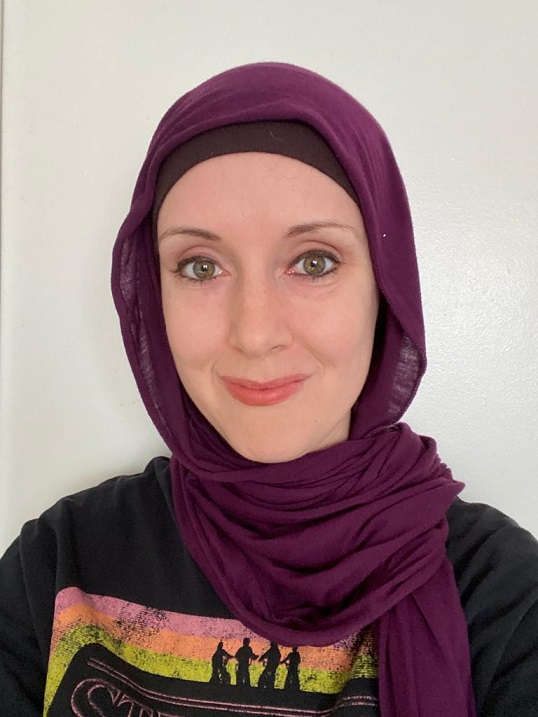
Reclaiming My Body as a Hijabi – Happy Hijab Day

Happy Hijab Day, everyone!

World Hijab Day is an annual event founded by Nazma Khan in 2013, taking place on 1 February each year in 140 countries worldwide. Its stated purpose is to encourage women of all religions and backgrounds to wear the hijab (Islamic head covering) for a day and to educate and spread awareness on why hijab is worn.

Why do I wear the hijab (the Islamic head covering)?

As I wrote all this out, the content matter actually got a lot darker than I originally intended. This brought up themes about how women are objectified sexually in society, and how this objectification leads to mental and psychological distress. It’s a dark conversation, but I think it’s one that is more relevant today than ever. So if you are willing to read something with a bit of a heavier theme, please continue.

Part of my answer as to why I wear the hijab is an explanation of what I am attempting to leave behind. Of course if any kind of sexual harassment happens, it’s the sexual harasser’s fault. But there are a set of extremely toxic social standards that I no longer wish to associate with or even pretend to accommodate.

If there is one thing that men need to understand about being a woman, it is that we grow up being bombarded constantly with the message that our worth as a human being is directly connected to how sexually attractive we are. This sexual objectification happens everywhere in every culture. Of course attractive men are treated better than unattractive men as well. But I feel that the amount of pressure and attention given to a woman’s appearance is far greater.

A particular enlightening conversation on this issue was one that Dustin Hoffman had about his role in the movie Tootsie. In this movie, they do as much makeup as they can to make him look like a real woman. And yet when he saw his female self on screen, he felt disappointed that he wasn’t more beautiful. He started crying because he realized that he wouldn’t even talk to his female doppelgänger at a party because she didn’t fulfill his own standards of female beauty. And in that moment, he realized how much female attractiveness was tied in with concepts of self worth as a human being.

If I say the name, “Hedy Lamarr,” you may know her for being a beautiful actress. Fewer people know that she was also a brilliant inventor who invented the frequency hopping technology that would lay the foundation for wi-fi. If I mention Kim Kardashian or Paris Hilton, you may think of their sex tapes. You might not think of the fact that Kim Kardashian has done political work to help prisoners, or that Paris Hilton has lobbied for youth home reform. If I mention Dolly Parton, there are two big things about her that may come to mind. Those two things are probably not included in the millions she has donated to charity.

Millions of Americans feel uncomfortable about their bodies. Seven million women and one million men in America have an eating disorder. Women represent 90% of all people with Anorexia.

Women will spend a quarter million dollars on their appearance in a lifetime. And women today are spending thousands on new silicone breasts and new silicone bottoms. They are vacuuming out fat from parts of their bodies to put in other parts of their bodies. They are injecting fillers into their faces that have potential to cause their facial muscles to droop so they have to constantly get more fillers. They get burning hot wax ripped off their skin and private parts. And if a woman simply allows the hair to grow on her body that is natural, complete strangers will loudly and rudely comment that she looks unnatural.

People may think things are getting better today for women with the body positivity movement and new and inclusive beauty standards. But I am not sure if this is the case. Ever since kids have started using social media more in the 2010s, self harm behavior has been spiking severely for young women, while remaining steady for young men. Why is this the case? The theory is that boys are mainly looking at YouTube videos about video games, while the Instagram and Tiktok feeds for young women are overwhelmingly full of beautiful Influencers. The anonymity of the internet is also conducive to bullying. Teens can more easily bully a young woman for not fitting in or not looking “the right way.”

And today it’s no longer just that young women feel as if they must compete with the most beautiful women. Now they also have to compete with digitally enhanced women who look way better on screen than anyone could ever appear in real life. This is a cruel social battleground where a woman’s declining self worth not only leads her to develop health and psychological disorders, but also opens her up to other forms of exploitation and abuse. I’m astounded by how many beautiful women out there think they are ugly. I astounded by how many young men just can’t be attracted to a woman who is clearly attractive. And I am saddened by the women who tell me they feel pressured to dress in a certain way by society in order to be liked or accepted.

I remember one time as a teenager I saw something on television about how Saudi Arabia had a contest to see which woman was the best person. They evaluated a group of women all hidden under their black niqabs, and gave a prize to the woman who spent her time taking care of her elderly parents.

In the West we like to look down our noses at the Muslim countries. We’d like to think we’re so much more enlightened. I’m not saying there aren’t problems in Saudi Arabia. But how likely is it the U.S. would have a beauty pageant based solely on a woman’s personality, and not her appearance? That would happen on a cold day in Hell, right?

I remember the most socially comfortable I’ve ever felt anywhere was when I was dressed in my Mass Effect Quarian costume at AwesomeCon. I was wearing a helmet that hid my face. And the rest of my body was hidden as well. When people interacted with me, they were interacting purely with my personality and the cool costume I constructed. My body and sexuality were a private thing that was just for me.

After a lifetime of enduring weird, inappropriate and sometimes life-threatening statements about my appearance (which started when I was 8), I feel like I’ve finally reclaimed my body for myself as a hijabi. I’m not saying that people are never rude to me. But what I am saying is that I am setting a clear visual boundary. Psychological boundaries are very important for social interaction. For me, visual boundaries are important as well.

Obviously, sexual harassment can happen regardless of what a woman is wearing, but at least dressed like a hijabi I feel like I have some control over what I want to show and what I don’t want to show. I feel like my body is mine, and not some product that exists to be judged by today’s shallow, consumer obsessed, hyper capitalist society.

I feel empowered and free to be me.

Update for 1/31/25:

As I read this post I wrote two years ago. I want to also add that part of the reason I wear the hijab is for Muslim representation. There is frequent and constant misrepresentation, and propaganda that seeks to dehumanize 2.5 billion diverse people on the planet. Unfortunately, it’s common to “other” people who aren’t the predominant demographic.

By wearing a hijab and being myself, I can invite those around me to check their assumptions about Muslims. It may be easy for people to have negative assumptions when they are rarely interacting with Muslims in their day-to-day lives (or are interacting with people who they don’t realize are Muslims, as a large number of Muslims don’t veil and simply dress like the people around them). Many people would be surprised to find out that famous personalities such as Dave Chappelle and Ice Cube are Muslim.

If you read here, you’ll see that there are countless American Muslims who are famous comedians, NFL stars, scientists, musicians, writers, Nobel prize winners, politicians, and civil servants.

I hope you found this to be an interesting read. If you have questions, feel free to comment!

How to Write a Character with Cancer – From a Cancer Patient

We’re all familiar with the depiction of cancer on TV. Someone goes to the doctor for a couple of tests. In the very next scene, they are in the doctor’s office. The grave faced doctor gives them the bad news. A minute later, they are in the hospital hooked up to an IV in their arm. Shortly after that, they lose all their hair and spend most of their time bed ridden.

This isn’t everyone’s cancer experience. Some of this is also an oversimplification of the whole cancer experience. I will tell you about what I learned from my own experience. However, I encourage you to do your research, because everyone’s cancer experience is different.

Why should you listen to me? Because I had cancer myself and went through a very strong chemotherapy regimen.

Disclaimer: You might not want to read this if you are currently going through chemotherapy or about to start. This article has emotional triggers. It discusses much of the hardship that can happen during chemotherapy.


First, let me go through some of the things fiction often gets wrong.

Chemotherapy is not often delivered through a needle in a vein in the arm.

If someone is getting chemo on a regular basis, they would most likely be given a device called a port.

The port is a device used to draw blood. It is surgically placed under the skin, usually in the right side of the chest. It is attached to a catheter (a thin, flexible tube) that is guided (threaded) into a large vein above the right side of the heart. It is placed there because that is the biggest vein in the body. During chemo sessions, a needle is inserted through the skin into the port to draw blood or give fluids.

The port must be cleaned with a saline flush every few weeks. The port will stay in the patient for many weeks, months or even years. When I had a port, it looked like a bump beneath my skin. My doctors gave me a heart-shaped port–as if the heart shape was supposed to make the whole experience of cancer more cheerful. I was put to sleep when the port was surgically put in me. Yet when it was taken out, they actually did the surgery while I was awake. My doctor simply used a local anesthetic to numb the area.

Getting surgery while awake was a very bizarre experience. Even though it wasn’t painful, the pressure on my chest and the noise of the drill made it all very unsettling. I cracked a lot of jokes with my surgeon to put myself more at ease.

Giving your character a port can serve as a way to dramatize the experience of cancer while also showing the audience that you did your research.

Cancer patients don’t always get their diagnosis right away.

In the movies, a patient gets their diagnosis in like five minutes. In real life, it often takes a month of tests and waiting to hear one’s results. People in the cancer community call the anxiety induced by this waiting period, “scanxiety.” Even though I understand that things can’t happen in real time in fiction, overlooking this waiting period is a missed opportunity. This waiting period is an opportunity to build tension.

Many forms of cancer today are survivable.

Of course this all depends on the type of cancer and the stage. But often in fiction when someone gets cancer, the immediate assumption is that they are going to die. The reality is that for a well researched and well funded disease like Breast Cancer, about 85% of patients will survive. Especially if they are young and have no other pre-existing conditions.

Survival is less certain for people with a Stage IV cancer. So if you want to heighten the drama or the risk of death, give the character a rare form of cancer or a late stage where the cancer has metastasized throughout the body.

Chemotherapy patients can live healthy, normal lives

A common fictional depiction of a chemotherapy patient is that they have lost all their hair, or are stuck in bed for months. While this is the case for some cancer patients, this isn’t the case for all of them. There are many different types of chemotherapy treatment, and different people have different reactions. And not all patients need chemotherapy. For some, surgery or radiation is good enough.

Some chemotherapies don’t cause hair loss. Some chemotherapy only makes a patient sick for a few days, and then they go back to work afterward. Some chemotherapy doesn’t even make the patient nauseous. It really all depends on the person’s diagnosis, treatment plan, as well as their own health.

I did lose my hair and become nauseous. But I was actually able to work throughout the majority of the chemotherapy process. Usually I would be nauseous for a couple of days after treatment, but then feel normal for the next few weeks until I got another infusion. I got one infusion every three weeks.


Overlooked Realities of Cancer:

Below I will list the realities of cancer that are often not captured in fiction. And yet these realities can still make for good drama, characterization and story telling.

Even though there are many forms of cancer that can be survived, there is drama to be found in the struggle after survival.

Many people assume that once the patient is finished with chemotherapy, all the hardship is over and they go off to live happily ever after. Yet the reality is that there are struggles to be found in the aftermath of cancer. Some patients experience a decreased quality of life. Some patients had to make large sacrifices in order to survive their prognosis: giving up a job, leaving an unhealthy relationship, surgically removing a body part or even giving up their own fertility.

Medical Abuse:

While I am sure that most medical professionals have a genuine interest in “doing no harm,” there is the unfortunate reality that medical abuse does happen. Often it’s not out of malevolence. It’s from medical professionals being tired and overworked, or it’s from inept employees keeping their job because the practice is short-staffed.

Regardless of the reason, many people with chronic illness have had a case of their health providers making a mistake, not taking them seriously, not being professional, or causing a problem by trying to rush.

I myself had a chemotherapy nurse who made mistakes on me three times. After the third time, I reported her to the clinic’s supervisor. He said that they basically had an entire book of complaints about this woman, but that there was nothing they could do since they needed the staff. I then even wrote to my state medical board to complain about her, since other patients and nurses privately told me they were unhappy. And yet nothing happened.

Medical Racism:

In the U.S., black women have the highest rates of death from breast cancer and cervical cancer.

Studies have shown that the African American community faces discrimination and implicit bias in the medical setting.

Dayna Bowen Matthew’s book, Just Medicine: A Cure for Racial Inequality in American Healthcare (2015), explores the idea that unconscious biases held by health care providers might explain racial disparities in health.

If there was an author who wanted to highlight this disparity, I think that would make for a compelling and powerful story that needs to be told.

Cancer patients can experience denial about their illness.

Facing the reality that one has a deadly illness is not easy. There are different reactions to threats. Fight, flight, or freeze. Some people choose to ignore the problem and pretend it doesn’t exist. Some people engage in magical thinking or buy into snake oil solutions. Even Steve Jobs (one of the wealthiest men on the planet) refused medical treatment for his cancer, because he thought he had other solutions. He ended up dead.

My doctors have told me sad stories about patients who had entirely treatable cancers, but ended up dead because they refused treatment.

There are people who try to control a cancer patient’s treatment.

When I was undergoing treatment, I had the experience of people pressuring me not to get chemotherapy or surgery. I had to tell these people in the most polite way to leave me alone.

Cancer patients often have to make a series of life altering decisions in a short amount of time.

This is another reality of cancer that could make for good drama in a book. People often have just a few weeks to make choices about their surgery, radiation treatment, chemotherapy regimen, and fertility preservation procedure. Surprisingly, there are many different options to choose from, and doctors often make their patients choose instead of telling them what to do outright. This can definitely lead to decision fatigue, as most people are not used to making a bunch of life altering decisions about their bodies in a matter of weeks.

Romantic partners can become MORE abusive after a diagnosis.

Most people would imagine after a cancer diagnosis that a person’s romantic partner would become more supportive. It’s hard to imagine a person being abusive to a cancer patient. It seems downright rotten in fact. And indeed, many people do have partners that step up and become extra supportive after a diagnosis.

However, this is not the case for everyone.

Unfortunately, what I have learned from being part of the online breast cancer community, is that partner abuse can actually escalate (rather than de-escalate) after a diagnosis. This was something I saw numerous women discuss. They often had stories about how once they started going through chemotherapy and surgery, their husbands would start becoming more distant or abusive.

What explains such horrible behavior? My own theory is that if a person is in a partnership where they are doing much of the housework, child care, or finances, and then they suddenly stop, the other person can become more stressed out as they take on a greater load. Not everyone is capable of taking on this extra load without becoming stressed out and toxic in the process.

There are also people who cheat on their partners or leave them after diagnosis.

Men more likely than women to leave partner with cancer (Reuters)

Divorce Risk Higher When Wife Gets Sick (The New York Times)

Cancer patients and domestic violence: More common than you might think (MD Anderson)

The Loneliness of Cancer

After I shared this article, many other people who experienced cancer also mentioned the loneliness of cancer.

On TV they often make it look like cancer patients are constantly surrounded by a large, supportive group of friends and family members. This certainly is the case with some people. But this isn’t always the case. There are often people who go through cancer alone. There are also people who had family members supporting them at first. But then when these family members realized that the ordeal was going to go on for months or even years, they backed off.

Cancer patients have to spend a ridiculous amount of time consoling OTHER people about their own illness.

Cancer is a scary thing. And when the loved ones of a cancer patient find out about their illness, they do a number of things. They freak out, cry, and go into panic mode. Indeed, most people aren’t taught how to deal with the reality of a loved one having a chronic or deadly illness. So unfortunately, many people can start unloading on the cancer patient themselves with the expectation that the cancer patient is supposed to do the emotional labor of dealing with all their fears and woes.

And yet the cancer patient does NOT want to hear someone tell them, “You’re gonna die! I’m so scared you’re gonna die!” People would say this stuff to me all the time. I had enough of my own worries to deal with, I didn’t need other people unloading on me at the same time. I had to tell people in the kindest way possible to STFU.

Some women lose their fertility after their battle with cancer.

The battle with cancer is already traumatic enough. But it’s an extra stab of the knife afterward when a woman may have to give up her dreams of being a mother. This isn’t always the case. If a woman is young, there is still a good chance she could give birth, but it becomes harder the older a woman gets.

There are medical treatments that can potentially preserve fertility, but they are not full proof.

Egg freezing, for example, is ridiculously expensive. It usually costs over $10,000, and most of the time, health insurance won’t cover it. Also, when I did my own research, I found that the results weren’t even that effective. The overall chance of a live birth from a frozen egg is 39%.

Many cancer patients become more spiritual as a result of their struggles.

So far, much of what I said was negative. But, there are some positives as well.

As the old expression goes, there are no atheists in foxholes. When someone has to face their own mortality in addition to going through scary and uncomfortable medical procedures, the belief in a higher power can go a long way.

Many cancer patients end up realizing what is truly important in life.

There’s nothing like confronting your own mortality to make you realize what’s truly important. Many cancer patients change their lives for the better after defeating their illness. This can involve making healthier choices, getting out of a toxic relationship, pursuing a job that they always wanted, prioritizing family and friends, and becoming internally stronger overall.

Despite all the negatives I’ve mentioned, cancer survivors are often very emotionally strong people.

I hope this was helpful to you. Now go write something cool and feel free to share it in the comments.

Related Articles:

Coping with Global Pandemic – Thoughts From a Cancer Survivor (Stories From Tomorrow)

My Stories About Illness:

“Artisanal Cancer” (Teleport Magazine)

How far will an influencer go to get likes? In this short story about a post scarcity future, people are literally killing themselves out of boredom. Chemotherapy treatment has become the next edgy fad.

“The Red Devil” (Vine Leaves Press)

This is a 50 word story about chemotherapy treatment.

“Fibromyalgia Fire” (Cuento Magazine)

This is a microfiction about fibromyalgia.

“The Red Devil” – Microfiction on Chemotherapy

(A picture of me shortly after chemotherapy)

I am happy to share that Vine Leaves Press has published my 50 word fiction about chemotherapy in their daily mail. On a daily basis they send their subscribers a microfiction.

For those who are looking to get their microfictions published, I would definitely recommend Vine Leaves Press.

The story I wrote is called “Red Devil.” It is about a chemotherapy drug known as doxorubicin (Adriamycin). Cancer patients call Adriamycin the “Red Devil” because of a few reasons: it is red, it comes in a giant scary needle, and it is one of the harshest chemotherapies that there is. Not only does it make all your hair fall out, but it knocks your ass out and makes you sick for days. I am happy to be done with all that now.

Read My Microfiction on Cancer Here:

“The Red Devil” – Vine Leaves Press

More 50 Word Fiction from Vine Leaves Press:

50 Give or Take

For those who like to write Microfiction, Vine Leaves Press could be a great option for sharing your material. Or for those who like to read it, you can subscribe to their daily mail.

Side Note:

The picture of me on Vine Leaves Press’ website is pre-hijab because I sent them the story and picture like a year ago. That doesn’t bother me too much as I grew up in a Western culture, so I don’t feel naked without the hijab. I wear the hijab these days for many reasons: modesty, positive representation for Islam, to remind myself to submit to God, and to humble my own ego and vanity. But I know there are pictures out there on the web of me without the hijab as I have done art, videos, photography and modeling in the past. So, it doesn’t bother me at all. But every woman is different and it’s important for every woman to be able to make their own personal choices on the matter.

Related Posts

Coping with Global Pandemic – Thoughts From a Cancer Survivor

Black Hare Press Year Four Anthology (Horror and Microfiction)

Black Hare Press’s Year Four anthology is now available on Amazon!

Black Hare Press is an Australian indie publisher that focuses mainly on horror and speculative fiction.

As we all know, publishing these days is HARD. Therefore, I appreciate this publisher because they create numerous opportunities for authors around the globe to share their creativity. One of their focuses is on microfiction, which allows them to accept and publish a large amount of content on an almost daily basis.

Black Hare Press has also created a great community for their writers, and they have many fun contests which challenge writers continuously with new ideas.

I would definitely recommend this publisher if you are looking for a home for your works of horror or speculative fiction.

I myself have two works of microfiction in the anthology listed above. Please read and leave a positive review if you can.

Year Four – Black Hare Press Anthology

Black Hare Press Website

Black Hare Press’s Collection of Horror and Speculative Microfiction

Life on Jupiter’s Ocean Moon Europa – Microfiction

“Europa Tour” by Jessica Brook

Debra pulled a lever, filling her submarine’s ballast tanks with more water. The boat continued its descent through Europa’s narrow sea trenches. The thrusters groaned with effort against the building current. The Earther tourists didn’t notice. They pressed their noses against the windows, oohing and aahing at the sights. Translucent invertebrates swam around hydrothermal vents. Bioluminescent plankton glowed like fairy dust.

Debra answered all the tourist’s questions until someone asked, “And what’s that colorful confetti-like stuff we see sprinkled around?”

“Another type of plankton,” she lied, deciding not to tell them it was pieces of paint from previously crashed submarines.

Author Note: I haven’t seen much exploration of Jupiter’s ocean moon Europa in science fiction, so I wrote a 100 word piece about it.

Image Source:

See Here

Similar Micro-fiction:

“The Burning Soldier” – Micro-fiction on Mercury

Seven SMART Writing Goals for 2023

(Image Source)

As the new year approaches, it’s a good time for writers to revisit their goals.

Writers.com has some good advice on how to set smart, reliable, achievable goals. They use the acronym SMART.

SMART is all about the properties of a good (“smart”) goal.

It stands for:

Specific. Make your goal or objective as specific as possible. Say exactly what you want to achieve in clear, concise words.

Measurable. Include a unit of measurement in your goal. Be objective rather than subjective. When will your goal be achieved? How will you know it has been achieved?

Achievable. Be realistic. Ensure that your goal is feasible in terms of the resources available to you.

Relevant. Your goals should align with your values and long-term objectives.

Time-bound. Give yourself a deadline within a year. Include a time frame such as a week, month or year, and include a specific date if possible.

Here are seven goals I can think of that match this acronym.

  • I will finish my outline for my work in progress by (insert date)
  • I will set aside (insert amount of time) to write each day, for at least 5 days a week.
  • I will finish my work in progress by (insert date)
  • I will join a critique group and commit to it (insert number) times a month.
  • I will submit my work to (insert number) of publications each month.
  • I will read for (insert amount of time) a day.
  • I will share my content on social media (insert number of times) a week.

You will notice I did not write things like. “I will finish my work in progress.” Or. “I will get published.” Or “I will write 12,000 words a day.” The best way to accomplish a goal is to make it specific, realistic, to create firm deadlines, and to break it down into small achievable pieces.

Committing to the process is also more important than making “getting published” a goal. There’s no way to know for certain that you will get published, but instead it’s better to make the goal something like, “I will submit to 2 publications a month,” because that is something you know you can achieve.

I added a social media component, because an important aspect of writing in today’s world is having followers who are interested in your work.

I also added reading and critique groups because these things help you to get better as a writer.

Check out this article on writers.com for more information.

Avatar 2 Review – Jake Sully’s Kids Need a Babysitter

(Image Source)

The Avatar sequel, The Way of Water, was overall an enjoyable movie experience. If you want three hours of breathtaking CGI along with action packed scenes, you will definitely be entertained.

However, I will say that a majority of the movie’s plot is moved forward by kids not listening to their parents.

[This review is for people who have already seen the movie. So…yes, there will be spoilers.]

Kids not listening to their parents is a common enough trope in television and movies used to move the plot forward or create tension. And if it happened once or twice in The Way of Water, I wouldn’t mind. But it happened at least 9 times!!! Let me walk you through it below. And some plot holes are detailed as well. Don’t take this as me hating on the film. I liked the film. I’m just having a bit of fun riffing on a recurrent plot problem.

  • In the beginning of the movie, we’re told that humans now want to colonize Pandora to live there. (Whatever happened to the treaty the humans made in the first movie with the Na’vi to leave the planet? Clearly the humans have violated the treaty, but…this seems to just not get addressed??? At the end of the first movie, did the humans go into cryo, go all the way back to Earth, which probably consumed immense amounts of resources and time, and then just be like…”Wait a minute!”). Anyways, Jake is valiantly leading a guerilla warfare type resistance against the humans. We see him and his people destroying a train and fighting human baddies, who have lots of cool mech armor. However, Jake’s kids are supposed to stay back and function as spotters. Instead, they Leroy Jenkins their way into battle and almost get killed. (My first thought is, if they function as spotters on a regular basis, why did they randomly do that in this battle? Is it because the plot called for it?) Regardless, Jake Sully is now pissed and tells his brood they are grounded from combat for a month.
  • After being grounded, Jake’s kids decide that this is a perfect opportunity to go wander off without adult supervision. Off in the woods all by themselves, they happen to spy the resuscitated bad guy from the first movie, Stephen Lang’s character Miles Quaritch, along with his squad. (Is there no one else in the Olo’eyktan Clan patrolling the woods?) Instead of running to safety, the kids stick around for a better look (and of course) get captured.
  • After Jake Sully and Neytiri rescue their wayward children, Jake realizes the threat to his family and abandons his post as leader of the Olo’eyktan clan (sorry not sorry Olo’eyktan clan). He decides to go into hiding . He seeks refuge with the Metkayina clan (a Maori like tribe of Na’vi who live in the water). The NUMBER ONE rule Jake tells his kids is to not get into trouble. But of course, when some of the boys in the Metkayina clan bully Kiri (Jake’s adopted daughter), her brothers step in and get into a fist fight.
  • After Jake yells at his sons once again for causing trouble, his second eldest son, Lo’ak, decides to smooth things over with the Metkayina boys by going on a excursion with them to…yes…you guessed it…a place they are not allowed to go because it’s dangerous. Lo’ak soon realizes the boys tricked him by leading him to the lair of a giant sea monster (you know, typical harmless teenage pranks, trying to get someone murdered). Lo’ak evades death by being incredibly lucky. He’s rescued by Payakan, a tulkun (a whale-shark looking species revered by the Metkayina).
  • Lo’ak’s new friendship with Payakan apparently causes tension with the Metkayina clan, because the other tulkun exiled Payakan. But of course Lo’ak doesn’t listen.
  • Meanwhile, Miles Quaritch is tasked with hunting down Jake Sully and killing him. He discovers that Jake is hiding with one of the water tribes. Miles Quaritch decides to draw Jake out by killing tulkun to anger the Metkayina. Jake Sully recognizes that this is a trap, and thus doesn’t take the bait. But of course of course of course his children don’t listen and take matters into their own devious blue hands, and once again they get captured. (I’m starting to feel like this movie should be called The Way of Not Listening To Your Parents).
  • When Jake Sully’s kids get captured, he offers to turn himself in. But as he’s making his way to the boat that contains Miles Quaritch, Lo’ak’s tulkun friend, Payakan, attacks the boat. As the humans start fighting against a tulkun, this causes the Metkayina to get angry. They loudly proclaim they are now going to battle the humans and then…valiantly disappear from the movie for the next 45 minutes, leaving Jake and his family to fight against Miles Quaritch’s forces all by themselves. The only reason I can think this happened is that the writers simply forgot that the Metkayina were in the battle.
  • Once Jake’s kids get liberated from capture, Jake tells them to go to safety, but of course, of course, OF COURSE, they don’t listen, and then get kidnapped AGAIN for a third freaking time! Is this getting repetitive yet?
  • At the end of the movie, the kids end up helping to rescue their parents by ignoring their orders to flee to safety. And then Spider (the feral human child of Miles Quaritch, rescues him in secret, and doesn’t tell anyone). Which of course opens the possibility to a third movie. I included this example with Spider because he’s like a pseudo adopted child for Jake Sully and Neytiri. It’s not so much him not listening to them, but him going against what they were trying to achieve, which is close enough.

If Jake Sully and Neytiri locked up their kids, or at least found a decent babysitter, the movie would have been about ten minutes long.

Now, despite these silly plot issues, I did legitimately enjoy the movie. I loved the environmental message. And I do think the world building was very cool. I definitely encourage people to go out and see the movie so that James Cameron can make his sequels. The Way of Water was neat because it explored a new biome in the Pandora world we didn’t see in the first movie. I would hope in the sequels we see even more diverse Na’vi and biomes. Perhaps a tundra Na’vi, or a desert Na’vi, or even Na’vi that live in caves with biolumenescent fungus. There’s many fun future possibilities to be explored. I would just recommend that Jake Sully and Neytiri get themselves a reliable babysitter before they go on any future adventures.

“The Spider and the Stars” – Science Fiction, Insect Farming, [Review]

(Image generated with Playground AI)

A new, controversial idea for saving the climate has been getting press lately. Insect farming.

Well…when I say “new,” I mean new for the western world. Eating insects has been a traditional cuisine in some African, Asian and Latin American cultures. In Ghana, for example, there are people who collect winged termites during the spring rains, fry them, roast them, and make them into bread. See more examples at National Geographic.

Even in Western cultures, the idea of insect farming isn’t completely revolutionary. After all, we eat a delicious, sweet, sticky substance farmed from insects called “honey,” which is basically bee vomit. We wear a comfortable fabric called silk, farmed from worms.

Of course there is that Fear Factor image of people putting writhing spiders or meal worms in their mouths. But realistically, if industries did start selling insect meat on a commercial basis, they’d probably find a way to make it look less disgusting and be more edible. After all, we do love crabs and lobsters, which are basically large sea insects. At one point lobsters were considered disgusting enough to be prison food. Now it’s a luxury cuisine. I imagine with insects, they’d probably be crushed into some kind of protein powder and then blended into things. The less they can look like insects as food, the better.

Despite the controversy, there are environmental benefits to insect farming. Our current animal agricultural systems are destructive for the environment.

“This sector relies heavily on water and carbon-intensive farming of grains at a time when the cost of agrochemical inputs are climbing and freshwater resources are becoming increasingly unreliable. Globally, animal farms consume more than a third of the world’s total grain production. In the U.S. the share is closer to half. Insect-based animal feeds could be this industry’s best shot at building climate resilience, while also helping to manage a food waste crisis.” (Bloomberg)

Meanwhile, insect farming has potential to utilize less land and leave less of a carbon footprint on the planet. “Black soldier fly larvae, in particular, hold promise: Known in the industry by the acronym BSFL, these infant bugs serve as high-quality chicken and fish feed and require 1,000 times less land per unit of protein produced compared to soy production, between 50 and 100 times less water, and zero agrochemical inputs.” (Bloomberg)

The EU has even approved three insects for human consumption: crickets, mealworms and grasshoppers.

Now enter DK Mok‘s wonderful short solarpunk story, “The Spider and the Stars,” published in Glass and Gardens: Solarpunk Summers.

True to the solarpunk genre, the story is focused on themes of ecology and sustainability. DK Mok is truly a talented hard sci-fi writer who immerses the reader into the bright and optimistic world of cyberpunk with much vibrant detail. She brings us such interesting details: tree planting drones, glowing festive solar fairy lights, biogas produced by cheese, cabins built of photovoltaic glass and reclaimed timber, snappily dressed proxy droids, and most revolutionary of all–spiders in space!

She goes into depth about how insect farming would work. And yes, she does tackle the issue of peoples’ inherent disgust and how such a thing could be made palatable.

Like all great science fiction, this story brings up a current world problem and paints a picture of how futuristic solutions would pan out.

I will add that the story also carried my attention with its good sense of humor and a likeable main character, who clearly has affection for her small, multiple legged friends.

Links

DK Mok

Glass and Gardens: Solarpunk Summers