For those of you who are interested in reading or writing military fiction (the same genre which brought us Starship Troopers and Ender’s Game), check out Bullet Points Magazine! They are accepting submissions!
They are a military fiction magazine that captures the complexity, tragedy, and hope of warfare and violence in human and nonhuman society.
My story, “The Bee Wrangler,” just made it into their AI edition.
The 9th edition of Bullet Points Magazine explores AI in warfare from multiple angles: AI run amok (in some very unexpected ways), the loyalty of AI on the battlefield, or more reflective uses of AI after the fighting has stopped, and sometimes, the real fighting begins (as explained in the magazine’s introduction). There’s also a funny story about sentient bullets.
“The Bee Wrangler” depicts the tale of a former drone operator trying to overcome the trauma of war by using the military tech installed in her brain in a quite unexpected way—to save the bees!
Stories about fascism aren’t relevant right now. No, not at all. I was just mentioning this randomly for no particular reason. (Sigh…)
Anyways… the other day I was reading Radon Journal (a journal that publishes stories relating to science fiction, anarchism, transhumanism, and dystopia), and I found this flash fiction that was just about as entertaining as it was dystopian:
If you are also looking for a place to submit your short works of fiction to, I would highly recommend Radon Journal. They tend to publish engaging, well-written, off the wall content. And they have won several awards as well!
When chronic tardiness meets quantum physics—and it all goes horribly wrong.
“Always Late? It might not be your fault. Conducting a study in the field of quantum physics. Tardy folks needed. You will be compensated. – Professor Green”
The flyer for the study was in Mia’s hand. She was always about thirty minutes late wherever she went. It was starting to become a problem at work and in her dating life. In desperation, she agreed to volunteer for the study and planned to show up at the professor’s house at 3:00pm. It was weird the professor had her come to her home instead of the university. Yet if the professor could fix Mia’s chronic tardiness, she supposed location didn’t matter much.
Of course, Mia arrived at the woman’s house at 3:30pm. Before Mia could even knock, the door swung open. A middle-aged woman in pajamas answered. Mia wondered if she had gone to the right address.
“Ah, perfect!” The woman beamed. “You’re late. I’m Professor Green. Nice to meet you, Mia. Please. Come in.”
“You’re happy I’m late?” Mia stepped inside.
“It’s not your fault.” Professor Green winked. “At least, that’s the working hypothesis.”
Without wasting any time on small talk, the professor led Mia downstairs. Once they reached the basement, Mia’s muscles went rigid. It was dark, the only light being the white glow of a computer monitor. There was a mess of wires connecting the CPU to a headset on the desk. The headset looked like a mechanical crown of thorns.
Mia took an involuntary step backward. “What is all this crap?”
Professor Green patted one of the computer chairs next to the desk. “Let me explain to you how all this crap works, my dear.”
Mia told herself she wasn’t afraid of some kooky pajama-clad professor. She took a seat. “You said it’s not my fault I’m always late?”
Professor Green sat in the other chair. “Your chronic tardiness may have to do with your brain’s perception of time. It may be out of sync with the rest of the universe.”
It was true that Mia always felt out of sync. Apparently, it was all the universe’s fault. Stupid universe. “What could I even do about that?” Mia asked.
Professor Green grabbed the crown of wires. “I believe I can use my temporal enhancer to get you in sync.” Professor Green placed the temporal enhancer lightly atop Mia’s head and typed a long string of equations on her computer that looked like another language.
“You better not fry my brain,” Mia said, trying to sound braver than she felt.
The professor didn’t respond.
“So how does this thing work?” Mia asked.
“Have you heard of the Observer Effect?”
“No.”
“It’s the idea that quantum phenomena is affected by the observer.” Professor Green inspected the connection the temporal enhancer had with the computer. “If I change the way your brain observes time, hopefully I can not only change the way you interact with time, but the way time interacts with you.”
Mia swallowed. “Have you tried this on anyone else?”
A ghost of a smile tugged at the professor’s lip. “You’re the lucky first.”
“The hell I am.”Mia’s fingers went to the crown of wires.
Professor Green clucked her tongue. “I wouldn’t take that off if I were you. I’m doing some very fine calibrations. At the Planck level in fact. It’s a unit of time so small it’s ten to the negative twentieth power the size of a photon. If I’m even one digit off, you could end up—” Professor Green scratched her head. “Hmm, I guess I don’t know what would happen to you if I was that far off.”
Sweat trickled down the back of Mia’s neck. Professor Green didn’t seem to notice her discomfort. The professor clacked away at her keyboard, humming contentedly. A light static zapped different parts of Mia’s head. Mia realized she had been wrong. Some experiment that messed with her brain wasn’t the answer to overcoming her bad habits. It was insanity.
“Screw this.” Mia grabbed the temporal enhancer.
“Stop that!” The professor clutched at Mia’s wrists before she could pull the device off.
“Get off of me!” Mia shoved the professor’s hands away. The woman’s elbow flew backward, hitting the keyboard. Numbers spooled rapidly across the screen.
Professor Green’s eyes went wide as hubcaps.
Shit. That’s not good. Before Mia could ask what was happening, a powerful burst of electricity exploded outward from the crown of wires, filling the room with blinding light.
Mia screamed. She was no longer in Professor Green’s basement. She was now lying on cracked, burning Earth. Mia’s skin turned red and blistered against the ground. She jumped to her feet. It was hard to see or breathe because the air was thick. It tasted toxic too. She coughed and struggled for breath as she squinted up through the haze, jumping from foot to foot on the scalding Earth. Through the mist, she made out the sun. The now red and enormous sun.
A horrifying fact from school came to her unbidden. A description of the death of the sun. The death of the solar system. The end of time.
Professor Green’s calculations were indeed off. Very off. Mia was no longer just thirty minutes late.
She was now five billion years too late.
The End:
Author Note: Thanks for reading my story! I have struggled with chronic tardiness throughout my life. To the point where one of my doctors even called me, Little Miss Suzie Late Pants (btw my name’s not Suzie).
Upon learning about how our observations can potentially impact reality, I have often wondered just how far this could go.
Good news, all! I recently got a flash fiction published in the scientific journal Nature.
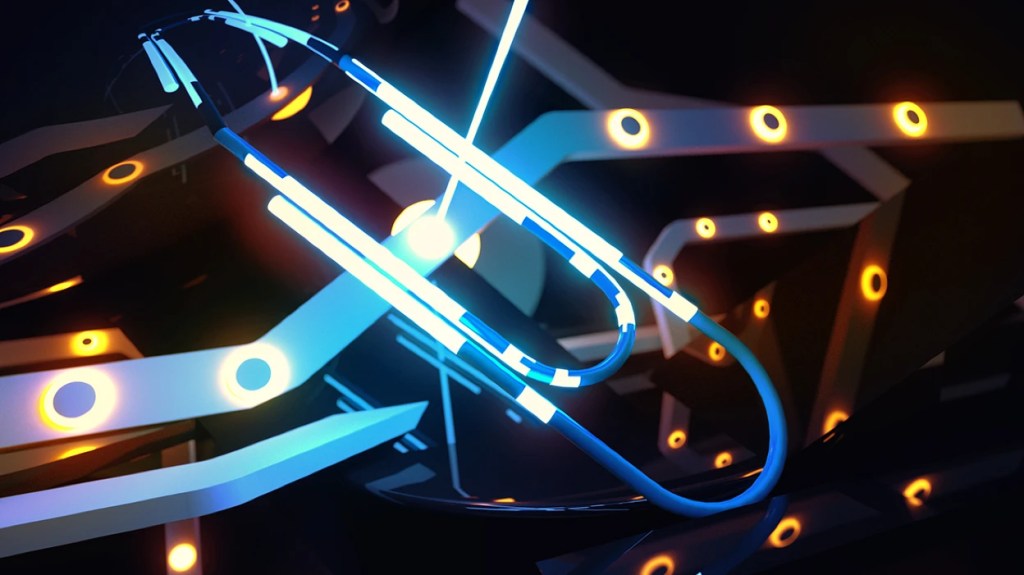
You can read it here. If you want a quick, fun, five-minute read about an eccentric vagabond on the subway who has a paper clip that could potentially enable time travel…or destroy the universe…check out my piece.
Nature magazine publishes flash fiction pieces of hard sci-fi. If you yourself are interested in getting published in Nature, check out their submissions guide.
The story above is my short work of absurdist, comedic flash fiction. It’s just a 6 minute read. You can read it for free today, but it’ll be behind a paywall tomorrow.
If you are looking for a place to publish your flash fiction, Havok is a great choice. They have a variety of different genres and monthly challenges. Their editors also worked with me carefully to help me craft the best possible version of this story. And their communication was quite good.
If you are looking to read quality flash fiction, you should definitely sign up to read their collection. There’s lots of creative, humorous content on their website. Each story is about a 5 minute read. Having access to the Havok catalog is only $5 a year.
So check it out! I hope you enjoy weird, existentialist stories about elevators.
When searching for places to submit shorter works, word count is key. This website lists publications that accept prose of 3,000 words or less. It is quite a lengthy collection of publications and allows you to search by word limit.
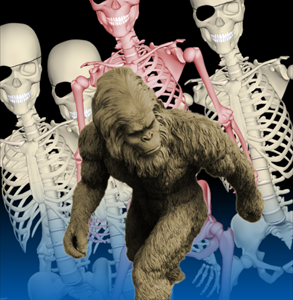
“Tagging along on the honeymoon of your two best friends makes you feel a little like the squeaky extra wheel on your nephew’s tricycle. Your two best friends in the whole world are a sentient monkey named Bob and a beastman cleverly named Beastman.”
This is my experiment with writing a story in second person, present tense. It was pretty fun. It’s also pretty short. Less than 1,500 words. You could probably read it in the time that it takes to brew a cup of coffee.
If you’ve ever wanted to read about the adventures of a sentient monkey named Bob and a Beastman, check it out:






 Stories From Tomorrow - Jessica Brook's Author Site