
“Y2K aesthetics are so hot right now – and so is the era’s existential dread.” – Willingham, A. J.
The kids are wearing weird pants, chunky highlights are back, and silvery, space-age silhouettes are edging their way into vogue.
Like clockwork, the 20-year fashion cycle has made the late 90s/early 2000s cool again. For us millennials, this can bring back a nostalgia for our preteen/teenage years. And for the Gen Zs and Gen Alphas, this reflects a fascination with a time in which the internet did exist—but without all the doodads that make it suck (i.e. social media and smart devices).
If you’d like to write a story in this era (because you’re a Gen Z trying to impress your friends), or you’re a crusty old millennial like me who wants to take a walk down memory lane, let’s take a journey to the Y2K era. A time when dot com fever was on the rise, people messaged their friends on AIM, listened to boy bands, and liked lots and lots of plastic shiny things.
Disclaimers:
- Don’t write toward trends for the sake of following a trend alone because trends can always change.
- There’s only so much I can cover. I tried to cover the basics, but I’m sure there’s a lot I missed out on. I’m not writing a book y’all.
Major Events in the Year 1999:

- Fear of the Y2K Bug: This is the obvious one to have on the list. The world experienced a widespread fear of computer shutdowns and civilization collapse due to a potential computer programming glitch known as the “Y2K Problem.” We’ll discuss this more below.
- Bill Clinton Impeachment Trial: Let me tell ya, it was very awkward having to hear about a particular kind of white stain on the dress of the president’s intern almost constantly. The entire news cycle was dominated by talk of that stupid dress. Fun fact! My dad took me out of school to go see the president’s impeachment hearing!
- Columbine High School Shooting: Back in 1999, school shootings were unheard of. (Oh to be back in such times, right?). So when it happened on April 20, 1999, it was all over the news. Some people were even blaming goth rocker Marilyn Manson for corrupting the youth.
- Launch of Napster: This is a big one. On June 1, 1999, the peer-to-peer file-sharing platform was launched, forever changing music distribution. At that time, the norm was buying and listening to CDs. Napster would eventually lead to the shift in downloading music in the early 2000s. Metallica even sued Napster in 2000 for copyright infringement.
- Big Film Releases: The Matrix, Fight Club, American Pie, 10 Things I Hate About You, and The Blair Witch Project.
- “Bling” is the most popular slang word of 1999.
What the Heck Was the Y2K Bug?
The Year 2000 Bug, or millennium bug (abbreviated as the “Y2K” bug), referred to a potential problem in computer systems.
In the early days of computers, memory was expensive, and computers generally had less of it than they do now. In order to save space, programmers abbreviated the four-digit year designation and stored only the final two digits. For example, computers recognized “98” as “1998.” So how would computers interpret “2000”?
There was a fear that when dates were moved from 1999 to 2000 that there would be massive crashes in programs that ran banking, utilities, communications, insurance, manufacturing, government, etc. There were also fears that key devices that used computer chips would fail, including medical equipment, temperature-control systems, and elevators. (Some people even said that planes would fall out of the sky!)
The theory was that when clocks struck midnight on January 1, 2000, affected computer systems, unsure of the year, would crash and worldwide chaos would ensue. Maybe civilization itself would even fall apart!
Obviously that didn’t happen (at least not in this timeline). But that would be cool if you wrote an alternative history in which it did.
U.S. Tech Usage in the Y2K Era
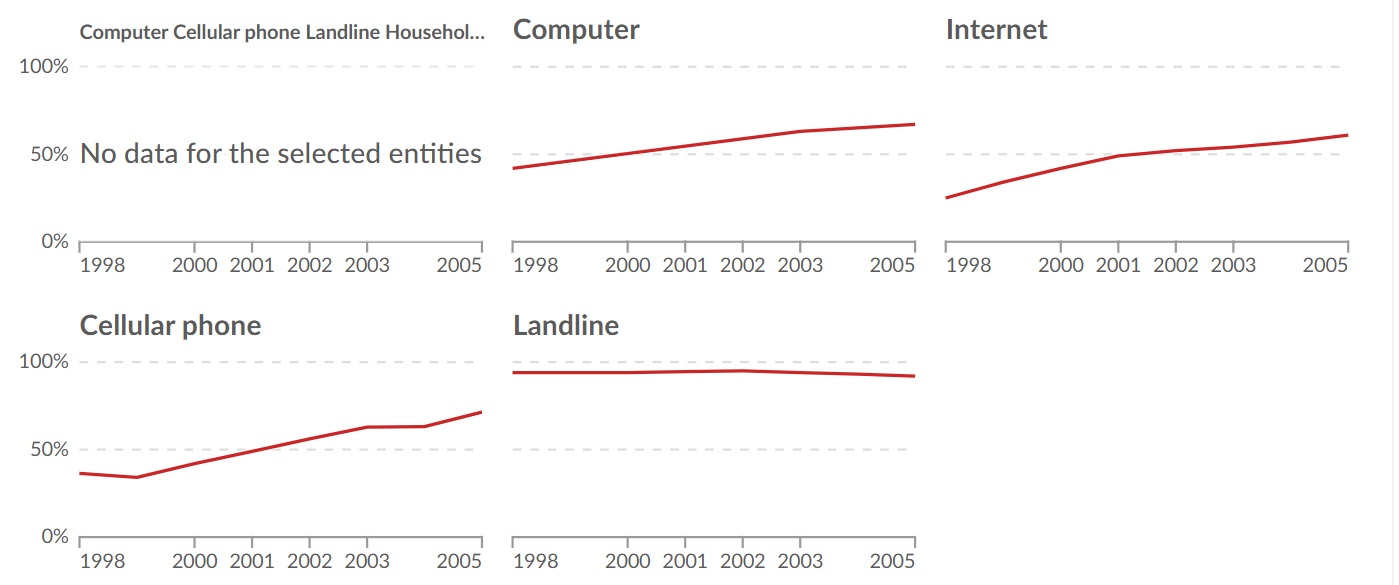
Note: When people refer to the “Y2K era,” they are referring broadly to the time between 1997-2004. In this guide, my focus was prominently on the year 1999, while also acknowledging elements of the late 90s and early 2000s.
The Internet:
As you can see above, 1999 was a turning point in which internet usage started to become more common in U.S. households (it wasn’t just for nerds anymore). People began using email more (even sending out email chains that promised a curse for not continuing the chain), bidding for things on eBay, getting spam about penis enlargement pills in their inboxes (OMG you can’t believe how common that was), talking in chat rooms, sending messages to friends on AIM with abbreviations like “lol” and “brb” and emojis, searching Ask Jeeves, and many people started using websites for the first time.
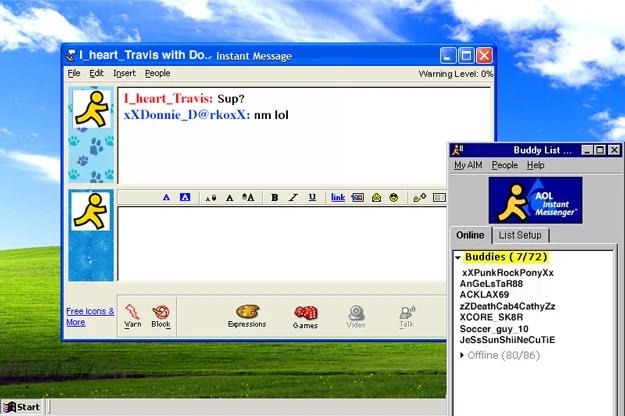
(A view of AIM from 1997 – Source)
Cyber cafes also started to emerge in this era. Though it seems they were more popular in other countries than the U.S. You could also have someone using the internet at work or school but not having access to it at home.
If you’re writing a story in the late 90s, it’s also important to understand how the internet was different than it is now. People still used dial-up, the internet came on an AOL CD, and you often couldn’t be on a landline phone and on the internet at the same time (without hearing a horrifying SCREEE EE ERRGHHH noise on the phone that sounded like a dying robot). The internet was also slower. Sometimes it could take so long for a page to load that I would get up, get a snack, and return while it was still loading. Though people were also more patient about this kind of thing since the internet was still new, exciting, and full of possibility—when it was “the information superhighway” and not a doom scrolling machine.
I think it’s significant that The Matrix came out in the year 1999, because this year marked the beginning of the shift from a more analog world to a digital one, and even an almost existential worry about where this shift could take us as a species.
SOME KEY TECH DEVELOPMENTS IN THE LATE 90s
1995 – eBay is founded.
1997 – AOL Instant Messenger (AIM) is released and becomes common by 1999.
1997 – The search engine Ask Jeeves comes out.
1999 – AOL buys Netscape. Peer-to-peer file sharing becomes a reality as Napster arrives on the internet, much to the displeasure of the music industry.
1999 – BlackBerry was introduced, a groundbreaking phone that would become an iconic device of high status businessmen and Wall Street executives.
2000 – The Y2K bug doesn’t kill us all and destroy civilization— phew!
Cellphones Were “Dumb Phones”
While cellphone usage in 1999 was still uncommon and largely dumb compared to the smart devices of today, this year represented a turning point where people were just starting to use cellphones more and cellphones were gaining more advanced features. Yet I’d say it would still be extremely uncommon for a teenager to have one. It wasn’t until the mid-2000s that it became commonplace. In general, people were more likely to call their friends on a landline, or possibly message a friend on AIM. Yet in 1999, having a device like a BlackBerry was quite a status symbol for high powered businessmen.
CDs Dominate for Music and Computer Games

The CD-ROM as we know it was invented in the 80s, but it didn’t go into common use until the late 80s, when people started using it for gaming and music. In the year 1990, tape cassettes were more common for music. However, over time CDs became more prevalent than cassettes, to the point that CDs were the main way to listen to music, play computer games, and use the internet by the late 90s. Though I will mention, while use of floppy disks were becoming less common by the late 90s, people were still using floppy disks for file storage or computer programs. I remember using floppy disks up until the mid-2000s.
Also, people commonly said “CD.” Not many people casually used the term, “CD-ROM.”
VHS and DVDs
If you are wondering how people watched movies at home back then, VHS tapes were still the dominant format in 1999. However, by 2003, DVDs would finally surpass VHS.
Also, going to Blockbuster on a Friday night to rent a movie was still a popular activity among friends and family. Blockbuster is definitely a part of the Y2K era nostalgia.
Y2K Era Music
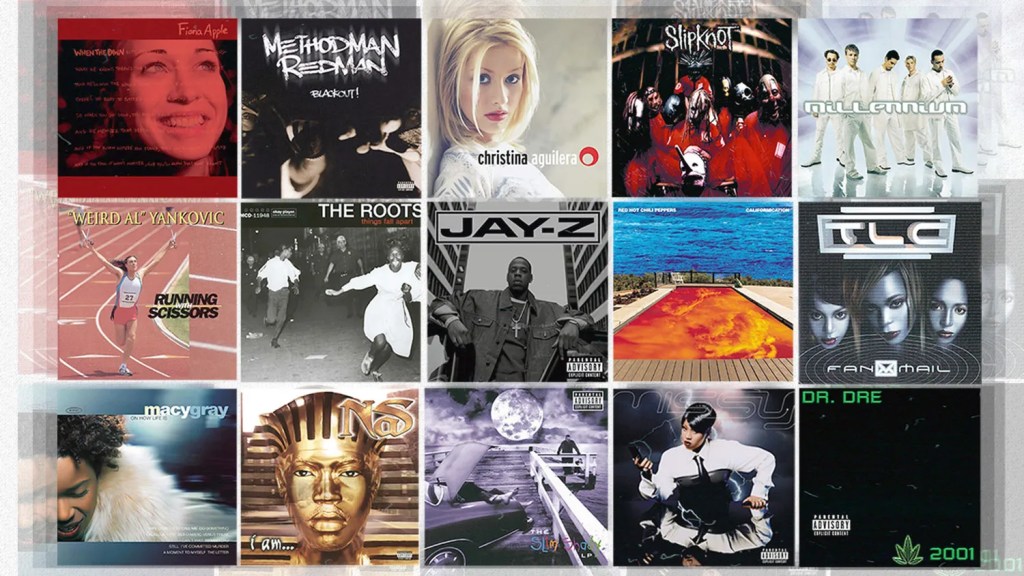
Latin Pop Goes Mainstream: Artists like Ricky Martin, Jennifer Lopez, and Enrique Iglesias brought Latin music to the forefront of American pop culture. The year 1999 was when “Livin’ la Vida Loca” became a global phenomenon. The year 1996 is when that “Ay Macarena!” song became popular, attracting the fascination of white people everywhere (Really…I think we just stopped doing the Macarena dance at weddings like two years ago lol).
The Bling Era of Rap: By the late 90s, Hip Hop started to become more commercialized and eventually morphed into the Bling Era, which would be very popular in the early 2000s. This was a time when there were a lot of rappers wearing shiny bling and there were shiny metal backgrounds on all the MTV videos. It would be easy to mistake the sets for many of these videos for the inside of a cheese grater. In 1999 we saw the release of Eminem’s “My Name Is,” Missy Elliot’s “Hot Boys,” B.G.’s “Bling Bling,” Ja Rule’s “Holla Holla,” and Nas’s “Nas is Like.”
Pop Punk: While people have been saying “rock is dead” since the late 60s, people were really saying and feeling that by the late 90s. This sentiment was caused by the meteoric rise of pop and hip hop, along with the death of grunge by the mid-90s. And yet despite that feeling, there was an emergence of many great pop punk bands that still have staying power today. These bands include Blink-182, The Offspring, Green Day, Sum 41, New Found Glory, Good Charlotte, and Jimmy Eat World.
Nu Metal: This new form of metal began to emerge in the late 90s. Though it would really experience its heyday in the early 2000s. The most popular bands were Korn, Slipknot, Papa Roach, Staind, and P.O.D. Nu metal has elements of heavy metal, industrial music, grunge, and even rap. Technically, it’s more simple on guitar than past forms of metal (rarely featuring guitar solos), and darker in nature with lots of drop D chords (for those of you who know what that means), and guitars that even feature an extra string to accomplish a heavier/darker sound. Nu Metal can include singing, rapping, growling, and sometimes even DJs to sample elements of techno. In particular, I’m very nostalgic about this form of music because it was what I listened to as a mall crawling, Hot Topic loving goth in middle and high school.
Pop Princesses: The late 90s was dominated by the popularity of pop princesses and pop divas. There were already the established stars such as Mariah Carey, Celine Dion, Whitney Houston, and Janet Jackson. In 1996, Celine Dion’s song from the Titanic was literally everywhere—you couldn’t escape it. The Spice Girls also heavily influenced pop in the mid to late 90s. However, new teen pop icons would emerge as well. Britney Spears broke onto the scene in 1999 with her debut album Baby One More Time. Christina Aguilera emerged around the same time, establishing her own powerful voice and career. Britney Spears in particular achieved massive success with her charismatic blend of teen pop and marketable image that captured the late 90s/early 2000s zeitgeist.
Boy Bands: I kept the most obvious one last. The late 90s and early 2000s were THE golden age for boy bands. This was driven by the immense commercial success of bands like Backstreet Boys and NSYNC who dominated the airways (along with their mini-me’s such as O-Town, LFO, 98 Degrees). Part of their meteoric success was due to marketing, a focus on fashion/appearances, and even the fan clubs that popped up around the bands. Many of my friends at that time loved to talk about which guy in the Backstreet Boys or NSYNC they had a crush on (I of course was the weirdo who listened to Linkin Park and had a crush on Vegeta from Dragon Ball Z, so I didn’t care). Thanks to MTV and TRL, many young people were also watching boy bands on TV every day. For more info, check out a brief history of boy bands.
Y2K Era Looks and Fashion (1997-2004)
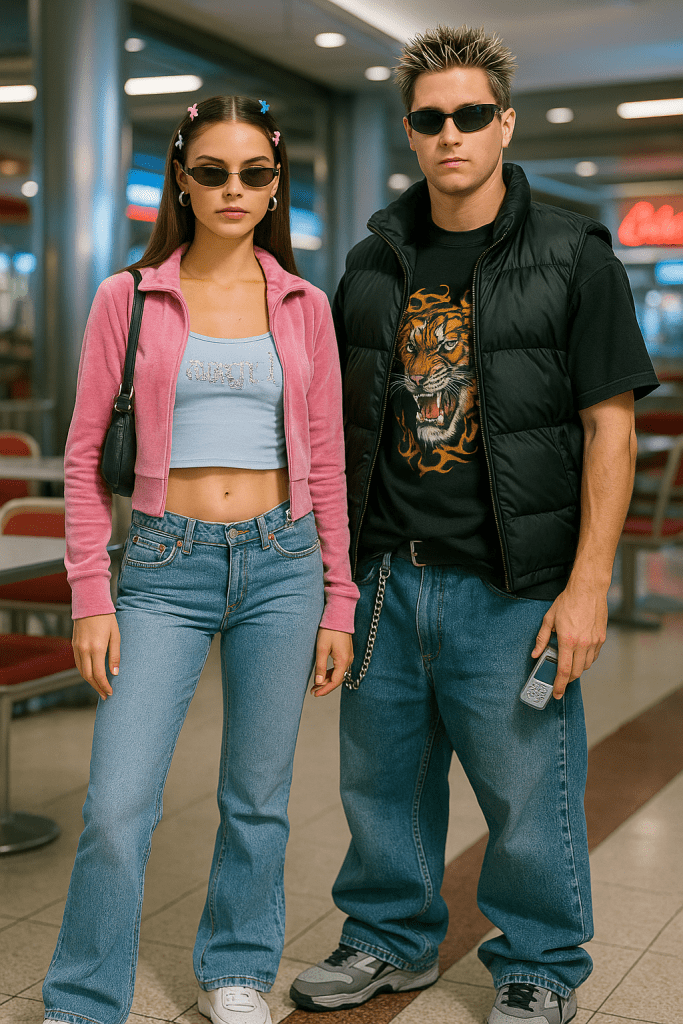
(In the image above I asked ChatGPT to capture Y2K fashion and I think it did a pretty good job. The setting at the food court is also relevant since people still hung out at malls back then).
The style in the Y2K era featured an eclectic mix of shiny metallic technological optimism with pop culture trends directly influenced by icons such as Britney Spears or the Backstreet Boys. The ideal silhouette was tight on the top and baggy on the bottom, with emphasis on showing the midriff. The ideal color palette was a futuristic shimmery, shiny, metallicness (this is a word I just made up) mixed with pop music hues of hot pink, lime green, and neon orange.
- Fashion for Women: Low-rise jeans with a wide or flared leg, crops tops, tube tops, rhinestone/baby tees, velour tracksuits, and pants with words like “juicy” or “angel” or “princess” or “baby” on the butt.
- Fashion for Men: Baggy jeans, graphic t-shirts, sports jerseys, and puffer vests.
- Hair: Chunky highlights and frosted tips.
- Makeup: Thin eyebrows (women would often wax their eyebrows), shimmery eyeshadow, lots and lots of lip gloss (you can’t underestimate how big lip gloss was!), and eyeliner was more subtle/less emphasized.
Read more about Y2K aesthetics here.
Y2K Fiction and Films

Created Recently
Y2K film (2024) – “Two high-school nobodies make the decision to crash a Y2K party. The night becomes even crazier than they could have ever dreamed when the clock strikes midnight.”
Honey a novel (2024) – “It is 1997, and Amber Young has received a life-changing call. It’s a chance thousands of girls would die for: the opportunity to join girl group Cloud9 in Los Angeles and escape her small town. She quickly finds herself in the orbits of fellow rising stars Gwen Morris, a driven singer-dancer, and Wes Kingston, a member of the biggest boy band in the world, ETA.”
10 Books to Fuel Your Y2K Nostalgia – This is a list of further books written recently, but focused on Y2K era nostalgia.
Popular Shows From the Late 90s
To understand the zeitgeist of the late 90s it’s key to watch shows like Friends and Sex and the City. Friends became popular for its timeless themes of navigating friendship (hence the name of the show), relationships, and early adulthood. It’s also experienced a re-emergence in popularity today for those who want to engage in Y2K nostalgia.
Sex and the City was also a big cultural hallmark of the time for its sex positive themes for women, which was edgy for the time. As I mentioned in my 90s Writer’s Guide, the 90s was a time in which sex positive feminism started becoming more prominent.
Popular Films
The year 1999 was when many iconic films were released such as The Matrix, Fight Club, American Pie, and 10 Things I Hate About You. While each of these films are still popular today, they also have key elements that represent something that was important at the time they were released.
The Matrix deals with greater questions about the impact of technology on reality and society.
Fight Club contends with themes of consumerism and its emptiness, masculinity or emasculation in modern society, identity crisis and alienation, and mental illness and repression.
American Pie – As I briefly mentioned in my 90s Writer’s Guide, the late 90s/early 2000s is when an era of “raunch culture” became popular, a phenomenon marked by the increased sexualization and objectification of women in the media. This can be seen in shows like The Man Show, Girls Gone Wild, and of course the film American Pie.
10 Things I Hate About You – This film is a great time capsule of teenage life in the late 90s. This includes a soundtrack that captures the pop-rock energy of the era, the fashion, the cliques and stereotypes of high school life.
Relevant Links

That’s all, folks!
If you enjoyed this guide, consider others written by Stories From Tomorrow!
Writer Setting Guide – The 90s
Game of Grunge – A Song of Rock and Hip Hop (Fanfiction on AO3)
World Building Guide for Writing Solarpunk
Here’s another article on why Y2K is hot
Y2K aesthetics are so hot right now – and so is the era’s existential dread (CNN). “The current looks scream “party,” but the vibe still whispers, “worry.” And there’s nothing more Y2K than that.”

 Stories From Tomorrow - Jessica Brook's Author Site