Writer Setting Guide – Y2K

“Y2K aesthetics are so hot right now – and so is the era’s existential dread.” –  Willingham, A. J.

The kids are wearing weird pants, chunky highlights are back, and silvery, space-age silhouettes are edging their way into vogue.

Like clockwork, the 20-year fashion cycle has made the late 90s/early 2000s cool again. For us millennials, this can bring back a nostalgia for our preteen/teenage years. And for the Gen Zs and Gen Alphas, this reflects a fascination with a time in which the internet did exist—but without all the doodads that make it suck (i.e. social media and smart devices).

If you’d like to write a story in this era (because you’re a Gen Z trying to impress your friends), or you’re a crusty old millennial like me who wants to take a walk down memory lane, let’s take a journey to the Y2K era. A time when dot com fever was on the rise, people messaged their friends on AIM, listened to boy bands, and liked lots and lots of plastic shiny things.

Disclaimers:

  • Don’t write toward trends for the sake of following a trend alone because trends can always change.

  • There’s only so much I can cover. I tried to cover the basics, but I’m sure there’s a lot I missed out on. I’m not writing a book y’all.

Major Events in the Year 1999:

  • Fear of the Y2K Bug: This is the obvious one to have on the list. The world experienced a widespread fear of computer shutdowns and civilization collapse due to a potential computer programming glitch known as the “Y2K Problem.” We’ll discuss this more below.

  • Bill Clinton Impeachment Trial: Let me tell ya, it was very awkward having to hear about a particular kind of white stain on the dress of the president’s intern almost constantly. The entire news cycle was dominated by talk of that stupid dress. Fun fact! My dad took me out of school to go see the president’s impeachment hearing!

  • Columbine High School Shooting: Back in 1999, school shootings were unheard of. (Oh to be back in such times, right?). So when it happened on April 20, 1999, it was all over the news. Some people were even blaming goth rocker Marilyn Manson for corrupting the youth.

  • Launch of Napster: This is a big one. On June 1, 1999, the peer-to-peer file-sharing platform was launched, forever changing music distribution. At that time, the norm was buying and listening to CDs. Napster would eventually lead to the shift in downloading music in the early 2000s. Metallica even sued Napster in 2000 for copyright infringement.

  • Big Film Releases: The Matrix, Fight Club, American Pie, 10 Things I Hate About You, and The Blair Witch Project.


What the Heck Was the Y2K Bug?

The Year 2000 Bug, or millennium bug (abbreviated as the “Y2K” bug), referred to a potential problem in computer systems.

In the early days of computers, memory was expensive, and computers generally had less of it than they do now. In order to save space, programmers abbreviated the four-digit year designation and stored only the final two digits. For example, computers recognized “98” as “1998.” So how would computers interpret “2000”?

There was a fear that when dates were moved from 1999 to 2000 that there would be massive crashes in programs that ran banking, utilities, communications, insurance, manufacturing, government, etc. There were also fears that key devices that used computer chips would fail, including medical equipment, temperature-control systems, and elevators. (Some people even said that planes would fall out of the sky!)

The theory was that when clocks struck midnight on January 1, 2000, affected computer systems, unsure of the year, would crash and worldwide chaos would ensue. Maybe civilization itself would even fall apart!

Obviously that didn’t happen (at least not in this timeline). But that would be cool if you wrote an alternative history in which it did.


U.S. Tech Usage in the Y2K Era
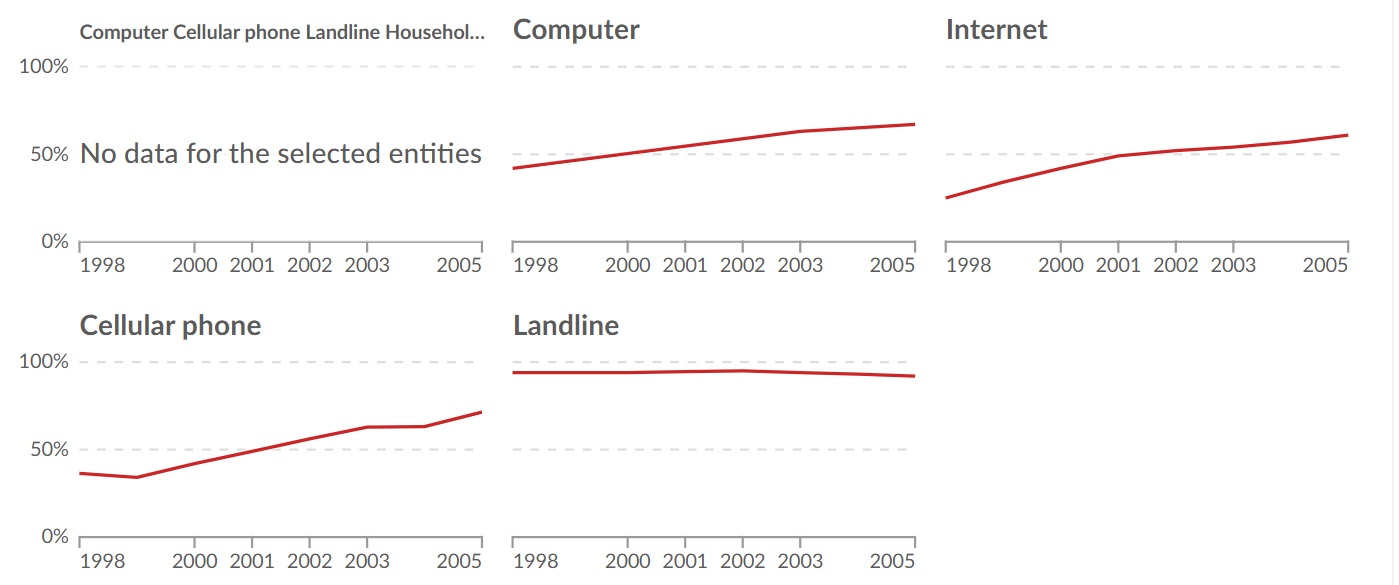
(Source – Our World in Data)

Note: When people refer to the “Y2K era,” they are referring broadly to the time between 1997-2004. In this guide, my focus was prominently on the year 1999, while also acknowledging elements of the late 90s and early 2000s.

The Internet:

As you can see above, 1999 was a turning point in which internet usage started to become more common in U.S. households (it wasn’t just for nerds anymore). People began using email more (even sending out email chains that promised a curse for not continuing the chain), bidding for things on eBay, getting spam about penis enlargement pills in their inboxes (OMG you can’t believe how common that was), talking in chat rooms, sending messages to friends on AIM with abbreviations like “lol” and “brb” and emojis, searching Ask Jeeves, and many people started using websites for the first time.
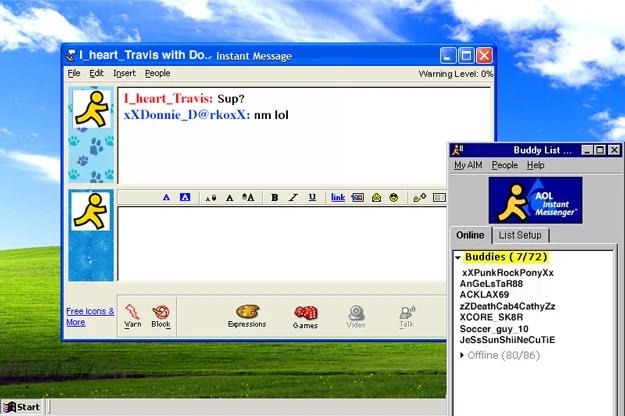
(A view of AIM from 1997 – Source)

Cyber cafes also started to emerge in this era. Though it seems they were more popular in other countries than the U.S. You could also have someone using the internet at work or school but not having access to it at home.

If you’re writing a story in the late 90s, it’s also important to understand how the internet was different than it is now. People still used dial-up, the internet came on an AOL CD, and you often couldn’t be on a landline phone and on the internet at the same time (without hearing a horrifying SCREEE EE ERRGHHH noise on the phone that sounded like a dying robot). The internet was also slower. Sometimes it could take so long for a page to load that I would get up, get a snack, and return while it was still loading. Though people were also more patient about this kind of thing since the internet was still new, exciting, and full of possibility—when it was “the information superhighway” and not a doom scrolling machine.

I think it’s significant that The Matrix came out in the year 1999, because this year marked the beginning of the shift from a more analog world to a digital one, and even an almost existential worry about where this shift could take us as a species.

SOME KEY TECH DEVELOPMENTS IN THE LATE 90s

1995 – eBay is founded.

1997 – AOL Instant Messenger (AIM) is released and becomes common by 1999.

1997 – The search engine Ask Jeeves comes out.

1999 – AOL buys Netscape. Peer-to-peer file sharing becomes a reality as Napster arrives on the internet, much to the displeasure of the music industry.

1999 – BlackBerry was introduced, a groundbreaking phone that would become an iconic device of high status businessmen and Wall Street executives.

2000 – The Y2K bug doesn’t kill us all and destroy civilization— phew!

Cellphones Were “Dumb Phones”

While cellphone usage in 1999 was still uncommon and largely dumb compared to the smart devices of today, this year represented a turning point where people were just starting to use cellphones more and cellphones were gaining more advanced features. Yet I’d say it would still be extremely uncommon for a teenager to have one. It wasn’t until the mid-2000s that it became commonplace. In general, people were more likely to call their friends on a landline, or possibly message a friend on AIM. Yet in 1999, having a device like a BlackBerry was quite a status symbol for high powered businessmen.

CDs Dominate for Music and Computer Games

(Image Source)

The CD-ROM as we know it was invented in the 80s, but it didn’t go into common use until the late 80s, when people started using it for gaming and music. In the year 1990, tape cassettes were more common for music. However, over time CDs became more prevalent than cassettes, to the point that CDs were the main way to listen to music, play computer games, and use the internet by the late 90s. Though I will mention, while use of floppy disks were becoming less common by the late 90s, people were still using floppy disks for file storage or computer programs. I remember using floppy disks up until the mid-2000s.

Also, people commonly said “CD.” Not many people casually used the term, “CD-ROM.”

VHS and DVDs

If you are wondering how people watched movies at home back then, VHS tapes were still the dominant format in 1999. However, by 2003, DVDs would finally surpass VHS.

Also, going to Blockbuster on a Friday night to rent a movie was still a popular activity among friends and family. Blockbuster is definitely a part of the Y2K era nostalgia.


Y2K Era Music
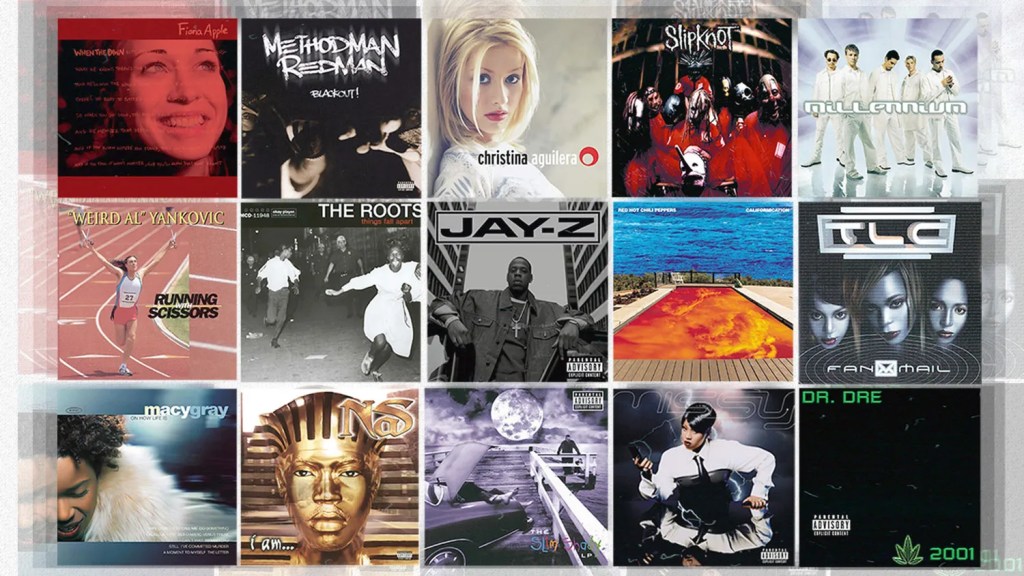
The above are hits from 1999. Image from Billoard.com.

Latin Pop Goes Mainstream: Artists like Ricky Martin, Jennifer Lopez, and Enrique Iglesias brought Latin music to the forefront of American pop culture. The year 1999 was when “Livin’ la Vida Loca” became a global phenomenon. The year 1996 is when that “Ay Macarena!” song became popular, attracting the fascination of white people everywhere (Really…I think we just stopped doing the Macarena dance at weddings like two years ago lol).

The Bling Era of Rap: By the late 90s, Hip Hop started to become more commercialized and eventually morphed into the Bling Era, which would be very popular in the early 2000s. This was a time when there were a lot of rappers wearing shiny bling and there were shiny metal backgrounds on all the MTV videos. It would be easy to mistake the sets for many of these videos for the inside of a cheese grater. In 1999 we saw the release of Eminem’s “My Name Is,” Missy Elliot’s “Hot Boys,” B.G.’s “Bling Bling,” Ja Rule’s “Holla Holla,” and Nas’s “Nas is Like.”

Pop Punk: While people have been saying “rock is dead” since the late 60s, people were really saying and feeling that by the late 90s. This sentiment was caused by the meteoric rise of pop and hip hop, along with the death of grunge by the mid-90s. And yet despite that feeling, there was an emergence of many great pop punk bands that still have staying power today. These bands include Blink-182, The Offspring, Green Day, Sum 41, New Found Glory, Good Charlotte, and Jimmy Eat World.

Nu Metal: This new form of metal began to emerge in the late 90s. Though it would really experience its heyday in the early 2000s. The most popular bands were Korn, Slipknot, Papa Roach, Staind, and P.O.D. Nu metal has elements of heavy metal, industrial music, grunge, and even rap. Technically, it’s more simple on guitar than past forms of metal (rarely featuring guitar solos), and darker in nature with lots of drop D chords (for those of you who know what that means), and guitars that even feature an extra string to accomplish a heavier/darker sound. Nu Metal can include singing, rapping, growling, and sometimes even DJs to sample elements of techno. In particular, I’m very nostalgic about this form of music because it was what I listened to as a mall crawling, Hot Topic loving goth in middle and high school.

Pop Princesses: The late 90s was dominated by the popularity of pop princesses and pop divas. There were already the established stars such as Mariah Carey, Celine Dion, Whitney Houston, and Janet Jackson. In 1996, Celine Dion’s song from the Titanic was literally everywhere—you couldn’t escape it. The Spice Girls also heavily influenced pop in the mid to late 90s. However, new teen pop icons would emerge as well. Britney Spears broke onto the scene in 1999 with her debut album Baby One More Time. Christina Aguilera emerged around the same time, establishing her own powerful voice and career. Britney Spears in particular achieved massive success with her charismatic blend of teen pop and marketable image that captured the late 90s/early 2000s zeitgeist.

Boy Bands: I kept the most obvious one last. The late 90s and early 2000s were THE golden age for boy bands. This was driven by the immense commercial success of bands like Backstreet Boys and NSYNC who dominated the airways (along with their mini-me’s such as O-Town, LFO, 98 Degrees). Part of their meteoric success was due to marketing, a focus on fashion/appearances, and even the fan clubs that popped up around the bands. Many of my friends at that time loved to talk about which guy in the Backstreet Boys or NSYNC they had a crush on (I of course was the weirdo who listened to Linkin Park and had a crush on Vegeta from Dragon Ball Z, so I didn’t care). Thanks to MTV and TRL, many young people were also watching boy bands on TV every day. For more info, check out a brief history of boy bands.


Y2K Era Looks and Fashion (1997-2004)
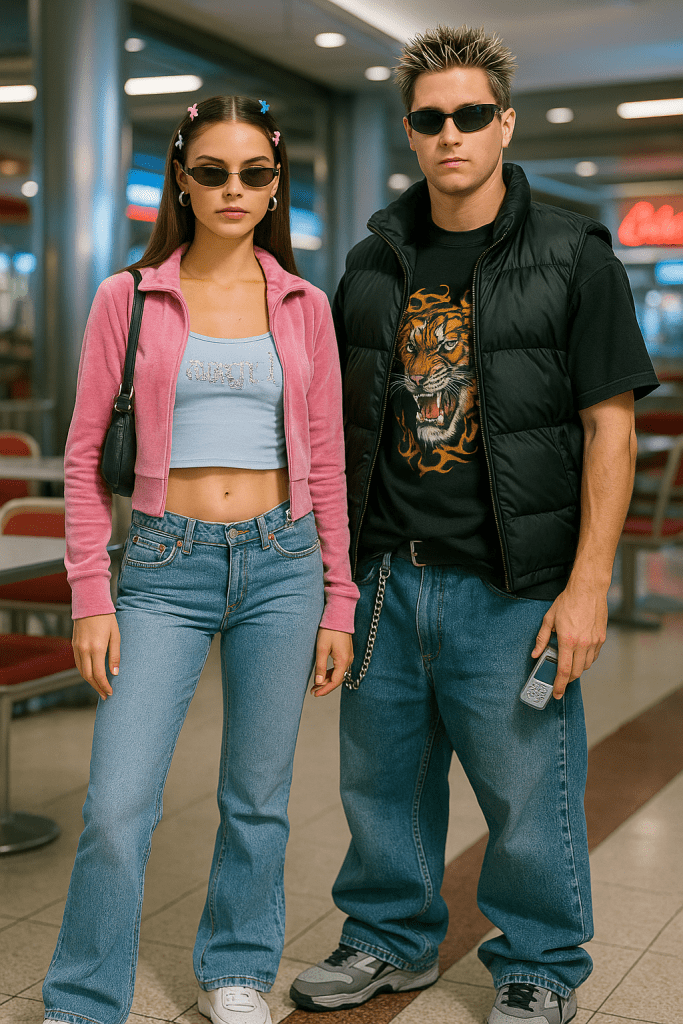
(In the image above I asked ChatGPT to capture Y2K fashion and I think it did a pretty good job. The setting at the food court is also relevant since people still hung out at malls back then).

The style in the Y2K era featured an eclectic mix of shiny metallic technological optimism with pop culture trends directly influenced by icons such as Britney Spears or the Backstreet Boys. The ideal silhouette was tight on the top and baggy on the bottom, with emphasis on showing the midriff. The ideal color palette was a futuristic shimmery, shiny, metallicness (this is a word I just made up) mixed with pop music hues of hot pink, lime green, and neon orange.

  • Fashion for Women: Low-rise jeans with a wide or flared leg, crops tops, tube tops, rhinestone/baby tees, velour tracksuits, and pants with words like “juicy” or “angel” or “princess” or “baby” on the butt.

  • Fashion for Men: Baggy jeans, graphic t-shirts, sports jerseys, and puffer vests.

  • Hair: Chunky highlights and frosted tips.

  • Makeup: Thin eyebrows (women would often wax their eyebrows), shimmery eyeshadow, lots and lots of lip gloss (you can’t underestimate how big lip gloss was!), and eyeliner was more subtle/less emphasized.

Read more about Y2K aesthetics here.


Y2K Fiction and Films

Created Recently

Y2K film (2024) – “Two high-school nobodies make the decision to crash a Y2K party. The night becomes even crazier than they could have ever dreamed when the clock strikes midnight.”

Honey a novel (2024) – “It is 1997, and Amber Young has received a life-changing call. It’s a chance thousands of girls would die for: the opportunity to join girl group Cloud9 in Los Angeles and escape her small town. She quickly finds herself in the orbits of fellow rising stars Gwen Morris, a driven singer-dancer, and Wes Kingston, a member of the biggest boy band in the world, ETA.”

10 Books to Fuel Your Y2K Nostalgia – This is a list of further books written recently, but focused on Y2K era nostalgia.

Popular Shows From the Late 90s

To understand the zeitgeist of the late 90s it’s key to watch shows like Friends and Sex and the City. Friends became popular for its timeless themes of navigating friendship (hence the name of the show), relationships, and early adulthood. It’s also experienced a re-emergence in popularity today for those who want to engage in Y2K nostalgia.

Sex and the City was also a big cultural hallmark of the time for its sex positive themes for women, which was edgy for the time. As I mentioned in my 90s Writer’s Guide, the 90s was a time in which sex positive feminism started becoming more prominent.

Popular Films

The year 1999 was when many iconic films were released such as The Matrix, Fight Club, American Pie, and 10 Things I Hate About You. While each of these films are still popular today, they also have key elements that represent something that was important at the time they were released.

The Matrix deals with greater questions about the impact of technology on reality and society.

Fight Club contends with themes of consumerism and its emptiness, masculinity or emasculation in modern society, identity crisis and alienation, and mental illness and repression.

American Pie – As I briefly mentioned in my 90s Writer’s Guide, the late 90s/early 2000s is when an era of “raunch culture” became popular, a phenomenon marked by the increased sexualization and objectification of women in the media. This can be seen in shows like The Man Show, Girls Gone Wild, and of course the film American Pie.

10 Things I Hate About You – This film is a great time capsule of teenage life in the late 90s. This includes a soundtrack that captures the pop-rock energy of the era, the fashion, the cliques and stereotypes of high school life.


Relevant Links

That’s all, folks!

If you enjoyed this guide, consider others written by Stories From Tomorrow!

Writer Setting Guide – The 90s

Game of Grunge – A Song of Rock and Hip Hop (Fanfiction on AO3)

World Building Guide for Writing Solarpunk

Here’s another article on why Y2K is hot

Y2K aesthetics are so hot right now – and so is the era’s existential dread (CNN). “The current looks scream “party,” but the vibe still whispers, “worry.” And there’s nothing more Y2K than that.”
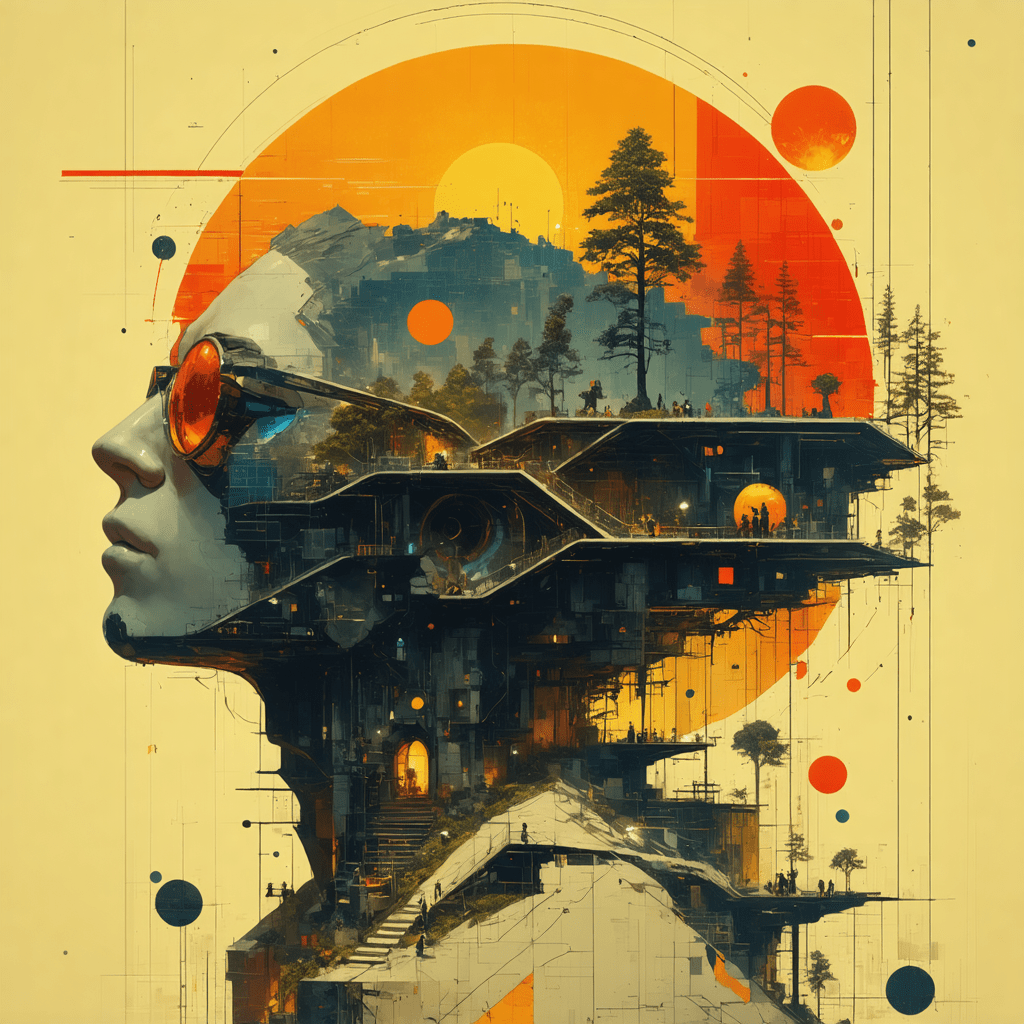
World Building Guide for Writing Solarpunk

Happy Earth Month!

In honor of Earth Month, I wanted to put together a guide for the literary genre our world needs right now. Solarpunk!

Right now we’re living in an era where it’s hard not to feel gloomy. The term “doom scrolling” is popular for a reason.

But what if instead of using our mental energy to doom scroll, we used our imaginations to conceive of a better future, where nature, technology, utopia, and human compassion came together to build a better world, a brighter world full of hope and optimism.

Enter Solarpunk. Solarpunk is a literary and artistic movement that envisions a sustainable future interconnected with nature and community. Contrary to the tech and capitalist heavy themes of Cyberpunk, Solarpunk imagines a world where we’ve evolved beyond hyper consumerism, and we have learned to live with nature in harmony. For this reason, Solarpunk is not just a fun read, but it’s often a call to action in our world to build a better future.

The term “Solarpunk” was coined in 2008 in a blog post titled “From Steampunk to Solarpunk.” The term combines the words “solar” and “punk”: “Solar” represents a world more reliant on solar energy, but the connotation of the word can also evoke a bright and sunny world full of vibrant colors and optimism. The word “punk” alludes to a grouping with other fiction subgenres, such as cyberpunk, dieselpunk, and steampunk; it also refers to a DIY (Do it yourself) counter culture.

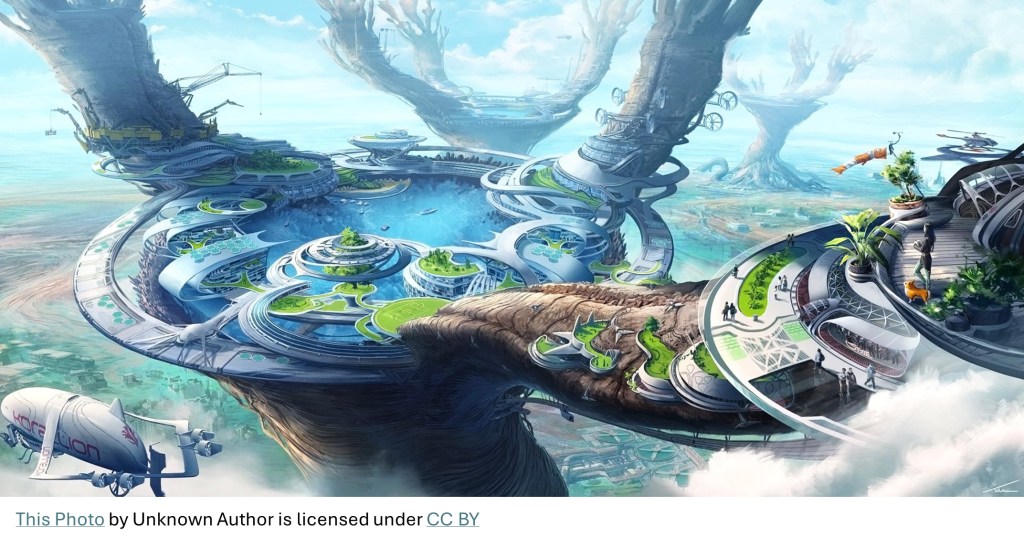
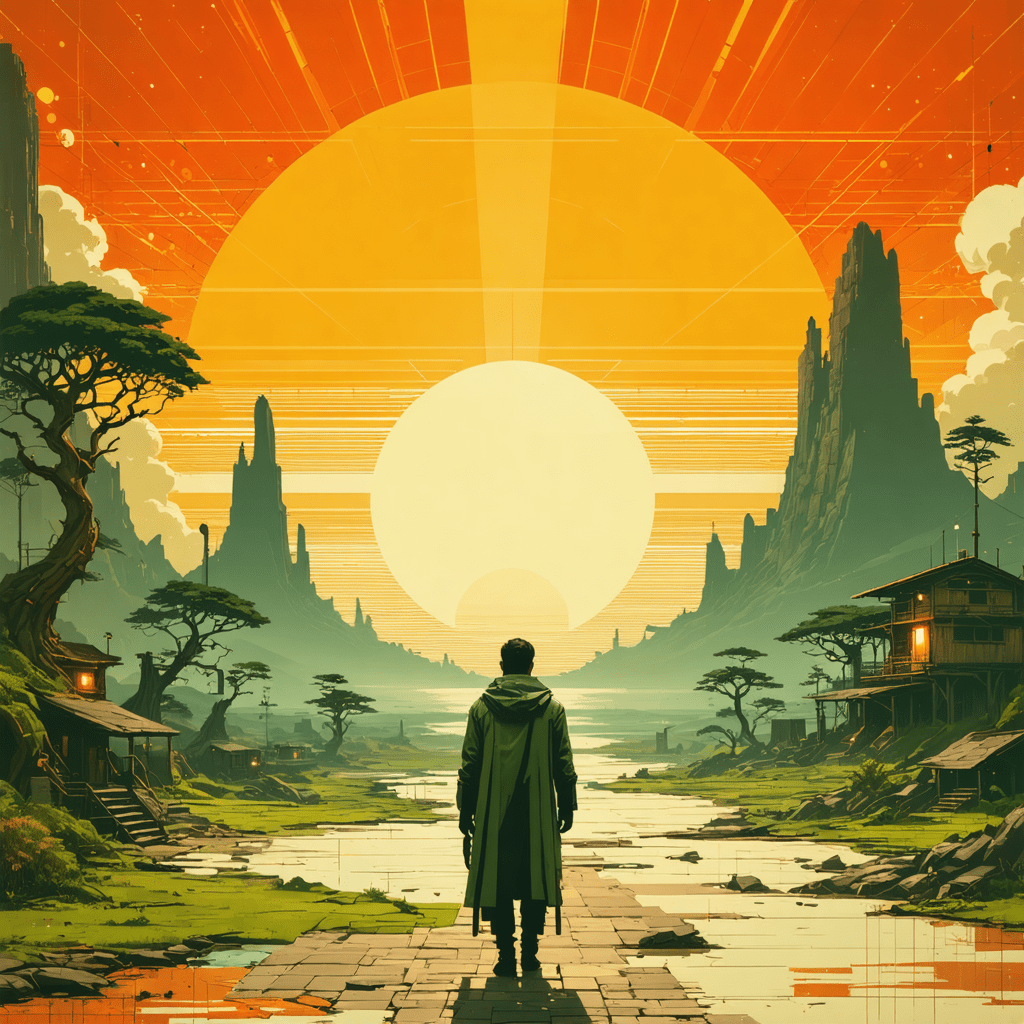
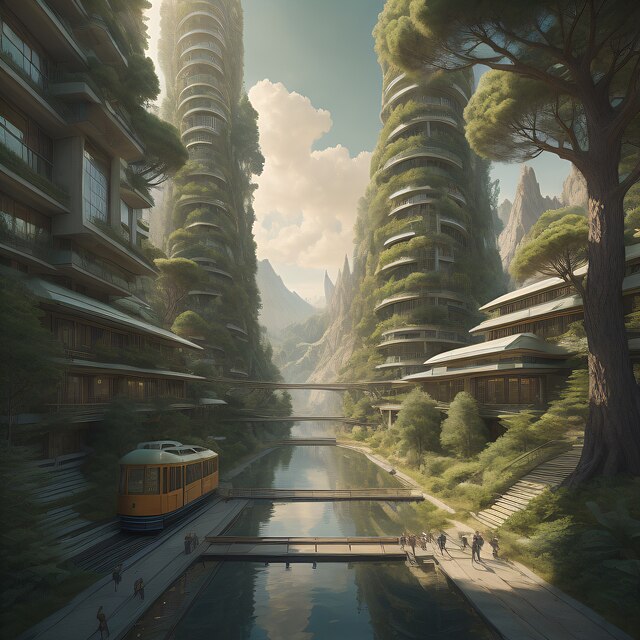
(The above image is creative commons licensed and can be found here)

Impactful Quotes About Solarpunk:

“Dystopian stories surely have a place, as a warning, but sometimes I feel like I’ve been warned enough. I want to know what to do in the face of despair, to not only avoid being crushed, but to reach for brighter skies. In times like those, I look for books that are part of an expanding genre — and a growing social movement — a counternarrative that has infused my days with hope. More and more lately, I find myself reading solarpunk.”

Quote Source: How solarpunk helped alleviate my existential dread

A new movement in SF that examines the possibility of a future in which currently emerging movements in society such as green movement, Black Lives Matter movement, and certain aspects of Occupy Wall Street coalesce to create more optimistic future in a more just world.

Quote Source: Cultural Elements in World-Building of Solarpunk Short Stories

Solarpunk with Capitalism is just greenwashed cyberpunk.

Quote Source: Reddit Post


Solarpunk Ethos:

The ethos of Solarpunk represents a world that has evolved beyond material capitalism.

It is a world in which knowledge sharing and resource sharing are encouraged. Technology has an open-source model.

The focus of this genre is often on local communities rather than globalism. Businesses often have a worker-owned model.


Popular Themes:

The following themes are popular in the world of Solarpunk.

  • Environmentalism
  • Renewable energy and sustainable tech.
  • DIY (Do It Yourself), ingenuity, localized resilience
  • Social justice
  • Feminism
  • Optimism
  • Historically marginalized communities, such as BIPOC and LGBTQIA+ folk are highlighted. Non-Western cultures are also highlighted
  • Animal rights
  • Localism over globalism, decentralization
  • Long term designs over built in obsolescence
  • Eco-anarchism and eco-socialism
  • Post capitalist, post scarcity societies, universal basic income, anticapitalism, anti-greenwashing
  • Antiwar

Artistic Inspiration:

  • The artistic genre of Solarpunk often uses the Art Nouveau style. Art Nouveau, which means “new art” in French, is an international ornamental art style that flourished from about 1890 to 1910, characterized by flowing, organic lines, floral and plant-inspired motifs, and a focus on integrating art into everyday life. “In particular, Art Nouveau became an aesthetic touchstone for solarpunk…not only because of its penchant for earthy, organic forms, but also because it’s both ornate and approachable, according to Rosie Albrecht, editor of solarpunk zine Optopia (source)”
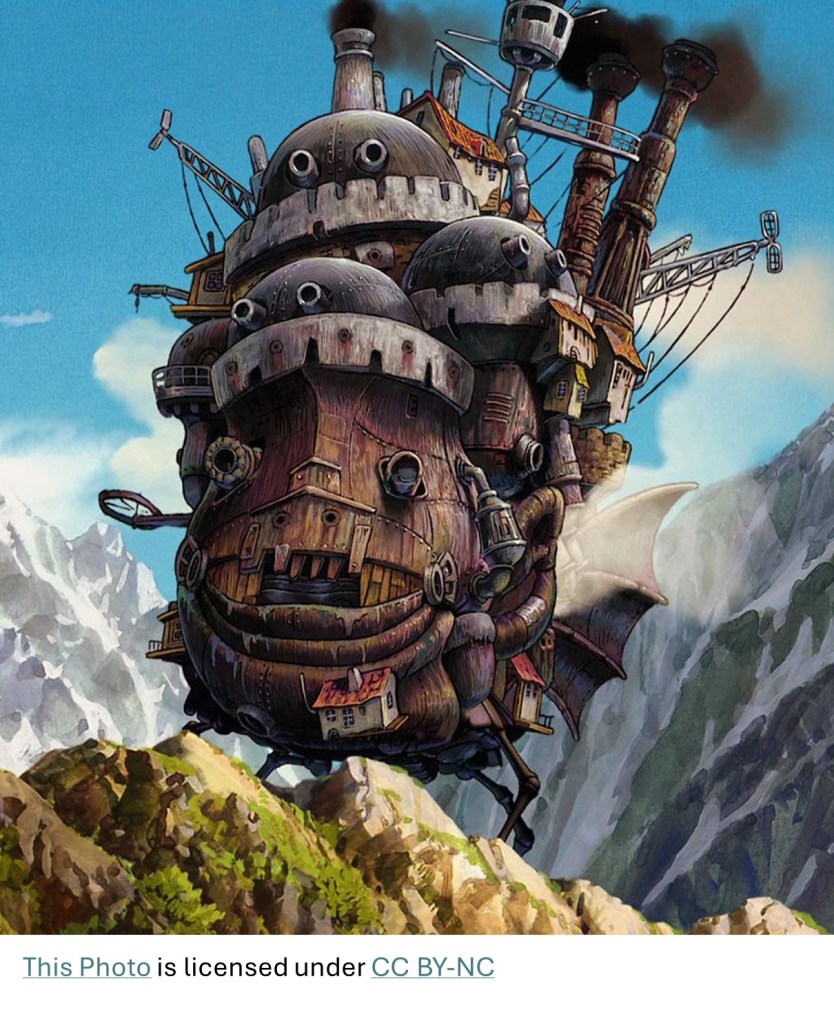
  • The Solarpunk aesthetic also makes heavy use of bright colors and is often inspired by Studio Ghibli movies, particularly Castle in the Sky and Nausicaä of the Valley of the Wind.
  • 1800s age-of-sail/frontier living (but with more bicycles)
  • Jugaad is a concept of non-conventional, frugal innovation in the Indian subcontinent. It includes innovative fixes or simple workarounds, solutions that bend the rules, or resources that can be used in such a way. It is considered creative to make existing things work and create new things with meager resources.
  • Stained glass windows used as solar panels.

Solarpunk Fashion

  • Sustainable
  • Thrift clothes
  • Recycled uniforms and armor
  • A love of nature shines through (flowers, animals, plants)
  • Practical
  • Includes diversity of cultures

Ideas for Tech:

When thinking about how tech functions in a solarpunk world, it’s not merely enough to slap some solarpanels on a roof and call it a day. Technology does not exist in a vacuum. We must also consider how it’s used and extracted by the culture of the society it exists within. For instance, under an imperialist-fascist state, solar panels do nothing to change the exploitative relationship between humans and the planet. Plundering the natural world and using abused workers to create electric batteries or solarpanels is not solarpunk.

So technological solutions within a solarpunk literary world must be integrated into ideas of humane relations with our fellow human beings and the planet. Solarpunk also isn’t always high or low tech. It depends upon the context and the culture it exists amongst. Much like our current world, the applications of the technology could be extremely diverse.

Solarpunk isn’t “anti-tech”, but it doesn’t romanticize technology either.

Two criteria for uses of solarpunk tech are the following: Is it equitable Is it sustainable?

Examples of solarpunk tech:

Below I’m going to generate a collection of ideas you can expand upon in your own stories. I’m not claiming the list is perfect. I’m sure there are ways that some of the items here could potentially be used in an exploitative way if it gets in the wrong hands, but such is human nature. Humans are gonna human. If anything, that could be a great source of tension in your story.

⚡️Energy Tech

  • Transparent Solar Panels – integrated into windows or even wearable fabrics.
  • Personal Wind Turbines – compact vertical-axis turbines for urban rooftops or balconies.
  • Algae Bio-reactors – used on buildings to generate energy and purify air.
  • Piezoelectric Flooring – captures energy from footsteps in public spaces.
  • Smart Energy Grids – decentralized and powered by community-run solar or wind co-ops.
  • Kinetic Batteries – store energy generated from human motion (e.g., walking, cycling, or dancing) for personal or community use.
  • Hydro Projects – small-scale, ecologically sensitive water turbines and current harvesters used in rivers, streams, or coastal flows to produce clean energy.
  • Wind Farms – large-scale turbine networks strategically placed on land or offshore, managed by local cooperatives or bioregional councils.
  • Solar Arrays – fields or rooftops lined with solar panels, often community-owned, that feed into local grids or energy commons.
  • Biogas Fuel Systems – anaerobic digesters convert organic waste (like food scraps or manure) into methane-rich biogas, which can be used for cooking, heating, electricity, or as vehicle fuel—closing waste loops and providing clean energy in both rural and urban settings.

🌬️ Low-Tech Renaissance

A redditor brought up a great point that my guide leaned toward the high-tech side of the genre, but that solarpunk can also be a return to low-tech. A return to low-tech doesn’t mean regression; it means refinement. Solarpunk societies embrace tools and techniques that are sustainable, repairable, and human-scaled. These technologies are rooted in harmony with the earth and designed for long-term care rather than short-term gain.

  • Sail & Ship Networks – Instead of high-emission air travel, long-distance journeys could rely on ships that sail across the ocean.
  • Windmills & Waterwheels – Time-honored energy sources could make a comeback, quietly powering villages, artisan workshops, and micro-grids. Designed with elegance and ecological sensitivity, they are living symbols of regeneration and place-based resilience.
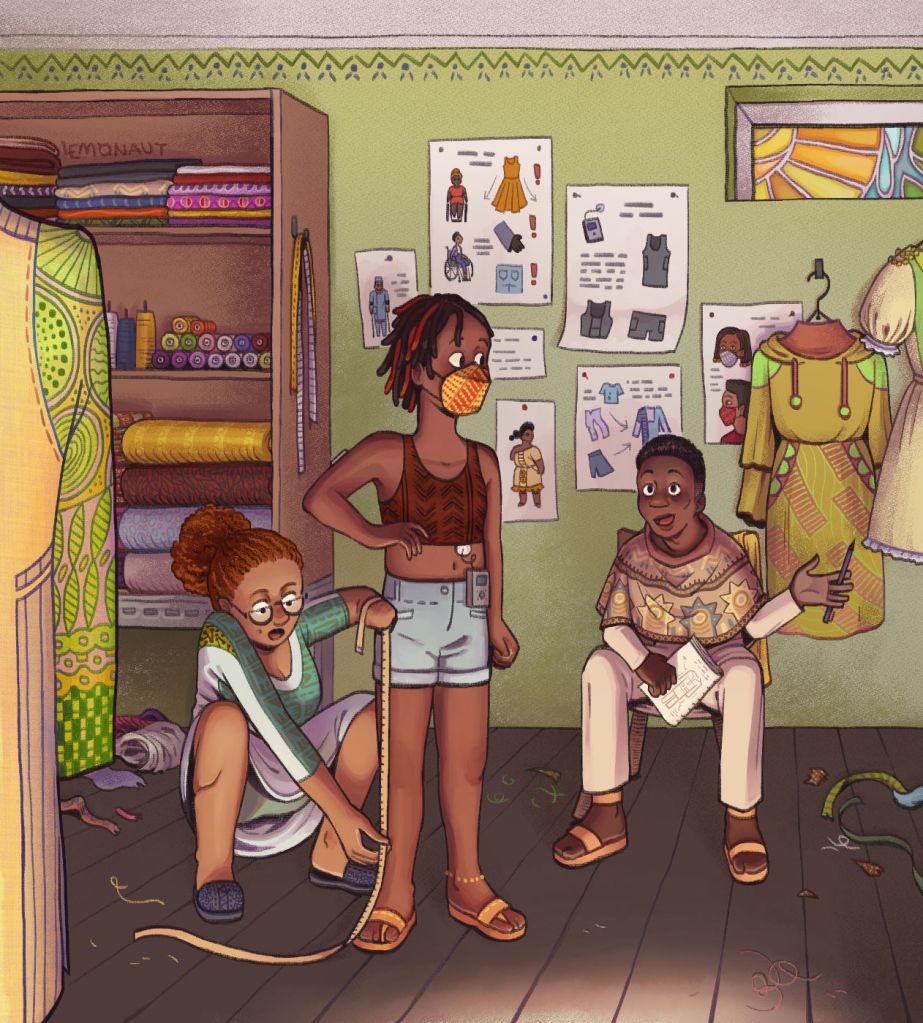
  • Village Tailors & Community Cobblers – Clothing and shoes may no longer be mass-produced but crafted with skill and care by local artisans using natural fibers and recycled materials. Fashion becomes personal, circular, and expressive of shared values.
  • Open-Air Workshops – Community workspaces powered by pedal, solar, or hand tools offer locals the means to build, mend, and make with intention. From bicycles to furniture, goods are created to last—and meant to be passed down, not thrown away.
  • Slow Roads – Pathways made for carts, bicycles, walking, and animal companions invite slower travel and deeper connection. These routes are dotted with rest stations, food gardens, and communal gathering spaces.
  • Craft Guilds & Apprenticeships – Knowledge transmission happens face to face, generation to generation. Skills like blacksmithing, herbalism, fermentation, and textile arts are cherished as both livelihood and culture.
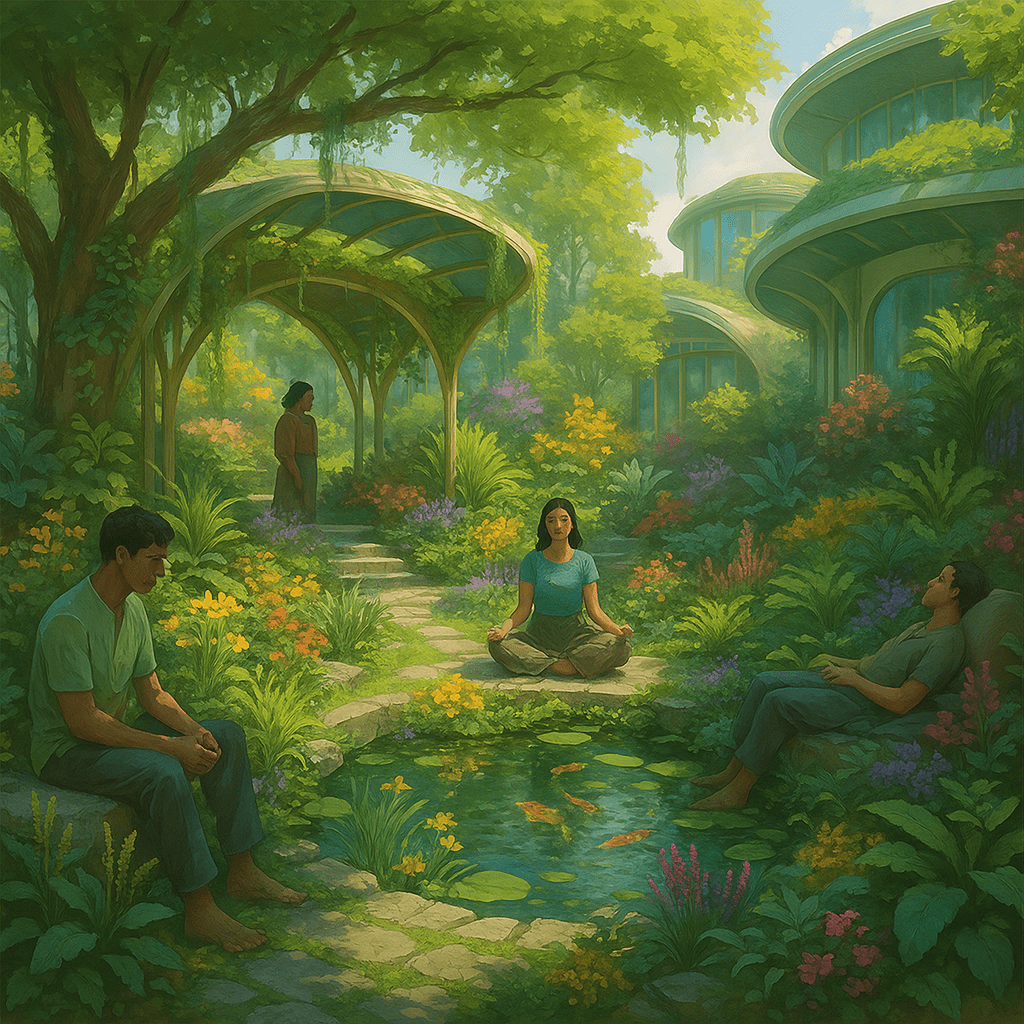
  • Off-Grid Sanctuaries – Healing retreats and study centers located deep in forest clearings, deserts, or mountain valleys rely on low-tech tools, local foods, and deep ecology to support recovery from burnout, grief, and disconnection.

🚜 Agriculture & Food

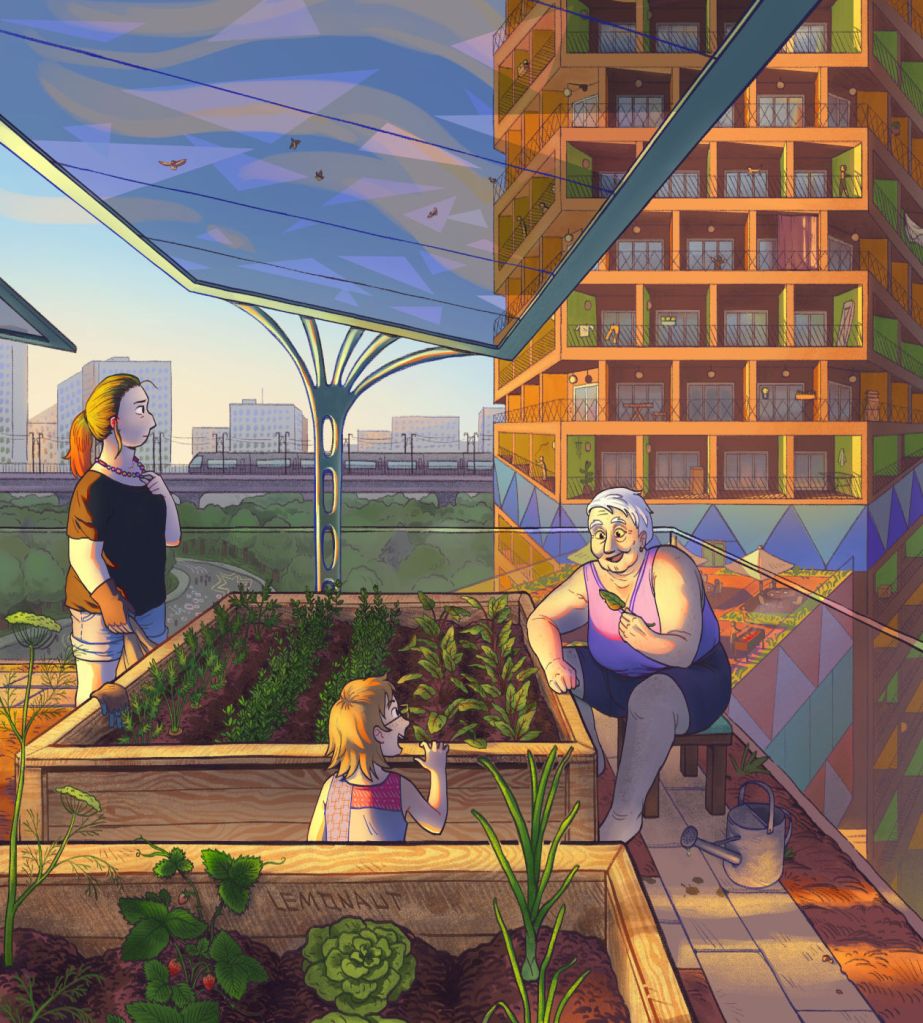
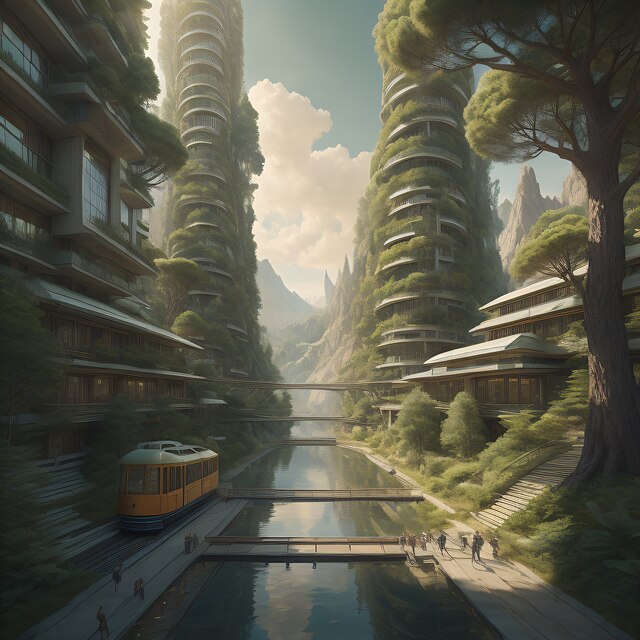
(This art is from The Lemonaut, who has made their art piece ‘A Solarpunk Tower‘ available for public use.)

  • Vertical Forest Towers – skyscrapers covered in trees and gardens for food production and air purification.
  • Smart Permaculture Systems – using sensors and AI to manage polycultures and water flow.
  • Hydroponic & Aeroponic Wall Gardens – growing food in apartments, on balconies, or on public buildings.
  • Mushroom-Based Packaging & Materials – biodegradable and grown locally.
  • Community Food Printers – 3D-printing meals from organic, local paste materials.
  • Biotech Gardens – genetically tailored plants grown for specific nutrients, climates, or medicinal properties, often co-designed with local healers or AI.
  • Clean Water Silos – vertical reservoirs that collect, filter, and store rainwater for irrigation and drinking, often integrated into garden infrastructure.
  • Ecogrid Interfaces – digital dashboards that allow communities to monitor soil health, water usage, crop readiness, and pollination data in real time.
  • Purification Plants – decentralized, eco-engineered water purification facilities that use layers of sand, charcoal, aquatic plants, and engineered microbes to clean greywater and storm runoff for reuse in agriculture and homes.
  • Harvester Titans – towering, solar-powered automata that tend and harvest large-scale vertical farms and biodiverse fields with delicate precision.
  • Pollination Drones – gentle, bee-sized drones that assist in crop pollination in balance with natural pollinators, guided by AI to avoid ecosystem disruption.
  • Cannabis and Hemp Systems – widespread cultivation of hemp and cannabis for sustainable textiles, biodegradable plastics, building materials (like hempcrete), oils, medicine, and soil regeneration—integrated into closed-loop agricultural and industrial systems.
  • Shift to Plant-Based Diets – many solarpunk communities could emphasize vegetarian or vegan lifestyles to reduce land use, emissions, and animal suffering, while celebrating culinary creativity and plant diversity.
  • Insect Farming – small-scale, ethical insect farms could provide high-protein, low-impact nutrition and compostable byproducts, used in community kitchens or food printers with minimal environmental footprint. (For more on solarpunk about insect farming, check out this story here).

🚲 Transportation

  • Solar-Electric Bikes – charge themselves while parked in the sun.
  • Hyperloop-like Community Transit – ultra-efficient intercity tubes powered by renewables.
  • Maglev Cargo Drones – clean, quiet deliveries between green rooftops or decentralized hubs.
  • Glider Roosts – launch and landing platforms for solar-gliders and personal winged transport, often built into cliffs, towers, or floating pads above green cities.
  • Shared Mobility Pods – electric, autonomous, and summoned via a community-run app.
  • Mass Transit – high-capacity, clean-energy transportation systems (like electric trams, solar subways, and suspended railways) that connect neighborhoods, eco-villages, and bioregional hubs with seamless accessibility and zero emissions. Mass transit is more ecofriendly than individual transit because more people are using the same vehicle, reducing waste.
  • Mobile Homes and Nomadic Lifestyle – compact, solar-powered dwellings on wheels or tracks that allow people to live nomadically while minimizing ecological impact; often shared among communities, artist collectives, or seasonal workers and parked in rotating eco-zones with resource-sharing hubs. A nomadic farmer lifestyle (if carbon free) could be more ecofriendly, as farmers aren’t using the same land over and over, and giving it a chance to replenish itself.

🎓 Information & Education

(More artwork from The Lemonaut. This piece is “A prosthesis maintenance day at the hackerspace“)

  • Community Mesh Networks – free, decentralized internet not reliant on big corporations.
  • Augmented Reality for Nature Education – overlaying info on plants/animals/eco-systems in real time.
  • Digital Seed Libraries – sharing open-source genetic data and growing guides.
  • Localized Learning Pods – tech-enabled home or neighborhood schools with flexible, community-based curricula.

🏛️Architecture & Infrastructure

  • Green Cities – urban areas designed around nature rather than over it, featuring dense canopy cover, integrated food forests, rooftop gardens, car-free zones, and buildings that act as part of the local ecosystem.
  • Green Avenues – wide, plant-lined boulevards that prioritize pedestrians, cyclists, and wildlife over vehicles, with integrated water channels, edible landscapes, shaded walkways, and solar lighting.
  • Vertical Gardens – living walls and stacked growing systems that provide food, purify air, and insulate buildings, often integrated into homes, schools, and public spaces.
  • Living Buildings – structures made from bioengineered materials that self-heal, grow, and clean the air.
  • Solar Paint – coats walls/roofs with light-absorbing nanomaterials.
  • Water-Harvesting Facades – designed to collect and purify rain or fog water.
  • Bioluminescent Pathways – glowing moss or engineered plants that light walkways at night without electricity.
  • Guerrilla Gardening – grassroots planting efforts in abandoned lots, roadside medians, or neglected corners of the city—transforming forgotten spaces into thriving gardens and biodiversity pockets, often without official permission.

🏘️ Eco-Architecture & Local Tech

  • Earthships – off-grid homes made from natural and recycled materials, with built-in water harvesting, passive heating/cooling, food growing, and waste systems.
  • Localized Material Tech – using regional materials (e.g., adobe, bamboo, volcanic rock, clay, algae) for construction, tech housing, and tools—optimized by AI to ensure durability and ecological harmony.
  • Modular Green Micro-Hubs – plug-and-play, solar-powered pods used for mobile clinics, education, or maker spaces, built from local biocomposites.

🌳 Integration with Nature and Forests

In solarpunk societies, nature is not something to be tamed or walled off—it is home, teacher, and ally. Landscapes are cultivated with reverence, cities and ecosystems coexist, and human responsibility is rooted in reciprocity and regeneration.

  • Land Conservation – expansive zones of protected wilderness co-managed by local communities, scientists, and indigenous caretakers, often monitored with eco-drones and supported by regenerative land use practices.
  • Integrated Forests – forests designed in collaboration with local ecosystems to blend food production, wildlife corridors, spiritual spaces, and climate resilience into the heart of every city, village, or biome.
  • Ranger Stations – solar-powered, earth-integrated outposts where ecological stewards live and work, tending forest health, assisting with wildlife care, and offering eco-literacy education to travelers and residents.
  • Food Forests – layered, self-sustaining ecosystems of edible plants, fruit trees, herbs, and fungi that mimic natural forest systems while providing abundant nourishment for humans and wildlife alike.
  • Coppicing and Pollarding – traditional woodland management techniques revived for sustainable timber, fuel, and craft material harvesting—encouraging long-term tree health and biodiversity while maintaining human-nature reciprocity.

♻️Waste & Circular Economy

A focus on extending the life span of tech, or utilizing waste, will be key in a solarpunk society, rather than the planned obsolescence we have in our current consumer society.

  • Smart Composting Toilets – odorless, clean, and turns waste into garden fuel.
  • AI-Driven Material Recyclers – neighborhood hubs that auto-sort and repurpose everything.
  • Upcycling Fabricators – small home devices that remake broken objects into new tools.
  • Blockchain for Zero-Waste Supply Chains – transparent tracking of materials from source to product to reuse.
  • Repair Garages – community-run workshops where people fix appliances, clothing, furniture, and tech together, sharing tools, knowledge, and skills to extend the life of every object.
  • Nuclear Reclamation Zones – long-term environmental healing projects that use biotech, fungi, and solar-powered robotics to detoxify and restore areas damaged by nuclear waste or meltdown sites, turning them into future sanctuaries or research gardens.
  • Ocean Plastic Harvesters – elegant marine drones and floating fungi rafts that collect microplastics and waste from the ocean, breaking them down into usable materials or feeding them into offshore bio-processing stations for reuse in construction, textiles, and tools.
  • Upcycled Tech Nodes – tech made from e-waste and scrap, locally repaired or refabricated using open-source designs and local knowledge.
  • Solar Forges – community workshops using intense solar reflectors to melt and reshape metals or glass without fossil fuels.
  • Biodegradable Tech Shells – devices (like phones or tools) made with organic exteriors that decompose safely once obsolete.
  • Repurposed Ruins – abandoned buildings, infrastructure, and industrial sites creatively transformed into gardens, homes, maker spaces, or cultural centers—honoring the past while reclaiming space for regenerative community use.

🤖 Tech & Robotics

In a solarpunk world, technology is decentralized, open-source, and designed for harmony with nature—not profit. Robotics and digital tools serve communities, not corporations, and often integrate with biology, local materials, and ecological systems.

  • Tech Markets – open-air or digital marketplaces where inventors, tinkerers, and communities exchange custom tools, code, micro-devices, and repair parts; often local, open-source, and governed by mutual aid.
  • Bot/Machine Shops – cooperative workshops where communities design, build, and maintain helpful robots and devices for farming, energy, caregiving, and exploration. Often part of neighborhood maker hubs or education centers.
  • AI Companions – emotionally intelligent digital beings trained to support mental health, creativity, memory-keeping, and spiritual reflection. Designed with ethical boundaries and community oversight.
  • Mycelium-Based Processors – living fungal circuits that process data slowly but sustainably, used for long-term ecological modeling, local computing, and communication with environmental systems.
  • Caregiving Robots – gentle, adaptive machines designed to assist the elderly, children, or those with disabilities in daily life, programmed with kindness, cultural sensitivity, and open-source ethics.
  • Nature Monitoring Drones – small, quiet aerial or aquatic drones that help track soil health, forest regrowth, air quality, and pollinator movement—designed to observe, not disrupt.
  • Trash Sorter Bots – helpful home or community-level bots that automatically sort waste for compost, reuse, recycling, or repair, integrated with circular economy platforms.
  • Collaborative Exosuits – lightweight robotic exoskeletons used for farming, building, or caregiving—shared through community tool libraries for people who need a little extra strength or mobility.

🦠Symbiotic & Regenerative Organisms

  • Engineered Plant-Partners – crops adapted to local conditions that also fix nitrogen, purify air, or glow softly at night.
  • Living Walls & Roofs – genetically enhanced mosses, lichens, and vines that clean pollutants, capture water, and self-regulate temperature.
  • Bioluminescent Organisms – light-producing algae or trees replacing street lamps and interior lighting in public areas.
  • Bio-Integrated Wearables – skin-safe sensors grown from bacteria or fungi, used for health tracking or plant-human communication.
  • Mycelium Neural Nets – fungal-based computing systems that process information like a natural brain and interface with environmental sensors.
  • Biocircuitry – genetic “wiring” for low-energy devices, potentially replacing silicon-based tech with self-growing organic materials.

⛏️Ethical Resource Extraction

In a solarpunk society, even the most industrial processes are reimagined to honor the Earth. Resource extraction is rare, deliberate, and done with maximum respect for ecosystems, often guided by indigenous wisdom, systems thinking, and community oversight. Extraction methods are low-impact, decentralized, and deeply integrated with land healing practices.

  • Agromining – the use of hyperaccumulator plants to draw metals like nickel or zinc from the soil; once harvested, metals are extracted from plant matter, creating a closed-loop alternative to traditional mining. Agromining can also be used to remove heavy metals and toxins from polluted ground, healing the land as it produces usable resources. Though less common today due to higher costs, solarpunk communities invest in it for its ecological benefits.
  • Biological Prospecting – using fungal networks, soil bacteria, and deep-rooted plants to detect mineral concentrations underground without destructive drilling.
  • Geothermal Access Wells – small-scale, carefully drilled wells that tap geothermal energy or access deep-earth minerals using low-impact, community-approved tech.
  • Robotic Micro-Miners – autonomous, solar-powered bots that extract minerals from abandoned waste piles, tailings, or post-industrial ruins rather than virgin ecosystems.
  • Salvage Rights Collectives – community-led groups that reclaim and process materials from old tech, ruins, or infrastructure—essentially mining the past instead of the planet.
  • Crystal Harvest Sanctuaries – ceremonial zones where rare minerals (like quartz or lithium) are harvested by hand in slow, respectful ways—often paired with offerings, story-sharing, or rituals to maintain balance with the Earth.

☁️ Sky Tech

  • Solar Blimps & Dirigibles – slow, serene airships for travel and cargo, powered by solar panels and algae biofuel; low-impact and panoramic.
  • Wind-Surfing Drones – lightweight transport or delivery drones that glide on natural wind currents, needing minimal propulsion.
  • Sky Gardens – floating platforms or tethered aeroponic systems that grow food and purify air high above dense cities.

🌍 Climate Control

This section may be controversial, because humans “controlling” the climate goes against the ethos of humans living in harmony with nature. However, this could also be a source of tension in the story, such as in the story ‘Weather Duty,’ by Kristine Kathryn Rusch.

  • Moisture Balloons – large, solar-inflated aerial devices that collect humidity from the atmosphere and release it as gentle rain over arid or drought-stricken areas.
  • Climate Satellites – orbital systems that monitor weather patterns, carbon levels, and ecological shifts in real time, guiding adaptive land use and early warning systems for natural disasters.
  • Habitation Domes – sealed or semi-sealed environments that maintain ideal living conditions in extreme climates (desert, tundra, post-industrial zones), incorporating regenerative agriculture, water cycling, and passive energy systems.
  • Cloud Seeding Drones – eco-safe drones that deploy mineral-based compounds to encourage rainfall in areas affected by prolonged drought, coordinated with local weather councils.
  • Forest Fire Prevention Nets – sensor-equipped mesh systems strung through high-risk areas to detect early signs of heat, smoke, and dryness, releasing moisture or alerting ground teams.
  • AI-Guided Climate Modeling – advanced simulations that blend indigenous knowledge with real-time environmental data, helping communities adapt agriculture, construction, and migration to shifting climates.
  • Thermal Buffer Zones – areas designed with plant layers, wind tunnels, and reflective surfaces to cool urban heat islands and stabilize microclimates.

🌐 AI & Adaptive Systems

This is another section that may be controversial. Today many people in humanist spaces are against AI because of the exploitative way it is being created and used. However, keep in mind that this is the use of AI within the framework of our exploitative, capitalist society. In a more humanist, egalitarian society, AI would be utilized differently.

  • AI Ecosystem Managers – constantly monitor soil health, water use, and plant life; advise communities on how to optimize their local ecosystem.
  • AI-Designed Buildings – use natural principles (biomimicry) and local materials, designing structures adapted to microclimates and community needs.
  • Companion AIs – spiritual/creative collaborators rather than productivity tools—helping people write poetry, tend gardens, or maintain emotional well-being.
  • Community Memory Archives – AI-curated oral histories, recipes, indigenous knowledge, and collective dreams, accessible in every neighborhood.

🧬 Medicinal & Healing Tech

  • Gene-Sharing Seed Banks – containing both heritage crops and newly bred species resistant to climate extremes and rich in nutrients.
  • Personalized Herbal Bio-Synthesizers – small, AI-assisted devices that grow, extract, and combine medicinal compounds on demand.
  • Adaptive Immuno-Gardens – plants engineered to detect airborne viruses and release natural immune boosters into the air.

🤝 Governance & Community Tech

  • Solar Credits & Energy Sharing Apps – neighbors can trade extra solar power peer-to-peer.
  • Consensus Decision-Making Platforms – decentralized apps that help communities vote and prioritize projects.
  • Time Banking Apps – track hours of community service as currency.
  • Augmented Co-Design Tools – AR/VR platforms that let citizens collaboratively design parks, buildings, etc.
  • A reddit user pointed out that rather than having a tech heavy solution, people in a solarpunk setting could even go back to a much more participatory democracy, as was practiced in Athens. See a YouTube video about it here.

⚖️Ethical Frameworks

  • Cooperative Genetic Commons – open-source genetic blueprints maintained by communities rather than corporations, respecting indigenous and ecological wisdom.
  • Consent-Based Biodesign – ecosystems and species are “consulted” (through observation, AI translation, or ritual) before engineering is done, emphasizing harmony over domination.
  • Biotech Literacy Education – every citizen understands the basics of bioethics, systems biology, and ecological interdependence.

For another list, check out the comprehensive picture Reddit user “OtherAtlas” put together. You can see their original post here.


Sources of Tension Within a Solarpunk Setting?

This video here by the Cleric Corner examines great questions about how to create compelling stories and world building within the Solarpunk setting.

  • Combating ecological threats
  • Competing views on how to get to utopia
  • Competing world views (i.e. a solarpunk society versus a cyberpunk society)
  • Contrasting ways of life
  • Two different solarpunk communities with competing views
  • Threats of greenwashing (pretending to be ecofriendly for publicity while engaging in destructive ecological practices

Alternative Social Structures to Modern Capitalism?

Solarpunk worldbuilding is an amazing place to explore reimagined social structures—especially ones rooted in equity, care, cooperation, and ecological consciousness. Below is a list of social structures that could govern (or gently guide) a solarpunk society, branching off from anti-capitalist, anti-patriarchal, and post-work themes. This could be useful food for thought in your stories or RPGs.

🌿 Post-Capitalist Economies

(This piece is Solarpunk Community Center by The Lemonaut)

  • Gift Economies – goods and services are shared freely within the community, based on need and mutual care.
  • Time Banking – time is currency; people earn hours by helping others and trade those hours for services (e.g. teaching, healing, repairing).
  • Resource Cooperatives – decentralized, worker-owned orgs manage energy, food, housing, and tech infrastructure.
  • Solar Credits & Energy Commons – people trade solar power or other renewable energy units in a localized, non-profit grid.

🚩Eco-Anarchist & Eco-Socialist Structures

  • Autonomous Bioregions – communities are organized by ecological regions (watersheds, forests, coastlines) instead of national borders.
  • Anarchist Syndicates – non-hierarchical collectives that handle specialized functions like healthcare, education, and resource distribution.
  • Eco-Councils – rotating representatives chosen by consensus to manage common resources, guided by ecological science and local knowledge.

🏘️ Localism & Systems Thinking

  • Resilient City-States – urban hubs surrounded by regenerative agriculture zones; decisions made at the local level with inter-city cooperation through federations.
  • Holonic Governance – nested systems of decision-making (e.g., family pod → neighborhood circle → city assembly → regional council), where each level handles only what it must.
  • Community Circles – regular gatherings where people of all ages deliberate local issues, share meals, and reconnect.

♻️ Reuse Economy

(This piece is a solarpunk tailor workshop by The Lemonaut)

In a solarpunk society, reuse isn’t just a personal habit—it’s a cultural and economic cornerstone. By building systems that prioritize second lives for objects, communities reduce waste, foster creativity, and deepen respect for the natural world.

  • Circular Education Initiatives – community programs that teach skills in repair, composting, material science, and conscious consumption, often tied to local schools or makerspaces.
  • Reuse Marketplaces – local platforms or town-square-style events where people trade surplus tools, parts, furniture, or salvaged materials, fostering a vibrant sharing culture.
  • Thrift Stores – secondhand shops embedded in community ecosystems, focused not just on resale but on upcycling, repair, and storytelling behind reused goods.

♀️ Anti-Patriarchy & Feminist Structures

  • Matriarchal or Matrilineal Societies – wisdom, inheritance, and leadership pass through maternal lines; power lies in care, relationship-building, and communal memory.
  • Queer Communal Families – chosen families and multi-parent households are common; care and parenting roles are distributed.
  • Feminist Tech Stewardship – technology is evaluated not by profit or scale, but by its capacity to nourish, liberate, and reduce harm—especially for women and marginalized people.

🌀 Spiritual & Indigenous-Inspired Model

  • Council of All Beings – decisions are made in ceremony that invites members to speak as animals, plants, rivers, ancestors—honoring the rights and voices of all life forms.
  • Dream Governance – dreams, intuition, and spiritual insight play a formal role in guiding decisions, often through dreamers, poets, or seers.
  • Elder Circles – wisdom keepers, often elders or tradition-bearers, hold space for long-term thinking, remembering histories, and resolving disputes with ancestral and ecological awareness.

🌻 Post-Work & Liberated Labor

  • End of Wage Labor – automation, AI, and biotech reduce the need for grueling labor, allowing people to choose meaningful roles instead of jobs.
  • Care Networks – caregiving (for people, animals, and land) is honored as sacred work; often rotated communally with full societal support.
  • Ritual-Based Rhythms – daily life is shaped by natural and seasonal rhythms rather than a clock; work is occasional, purposeful, and often celebratory. People celebrate the seasons, along with the lunar and solar cycles.

Alternatives to Policing & Prisons in a Solarpunk Society

🕊️ Transformative Justice

  • Community Accountability Circles – when harm occurs, the person who caused harm, the person harmed, and trusted community members meet in facilitated circles to process the event, name the harm, and co-create a plan for repair.
  • Restoration Hubs – peaceful, garden-like spaces where people come to reflect, learn, and heal after causing or experiencing harm. These are staffed by trained mediators, counselors, elders, and spiritual guides.
  • Conflict Weavers – respected community members who specialize in de-escalation, mediation, and long-term relationship repair; they’re trained in communication, psychology, and cultural traditions.

🛠️ Systems of Prevention & Repair

  • Harm Prevention Teams – nonviolent, trauma-informed groups trained in crisis intervention, mental health first aid, and de-escalation; called upon in emergencies instead of police.
  • Accountability Apprenticeships – individuals who’ve caused harm may be mentored by elders or former wrongdoers in regenerative roles (e.g., farming, healing, community service) to re-earn trust and learn care-based values.
  • Circle of Needs Assessments – when community tensions rise, councils use systems thinking to identify unmet needs behind behavior—like hunger, grief, or isolation—and build communal solutions.

🌱 Abolitionist Principles in Practice

  • No Prisons, Just Pathways – instead of incarceration, people who’ve done harm are invited into long-term, immersive programs focused on therapy, skill-building, ancestral reconnection, and spiritual healing.
  • Restorative Memory Gardens – places that honor and remember harm that has occurred (such as intergenerational trauma or ecological devastation) as part of collective healing and learning.
  • Public Truth-Telling Ceremonies – storytelling and ritual where people speak openly about harms they’ve caused and received, witnessed by community with compassion, not condemnation.

🧠 Rebuilding Social Safety Nets

  • Universal Care Networks – wraparound systems that support people before crises happen, including housing, mental health care, food sovereignty, and community mentoring.
  • Early Signal Monitoring – AI and local data cooperatives track rising stress factors (like hunger, isolation, air quality) and alert community responders before harm escalates.
  • Neighborhood Guardians – rather than enforcing rules, these gentle figures provide protection and support by building relationships, noticing tensions early, and facilitating trust between groups.

Recommended Viewing and Reading for Inspiration

Jessica’s Note on Recommendations Below: I’m not trying to compile a list of every Solarpunk anthology, novel, or movie below. That would take too long. Here is just a sample selection of a few to help give you a start with exploring the genre.

Related Stories From Tomorrow Content:

Five Real Life Examples of Solarpunk?

On this post, I wanted to share some potential real life examples of solarpunk to help get you inspired, and to show that these ideas are potentially possible in real life if we dare to dream big.

Solarpunk Ireland, Druids, Celts – Art and Worldbuilding Ideas

This is a collection of digital art and ideas that captures the vision of a solarpunk Ireland, along with images of a futuristic world inspired by the ancient Celts.

Solarpunk Spain & Al-Andalus – Art and Worldbuilding Ideas

This is a collection of digital art and ideas that capture the vision of a solarpunk Spain, along with images of a futuristic Al-Andalus from an alternative timeline in which the Moors were never thrown out.

Solarpunk/ Swamp Punk Fiction World Building Guide

An addition to this guide, focused on swamps.

“The Spider and the Stars” – A Review of a Short Story About Insect Farming

A new, controversial idea for saving the climate has been getting press lately: Insect farming. Check out the article above to read more.


Solarpunk Short Story Anthologies and Magazines:

Solarpunk: Ecological and Fantastical Stories in a Sustainable World

Brazilian editor Gerson Lodi-Ribeiro proposed, and the authors in this anthology took the challenge to envision hopeful futures and alternate histories. The stories in this anthology explore terrorism against green corporations, large space ships propelled by the pressure of solar radiation, the advent of photosynthetic humans, and how different society might be if we had switched to renewable energies much earlier in history.

Wings of Renewal: A Solarpunk Dragon Anthology

The future is vibrant, hopeful, and filled with dragons. Read more!

Sunvault: Stories of Solarpunk and Eco-Speculation

An anthology that broadly collects solarpunk short fiction, artwork, and poetry. Focuses on solutions to environmental disasters, sustainable energy used by societies that value inclusiveness, cooperation, and personal freedom.

Glass and Gardens: Solarpunk Summers

 The seventeen stories in this volume grapple with real issues such as the future and ethics of our food sources, the connection or disconnection between technology and nature, and the interpersonal conflicts that arise no matter how peaceful the world is.

Solarpunk Magazine – Demand Utopia

A fiction magazine with a focus on promoting solarpunk stories and art!


Solarpunk Novels:

A Psalm for the Wild-Built: A Monk and Robot Book

“It’s been centuries since the robots of Panga gained self-awareness and laid down their tools; centuries since they wandered, en masse, into the wilderness, never to be seen again; centuries since they faded into myth and urban legend.” But then…

A Prayer for the Crown-Shy

A sequel to the book above.

Ecotopia

“Twenty years have passed since Northern California, Oregon, and Washington seceded from the United States to create a new nation, Ecotopia…”


Solarpunk Films:

Some people may debate whether some of these films truly are “Solarpunk” or not. But my purpose is simply to share some works that potentially have Solarpunk themes.

The Works of Hayao Miyazaki (Co-Founder of Studio Ghibli)

These films are recognized in hindsight as examples of early Solarpunk cinema.

Princess Mononoke (1997)

Treasure Planet (2002)

WALL-E (2008)

Tomorrow Land (2015)

The Avatar Films (2009 and 2022)

The Black Panther Films (2018 and 2022)


Solarpunk Music:

Solarpunk Music (naturewave)


Video/Computer Games:

Eco

Work together to advance society and stop a meteor, all without destroying the ecosystem in the process.

Half-Earth Socialism

Try your hand as a global planner of a future society. Play with a wide range of technologies and policies spanning different fields and ideologies. Will you lead the world to ecological utopia or planetary ruin?

Beecarbonize

Do you have what it takes to save the planet? Beecarbonize is an environmental card strategy game with climate change as your opponent.

Solarpunk on Steam

“Solarpunk is a survival game in a technically advanced world of floating islands. Alone or together with your friends, you can construct buildings, grow food, craft gadgets and hop on your airship to explore distant islands in the sky.”

Notes Towards a Solarpunk Game Design – Overview

Ideas for Solarpunk game designs.

RPGS:

Fully Automated!

Fully Automated is an open source tabletop roleplaying game set in a solarpunk future.

Dive into a wild, hard-science post-scarcity future and go on thrilling adventures across Los Angeles in the 2120s!​


Further Reading

Solarpunk Wikipedia

Solarpunk Reddit

Solarpunk Aesthetics

Solarpunk Is the Future We Should Strive For

Solarpunk: Designing a Sustainable World Worth Living In

What Is Solarpunk? A Guide to the Environmental Art Movement (Built In)


Related YouTube Videos:

How We Can Build A Solarpunk Future Right Now? (Our Changing Climate)

The Fantasy Genre that’s Powered by Green Energy | D&D (The Cleric Corner)


I hope this was both helpful and inspirational for you. If there is anything else you feel is important for me to include, please feel free to share in the comments below!

World Building Science Fiction – Venus


WHY COLONIZE A HOT BALL OF ACID?


Until the 1960s, Venus was thought to be a potential location for human colonies and space exploration because it was known that there were clouds on Venus, so there was some speculation that it could have an environment that was similar to Earth. Indeed early pulp science fiction (particularly between the 1930s-1950s) depicted Venus as a lush paradise full of jungles, oceans, swampland, Amazonian warrior women, and even dinosaurs.

It was only in the 1960s, when scientists got a better look, that it was discovered that Venus was super hot and that the clouds are made out of sulfuric acid.

Another problem is that Venus has more volcanoes than any planet in the solar system.

Currently now, much of the discussion of finding another planet for humans to live on focuses on Mars, not Venus. Yet surprisingly, there are many aspects of Venus that could make it a better candidate than Mars, despite Venus being a boiling hot oven of sulfuric acid. So some people are now saying that the original assumption popular before the 1960s was correct. One of the people who has argued that Venus is a better candidate for human colonization than Mars is Geoffrey A. Landis, a NASA researcher who has written much on this topic.

The benefits of Venus are its mass is 82% of Earth’s, and its surface gravity is 90% of Earth’s.

Because of the thick atmosphere, people wouldn’t need a heavy pressure suit, just a simple acid-resistant suit.

Mars, by contrast, has low atmospheric pressure, low temperatures, low gravity, and high exposure to cosmic radiation.

(Image source for picture above.)


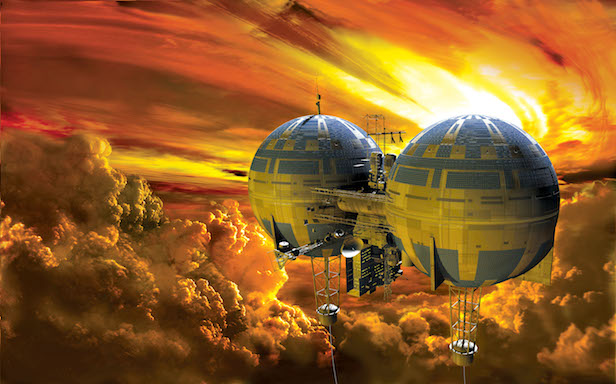
BLIMP CITIES IN THE CLOUDS

(Image Source)

People would not be able to live on the surface of Venus (at least not in its current form). The surface is 900 degrees Fahrenheit (475 degrees Celsius), which means it is hot enough to boil lead.

However, the higher up you get from the surface, the thinner and cooler the atmosphere gets. There’s a sweet spot about 50-55 kilometers up where the atmosphere is down to about normal Earth pressure, and temperatures are similar to the Mediterranean.

As Geoffrey A. Landis says, the surface is hell, but at cloud level, it’s paradise.

So a possibility is to build floating cities 50-55 kilometers above the ground. But how would one do this?

Venus’s atmosphere may be a vital asset in this endeavor. Venus has an incredibly thick atmosphere, about 100 times that of Earth. Most of the atmosphere is carbon dioxide, with just over 3% being nitrogen, and only trace amounts of other gases. And yet Venus has more nitrogen than Earth, simply because it has so much atmosphere.

There is also a sea of carbon dioxide down on the surface, having characteristics of both a liquid and a gas, which will be important for terraforming the planet, but we’ll get to that later.

Now with regards to the carbon dioxide atmosphere, we must keep in mind that carbon dioxide has a molecular weight of 44, which means that any gas with a lower molecular weight than carbon dioxide can act as a lifting gas, much like helium in balloons on Earth. That means that hydrogen and helium work even better as a lifting gas on Venus than on Earth, but it also means that our normal oxygen-nitrogen air mix could actually make a balloon float on Venus. And you can get hydrogen, oxygen and water out of the sulfuric acid that makes up the clouds.

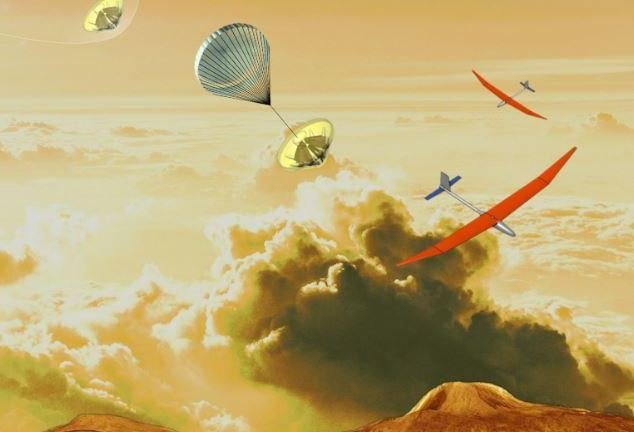
A near-term option for humanity would be to have automated aerostat vehicles in the atmosphere.

But for longer-term habitation, Venus’s colonists could make large, sturdy blimps with the mass manufacture of graphene. What is graphene you may ask? Graphene is the building block of graphite (which is currently used in pencils). This wonder material graphene is the thinnest material known to man, at one atom thick. And yet it is incredibly strong, 200 times stronger than steel. Graphene is also an excellent conductor of heat, electricity and has interesting light absorption properties. Graphene is an exciting material that is getting a lot of attention—especially since the 2010 Nobel prize in physics went to Andre Geim and Konstantin Novoselov, who first isolated Graphene in 2004.

And there is plenty of carbon for making graphene in Venus’s atmosphere. Venus’s colonists could use the carbon to make diamond hard tethers anchoring their blimp cities to the ground. These hard tethers could be possibly strong enough to survive the super-hot, acidic hurricane below. Or the colonists could use them like harpoons with a winch to drag their settlements around like a giant octopus.

Another benefit of Venus, Geoffrey A. Landis points out, is that the super thick atmosphere could provide shielding from cosmic radiation.


FLOATING SOLAR PUNK CITIES

(Image Source)

Up higher in Venus’s atmosphere, the lighting is a lot like Earth, except that if one stays in the same spot, they’ll have a day-night cycle not of 24 hours but of 243 days. Since the day-night terminator creeps along at a fast walking pace, even at the equator, a colonist could opt to stay in perpetual sunlight, making it handy for solar power or growing plants to help recycle air and water, and to extend food supplies.

In fact, solar arrays can produce just as much energy pointing downward toward the reflective clouds as they can produce by pointing toward the sun.

There is also a superabundance of solar energy to power engines. And all the wind allows colonists to use wings to provide lift for a plane or a kite, not just balloons and buoyancy. So, there are a lot of options for transportation and moving around in the clouds.

The abundance of atmospheric carbon dioxide and nitrogen will also be a useful resource for greenhouses.

The creation of mining robots could allow people in these sky cities to have autonomous sources of production that could give them a good deal of free time for recreation, education, family life, and spiritual reflection.

(Image Source)

Venus also has a surface area 3.1 times the land area of Earth. With all this room, a billion habitats, each one with a population of hundreds of humans, could be placed in Venus’s atmosphere.


OBSTACLES WITH FLOATING CITIES

(Image Source)

Floating cities would have their obstacles. Floating cities on Venus would have to be very thin and very lightweight to float. The colonists could also just orbit the planet in conventional rotating habitats. Yet being lower in the atmosphere would protect from meteors and radiation. Geoffrey A. Landis says the thick atmosphere would protect from radiation. But if this is not enough, the colonists could also put their blimps in water shielding to add some protection.


ROBOTIC MINING OF THE SURFACE

(Image Source)

Venus’s surface is way too hot for humans to mine on their own. But they could control mining robots from up in their floating habitats and deliver the goods by going up a tether in the form of a high-temperature fullerine tether. Or the robots could pop compressed gas cartridges to fill balloons and float back up.

A settlement could float over a spot they are mining.


TERRAFORMING VENUS

Terraforming Venus is another option. And given Venus’s mass and gravity, it may be the best candidate for terraforming in the solar system.

Terraforming could be accomplished by constructing a dome or an enclosure on the planet, which would grow to encompass most of the planet’s usable area. This could be part of the process of cooling down Venus.

Changing the Atmosphere:

(Image Source)

Part of the reason Venus is so hot is its thick atmosphere. But a major reason for the heat is Venus’s proximity to the sun. If one blocks out the light between Venus and the sun, they could reduce that heat. Colonists could use massive shades that are about as big as a football field but don’t weigh too much. Ideally, they would want to use something very light and strong, like graphene made of carbon. The colonists could manufacture these graphene shades on the cloud cities of Venus and deploy them to the Lagrange point between the sun and Venus by the millions until they shade Venus’s atmosphere. The atmosphere would then begin to cool. The thick atmosphere would start to liquefy and turn into seas of carbon dioxide.

The floating cities would probably not survive the process of liquefying the atmosphere, so the colonists would have to abandon them and retreat to orbital colonies. Or they could modify the floating cities to safely survive the process (like some Johnny Quest car blimp?) and be able to land on the seas of carbon dioxide and survive the changeover of early terraforming. During cooling, there would be a ton of earthquakes and maybe volcanic activity while it snows dry ice. And then, the colonists would have to find a way to export or permanently sequester all that carbon dioxide so they could warm the planet to an Earth-like temperature and an atmospheric composition.

Another possibility for clearing the atmosphere of Venus would be to use solar mirrors instead of shades. This would heat the planet even more and evaporate the atmosphere away.

But if the colonists went with the strategy of cooling the planet, they could keep cooling it until the seas of carbon dioxide froze and turned into surfaces of dry ice. Then they could pave over that and introduce dirt and water.

The trouble is, how to get enough water for oceans?

There is a large amount of water available in Venus’s atmosphere. But it isn’t enough for real oceans. It’s enough for people to drink and to farm food inside greenhouses. But it’s not enough to make a classic biosphere. For that, the colonists would need to come up with somewhere between 10-100 billion megatons of hydrogen.

One possibility is to boil hydrogen off the sun since the sun is a massive source of hydrogen.

Another possibility is to import the hydrogen from Jupiter or Saturn.

However, when it comes to making Venus more Earth-like, there is also the problem with Venus’s day length. Venus’s day is longer than its year. The sun would rise in the sky and stay there for months before setting for more months.

There are three approaches to this:

First, ignore it and adapt to life on a planet like this.

Second, place mirrors in orbit around Venus to bounce light down on the night side and block incoming sunlight on the day side to simulate a 24-hour day cycle.

Thirdly, the colonists could also make a fake sun with lots of mirrors to bounce light to something about the same angular size in the sky as the sun in Earth’s sky. All the mirrors and shades could also protect Venus from radiation. Though colonists would still want to consider an artificial magnetosphere to hold the atmosphere in. They can’t expect the atmosphere to stick around on its own once they make Venus earth-like.

The other alternative is to go all in and adjust Venus’s rotational speed to a 24-hour day, or maybe save some energy and let people sleep in longer with a 26-hour day. Yet the colonists would need massive amounts of energy to change the rotation of a planet. They would need 10^29 joules of rotational energy to do this. To put that in perspective, it’s more than a billion times the amount of electricity 21st century Earth uses each year. It’s also only a few years of energy output from the sun. (Though it would take roughly the same amount of energy to ship in enough hydrogen to create an ocean.)

Accomplishing this task could come in the form of sending a large beam of hydrogen from the sun like a water jet, hitting one side of the planet Venus, injecting hydrogen and spin. If we were getting the hydrogen from gas giants instead, each of those ships and pods would be moving quite fast, carrying a large amount of kinetic energy. The amount of kinetic energy needed for massive transports of hydrogen would be in the same ballpark as rotational energy. So the colonists would need to figure out how much hydrogen they want and how much rotational energy they need and make sure each pod of hydrogen is moving at a speed to deliver that energy. If that were moving too fast, they might ship in comets or massive balls of ice and let the extra mass carry the extra kinetic energy. It would still be very tricky to get this process to work. But a benefit of this is that if the planet is spinning fast enough, it could generate a magnetosphere, so the colonists wouldn’t have to generate an artificial one.

Another possibility is to give Venus a moon and use it as a gravity tractor to impart spin. And the outer planets of our solar system have an abundance of moons, along with excess hydrogen. The colonists could also take the excess carbon from Venus and build a fake moon.

While these are all interesting ideas, the reality is that terraforming Venus would most likely take thousands of years. So this would involve a long-term commitment that would outlast the length of many civilizations. The kind of society willing to do this would either have to be very dedicated, or they might be some form of artificial intelligence with a lengthy lifespan.

The residents of Venus have a few options: The orbital colony route, the floating city route, the para-terraforming route where they use shades to cool the planet down and use orbital mirrors to create a 24-hour day, or go big and start spinning the planet up to a 24-hour day by importing shipments of hydrogen or water to impart that spin momentum.

The colonists also don’t only have to do one option. They could have several phases or multiple options pursued simultaneously.


WHAT WOULD THE VENUSIAN ECONOMY LOOK LIKE?

(Image Source)

Carbon in the form of graphene will likely be the preferred building material of the future, so Venus could export gigatons of that.

For export, Venus has lots of carbon dioxide, nitrogen, and solar or wind energy for industrial processes. They could also build solar-powered satellites for export, along with shades and mirrors for terraforming.

Mining the surface (which is primarily a basaltic silicate), will provide silicon, iron, aluminum, magnesium, calcium, potassium, and sodium.

Venus could give Mars pods of nitrogen for their terraforming process, which could get shipped to their atmosphere and shot down. Metal for the pods would come from mining the surface of Venus.

Venus is closer to Earth than Mars. With current propulsion systems, launch windows to Venus occur every 584 days, compared to the 780 days for Mars. Flight time is also somewhat shorter; the Venus Express probe that arrived at Venus in April 2006 spent slightly over five months en route, compared to nearly six months for Mars Express. This is because at closest approach, Venus is 40 million km (25 million mi) from Earth (approximated by perihelion of Earth minus aphelion of Venus) compared to 55 million km (34 million mi) for Mars (approximated by perihelion of Mars minus aphelion of Earth) making Venus the closest planet to Earth.

Then there is the accessibility of asteroids from Venus. In terms of flight time, Venus is closer to the Asteroid Belt than either Earth or Mars. Geoffrey A. Landis argues that the higher orbital velocity of Venus makes transfer orbits somewhat faster and increases the number of transfer opportunities to various asteroids in the Asteroid Belt.

There is also the possibility of tourism on Venus. The appeal is that people can walk around beautiful sky cities without a heavy pressure suit. And with the thick atmosphere, there is the possibility of hang gliding with just a mask and a thin acid proof suit.


EXAMPLES OF VENUS IN EARLY SCIENCE FICTION

(Image Source)

As mentioned at the top of this article, Venus was a popular planet in early science fiction before it was known that the surface was hot enough to melt lead. Therefore, there are quite a few examples of humans colonizing Venus, especially in the age of early pulp Science Fiction. But be aware that these examples do not offer accuracy given what we know about Venus today. I mean…especially not with the dinosaurs and Amazonian warriors and so on.

In the early pulp science fiction of the mid twentieth century, there was a lack of agreed upon canon about what Venus was like, given that the stories about life on the planet included everything from thick jungles, to a water world covered in oceans, to widespread deserts. In comparison, the writing about Mars was much more uniform.

Science fiction scholar Gary Westfahl attributes the disparity largely to the image of Mars made popular by Percival Lowell around the beginning of the 20th century. By contrast, very little was known of Venus aside from the fact it had clouds.

Disclaimer: I produced a list below of examples of Venus in science fiction. This list below doesn’t represent all instances of Venus in science fiction, as there are multiple instances. The list simply represents a few examples I have chosen to highlight.

Venus in Fiction (Wikipedia)

A True Story by Lucian of Samosata – 2nd Century A.D. (One of the earliest known examples of interplanetary travel in fiction. Lucian refers to Venus as the ‘morning star.’)

Voyage à Vénus by Achille Eyraud 1865 (One of the earliest known uses of Venus as the primary setting in fiction)

Last And First Men by Olaf Stapledon -1930 (A book that discusses genetic engineering for interplanetary colonization.)

“The Big Rain” by Poul Anderson – 1954 (Anderson writes about terraforming Venus’s atmosphere.)

In the Walls of Eryx by H. P. Lovecraft – 1936

Perelandra by C. S. Lewis – 1943 (This is a retelling of the story of Adam and Eve in the Garden of Eden on floating islands in a vast Venusian ocean.)

Lucky Starr and the Oceans of Venus by Isaac Asimov – 1954 (Asimov depicts human colonists living in underwater cities on Venus.)

“Before Eden” by Arthur C. Clarke – 1961 (Clarke portrays Venus as mostly hot and dry, but with a habitable climate at the poles.)


VENUS IN MODERN SCIENCE FICTION

(Image Source)

2312 by Kim Stanley Robinson – 2012 (A very well written novel showing human colonization on multiple worlds in our solar system.)

The Sultan of the Clouds” by Geoffrey A. Landis in Asimov Magazine – 2011 (I highly recommend this story for anyone who wants a more scientifically sound depiction of what life on Venus could look like. This is written by a NASA researcher.)

The Snows of Venus by G. David Nordley in Analog magazine – 1991 (In this story, G. David Nordley suggests that Venus might be spun-up to a day-length of 30 Earth days by exporting its atmosphere of Venus via mass drivers.


ART

Venus Science Fiction Art on Pinterest


LEARN MORE ABOUT COLONIZING VENUS

(Image Source)

Colonizing Venus Video by Isaac Arthur (YouTube)

Colonization of Venus by Geoffrey A. Landis (NASA, February 2003)

How to colonize Venus, and why it’s a better plan than Mars (Big Think, 11-28-18)

How Could We Create Settlements on Venus? (Universe Today, 9-4-16)


RELATED PAGES

World Building Science Fiction – Mercury (Stories From Tomorrow)