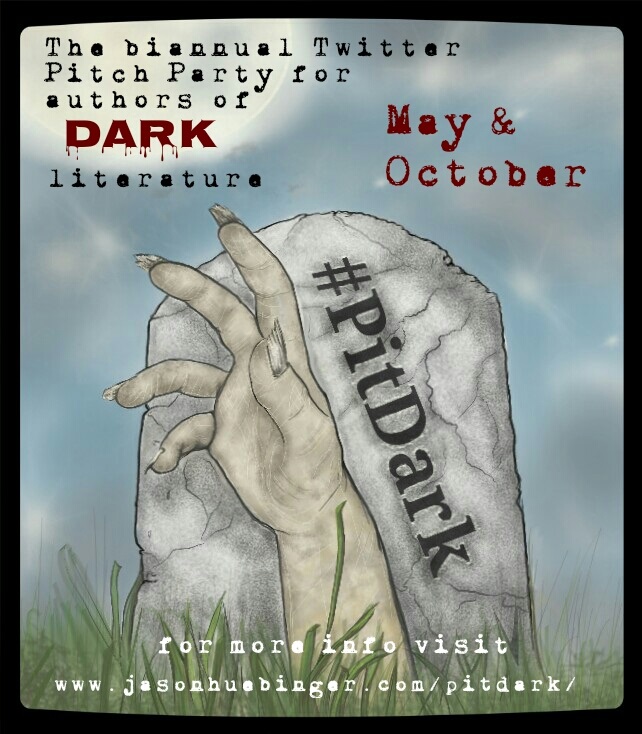
#PitDark is Today!

“#PitDark is the first and only Twitter pitch event to highlight literature of a “darker” nature. Importantly, this is not limited to horror works; however, any pitched manuscript must contain an element of horror or darker writing. Examples of such categories include pure horror novels, dark fantasy, murder mysteries, psychological horror stories, non-fiction works about darker subjects, etc. MG, YA, NA, and adult age categories are welcome.”

See More Details Here

Do NOT Write a Book

Image Made With DALL-E AI Art Generator

The title may seem like odd advice since this is a blog for writers.

Isn’t the first step of being a writer to … you know… write?

That may be true, but there are several good reasons not to start off your career as a writer by writing a book.

I just read a great article by Medium author Akshay Gajria called, “Please Do NOT Write a Book.” I highly recommend it.

The point Akshay makes is that a large number people have dreams of writing a book. And many of these people often have unrealistic expectations.

While there are all sorts of workshops and books out there training people how to write “12k” words a day, Akshay reminds his readers that much much more goes into a book than simply getting words down. There’s also editing and research.

While it may take 6 months to simply write a first draft, polishing that first draft into a quality product can take years. For me, it takes 2-3 years on average to write and finish a book. And that includes working on said book about 5 days a week.

Writing a book is not a mere passion project. It’s a major commitment. And it’s something that takes skill. One must know how to structure a story, create compelling characters, have a logical plot, good pacing and quality description.

A great point that Akshay made is that one should build their skill by writing short stories first. Short stories require a much smaller time commitment. They are also much easier to get published than novels. A publisher takes a smaller financial risk on a short story than a novel.

Many of the most famous authors today got their start with short stories, including Stephen King and George R.R. Martin.

Short stories are also a good way to build your portfolio, get your name out there and build an audience before you make the major commitment to write a book.

If you enjoyed this advice, please read Akshay Gajria’s article, “Please Do Not Write a Book.”

AI Art Generators For Creative People

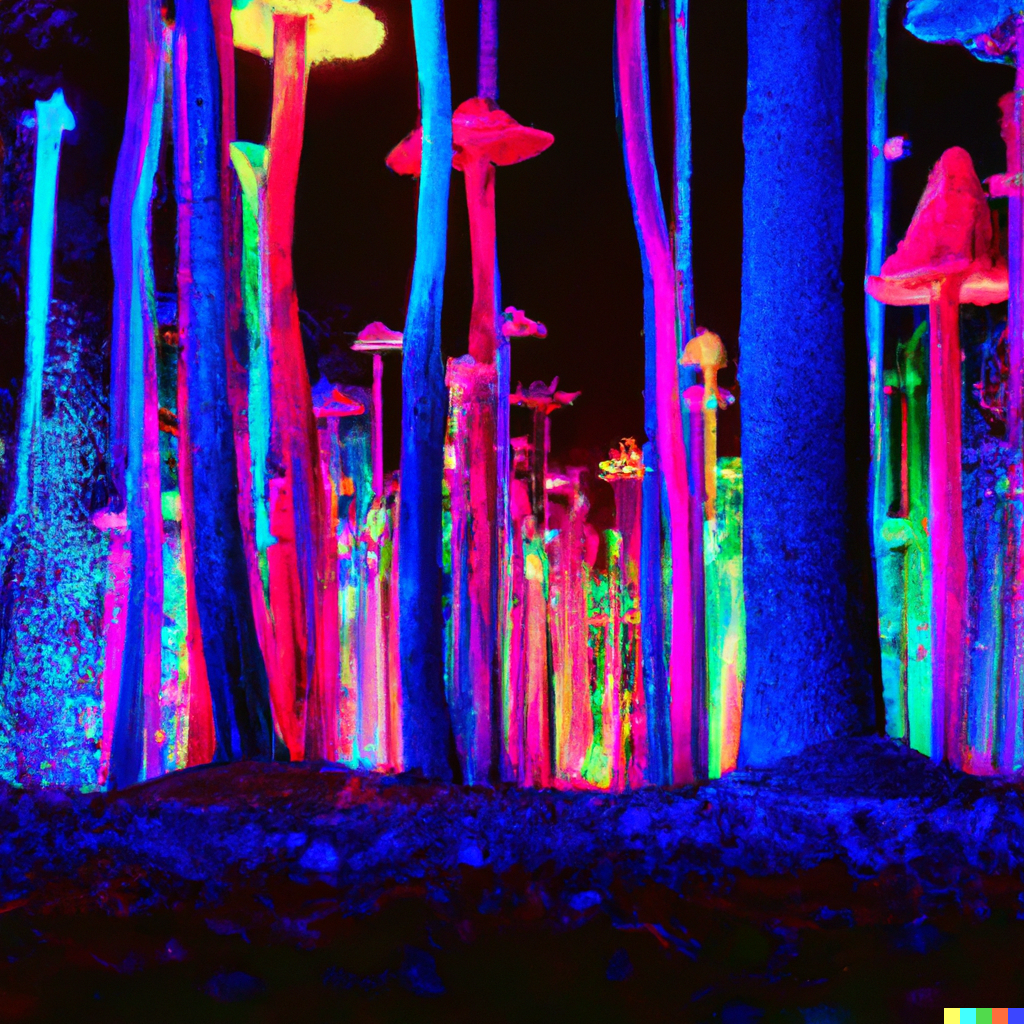
(Picture of “tall colorful mushrooms at night” generated with DALLE-2)

The ability to use AI to generate realistic-looking art is revolutionary for all the creatives out there. These tools are even useful for writers. You can use these art generators to make a logo for your website, an image for an article, or a cover for a book. It can also be useful for stimulating your creative juices.

Check out Gizmodo’s Recommended Free AI Art Generators

An Alternative Ending for Loki Season 1

Disclaimer: Spoilers included. Also, much of what is included here is my own personal opinion on the ending. I don’t claim that this opinion is authoritative or the best. Please let me know if you have a different opinion.

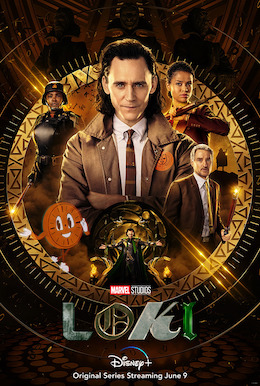
Overall, season 1 of Marvel’s Loki television show was enjoyable.

The Loki series takes place after the events of the film Avengers: Endgame, in which an alternate version of Loki creates a new timeline, diverging from the events of The Avengers (2012). The season sets up the events of Doctor Strange in the Multiverse of Madness (2022) and Ant-Man and the Wasp: Quantumania (2023).

What I Liked:

The show centers around Loki, Marvel’s most entertaining villain. And indeed the show is a lot of fun as we see the God of Mischief butt heads with a fitting foil: the TVA (Time Variance Authority), the most powerful bureaucracy in existence. The TVA is so powerful that their employees treat the infinity stones as if they are mere objects to store in a desk along with paperclips and pencil erasers.

Owen Wilson is one of the TVA’s bureaucrats. He’s cool and collected in contrast to Loki’s brash and hot headed manner. Owen takes Loki under his wing and explains the TVA’s purpose: to protect the one true sacred timeline from the threat of multiversal war. This is accomplished by pruning people called ‘variants’ from the timeline.

The employees at the TVA are all told that three lizard-like beings (called Time Keepers) created the TVA with the purpose of protecting and guiding the sacred timeline.

The show is an interesting mix of sci-fi, fantasy, police procedural, and 1970s retro style.

I ended up binge watching the whole season in one night because each episode kept me intrigued about what was going to happen next.

Where the Show Lost Me:

Unfortunately, much of the build up that kept me intrigued ultimately left me confused with the reveal at the end of the season’s final episode, episode 6.

By episode 3 we get our “aha!” moment when one of the time variants, a female version of Loki named, “Sylvie,” reveals that the agents of the TVA are actually brainwashed variants from Earth who got their memories wiped by the TVA.

Once it was revealed that the employees of the TVA were deceived, the audience was left to wonder about the real motives of the powerful time agency. By episode 4, Sylvie beheads one of the Time Keepers, only to find out it was just a lifeless machine. It is revealed that there is a true mastermind behind the TVA pulling the strings of the organization in secrecy.

Classic Loki and Sylvie end up at the Void at the End of Time, figuring that the clandestine mastermind of the TVA would be hiding at the end of the known timeline. There they find a world of Loki variants. Instead of cooperating with each other to escape the Void, this motley collection of Lokis fight with one another endlessly and stab each other in the back—as Lokis are known to do. However, a small band of Lokis cooperate with Classic Loki and Sylvie to help our two protagonists escape the Void and arrive at the Citadel at the End of Time. There they finally find the mastermind behind the TVA, He Who Remains, a person who is revealed to be…

*Drum roll.*

JONATHAN MAJORS, who was officially cast as KANG THE CONQUEROR in Ant-Man and the Wasp: Quantumania. Devout comic book fans and Marvel movie fans may enjoy this easter egg. It’s a cool set up for Ant Man. But for people who are not as familiar with all the comics or every movie of the Marvel Cinematic Universe, this could definitely be unclear. Kang the Conqueror only gave his background story in this episode, but not his name.

Maybe Kang the Conqueror will play a bigger role in season 2, but it would have been nice to see him more involved throughout season 1, so there would be more payoff when he was revealed as the big bad in the end.

Not only that, but He Who Remains says he actually wants to protect the timeline from multiversal war, just as the TVA originally explains. So…why all the cloak and dagger? Why the need for the animatronic space lizards? In fact, when the memories of the TVA employees get wiped and reset, they have a new statue of He Who Remains. At the end, it seems to me there wasn’t much reason to hide that Kang was pulling the strings. But maybe something will be revealed in season 2 that may explain this?

Alternative Ending

For me, I would have preferred it if the big bad was a Loki variant. There’s literally a whole world full of them. There’s a kid Loki. There’s even a freaking alligator Loki who gets a lot of screen time. The antagonist at the end could have considered him or herself, “The Ultimate Loki.”

This Loki could have bragged that they were a variant who found a way to do what our Classic Loki originally wanted to do, but failed to do: control reality. This would have created a legitimate reason to hide the original mastermind behind the TVA. A Loki variant would want to trick the other Lokis and destroy them so he or she could rise above them all and become the ultimate Loki. And this is indeed a theme the show even alluded to when they showed Classic Loki being insecure about the existence of other more powerful Lokis.

Caveat

I know that this is just the first season, and perhaps its purpose is to set up something more interesting in season 2, along with other Marvel movies. I am definitely open to watching season 2 because most of season 1 was pretty good.

I will also admit that keeping all the various Marvel plot lines tied together is probably a very difficult feat. Writers for the Marvel Cinematic Universe have to constantly balance satisfying their more active fans who keep up with every comic and movie, along with viewers who are less active, and are simply dipping in for the occasional show or movie.

If you have a different view on the ending, feel free to comment.

Links

WHO IS THE VILLAIN IN THE LOKI FINALE? EPISODE 6, EXPLAINED [SPOILERS!] (Inverse, 7-14-21)

The Rings of Power is Enjoyable as Amazon Fan-fiction

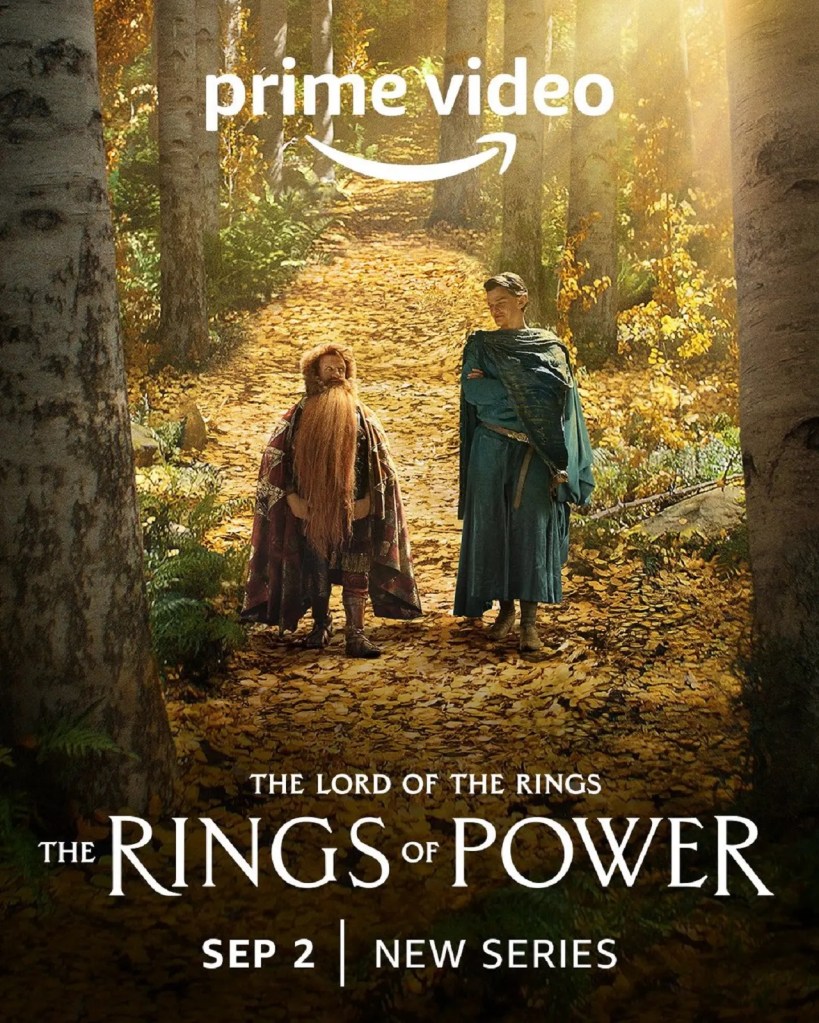
There’s been a lot of hate for Amazon’s new Tolkien inspired fantasy series, The Rings of Power. ‘Rings Of Power’ Is Getting Review Bombed So Hard Amazon Suspended Reviews Entirely. On Rotten Tomatoes, while its critics score is 84%, it has a 36% audience score. This means that the Rotten Tomatoes Audience reviewers actually hated The Rings of Power more than Troll 2 (one of the most hilariously bad movies ever made).

While The Rings of Power is not the best show ever, I was honestly surprised by all the hate. I didn’t think it was Troll 2 bad.

Deciding to investigate, I scanned through about four pages of Rotten Tomatoes reviews. The reviewers said they were angry about bad writing, slow pacing and the drastic change in Galadriel’s character from wise sorceress to elf Rambo. But the biggest complaint of all was that people felt that the show was unfaithful to Tolkien’s source material.

The show itself is based on J. R. R. Tolkien’s appendices. It is produced by Amazon Studios in cooperation with Harper Collins and New Line Cinema, in consultation with the Tolkien Estate.

If you think about it, The Ring’s of Power is basically fan fiction. The show writers are using the world building Tolkien provided in his appendices, and populating it with their own plot lines and dialogue. Why? Because they are doing their work based off an appendices, not a written novel with its own dialogue and plot. So it’s just not going to be the same quality as Tolkien. We can’t expect it to be unless they can somehow bring Tolkien back from the dead and make him write it. Maybe if Amazon called the show, Amazon’s $465 Million Tolkien Fan-fiction, people would have been less upset?

If one approaches the show as fan fiction, rather than expecting it to be on the level of Tolkien, one can enjoy the show more.

While I was not blown away by the show, I was entertained enough to keep watching. I think Tolkien’s original theme of good versus evil, and corruption versus nature were intact. The New Zealand landscape was visually stunning, along with the depiction of Númenor. There’s likeable characters. I’m genuinely enjoying the friendship between Nori Brandyfoot and The Stranger (who may be Gandalf). Perhaps what the show writers are setting up is an explanation for Gandalf’s love of little people. I’m also enjoying the humorous exchange between young Elrond and the dwarf, Prince Durin. And I’m genuinely excited to see what the orcs, and their leader, Adar, are going to do next (I find them pretty interesting).

Compared to other fantasy series out there on TV, I think The Rings of Power is not bad. And given that a record breaking 25 MILLION other viewers are watching season 1 along with me, how bad could it really be? I am looking forward to watching more.

I also do think it’s getting better. Even the audience reviews (which are currently almost below freezing) seem to be thawing ever so slightly.

If I had to give The Rings of Power a rating between Valinor and the Southlands, I’d give it a rock solid Khazad-dûm.

Mango Publishing Interview – Starting an Independent Book Publisher

Mango Publishing has been listed as one of the top ten independent book publishers in the U.S. by NY Book Editors.

In their sixth year of existence, Mango Publishing is one of the fastest-growing publishers in the country, and was a finalist for Publisher of the Year at Digital Book World 2019.

So I am very grateful that they were willing to talk with me in my continuing series of articles on independent publishing. The interview below was held with Mango’s Director of Logistics, Hugo. He has been with the company since the very beginning. I would also like to give a shout out to Geena El-Haj (Mango’s Marketing Communications Coordinator) for helping me to facilitate the interview.

JBJ: Why was Mango Publishing created?

Hugo: I don’t know if we had a very intentional start. Mango Media, the original incarnation, and parent company, was formed with the idea of being a modern, data-driven media company that explored the intersection of books and smartphone apps. Through that journey of mistakes, we stumbled upon a consistent theme: Gut. “My gut tells me,” “I have a gut feeling,” “I think I should listen to my gut…”

Nearly every project we created in the media days revolved around a lot of gut instinct. Something that was diametrically opposed to the mission of being data-driven. So we reevaluated our process of creating content and identified a hole in the market: books published for consumers, ignoring the “gut” of buyers, agents and traditional public relations, and instead focusing on the analytics on consumer trends.

JBJ: For other people who are interested in doing the same thing, what were the steps your publishing company took starting out?

Hugo: It’ll sound repetitive, but the data was our focal point. Once we understood how outdated the publishing landscape was, we began to reinvent it by following the success of content creators. Bloggers, journalists, podcasters, YouTubers, chefs and artists who were creating content for a specific audience. We didn’t (and still don’t) care how large their audience was or even how engaged they were. We were more interested in their expertise in the field and their authentic relationship with their audience.

JBJ: What are the important services you have to pay for when running an independent publisher?

Hugo: Everything. Mitchell Kaplan of Books and Books loves to tell people, “If you want to make one million dollars selling books, start with two million dollars.” You won’t find many people in publishing that are in it for the money, regardless of how Hollywood likes to present it. Publishing, indie publishing, is a world filled with constant minor expenses, thin margins and incredible people. You can’t skimp on design, or editing, or printing or sustainability and expect to have a book that delivers on the promise their author made when announcing the book.

JBJ: Do you mind giving me a figure for a starting budget?

Hugo: It’s too vague to give a number because, at least for us, we build our list on every title carrying its weight. So they all get their financial support in the same capacity (in direct marketing, advertising, design costs, editing, etc.). P&Ls play a role in our commissioning process, but more than that, it’s the mission of the book, the authenticity of the author and the potential of the data.

JBJ: Would you especially recommend anyone or any website for the following services: legal, production, editing?

Hugo: No. Everyone’s purpose for those services is different, so there’s no way to outright recommend people or services in a general sense.

JBJ: What is Mango Publishing’s greatest challenge?

Hugo: Pre-pandemic I would have said time. Mainly time for commissioning. We have endless data helping us identify authors, categories, trends and more. Yet the time that goes into building the trust and relationship with your authors is incalculable and not something that can be skipped or ignored. In a post-covid world, print production is probably our biggest hurdle. Supply chain issues, paper shortages, sustainability limitations and limited warehouse workers all add chaos to a highly delicate system.

JBJ: What is the most rewarding aspect of what Mango Publishing does?

Hugo: Publishing under-represented voices from marginalized or ignored communities.

JBJ: You guys are listed as one of the top ten independent book publishers by NY Book Editors. What is the secret to your success?

Hugo: Getting unimaginably lucky with our hiring. Having the mission of reinventing publishing and publishing underrepresented authors is nice and all, but without the insane luck of the people we’ve been able to hire and work with buying into it, we would have folded up years ago.

JBJ: What steps would you recommend to an author who is submitting a query to you? What is the best way for a prospective author to get published at your publishing house?

Hugo: Know your audience. I don’t care if you have a massive platform with eight million subscribers or a new podcast with 3,000 downloads a month. Those are both fantastic and reaches we can work with, but in order for them to work, we need the author to understand their audience: who they are, why they follow them, what they’re looking for, and more.

JBJ: What are your plans for the future?

Hugo: Partner with incredible authors, design and print beautiful books and continue to push forward with the idea of borderless publishing.

For more information, check out Mango Publishing here.
Interview with Space Squid – How to Start a Fiction Magazine

Image Source

About ten years ago, there were six big publishers for books. Now there are five. And soon there may only be four. Combined with the competition introduced by self-publishing, it’s becoming increasingly difficult for authors to get traditionally published. This is on top of the supply problems introduced by Covid, and the fact that there was a massive exodus from the publishing industry back in March of 2022. About 1% of people in the publishing industry quit.

With all of these factors in play, some people are now more interested in creating their own independent platforms, or at least are interested in learning how they work.

I decided to interview some of the staff on various speculative fiction magazines along with indie publishers to see how that works. The first people I interviewed were the staff of the humor sci-fi magazine, Space Squid.

JBJ: Thank you so much for your help. Let’s say I started a free online blog—which I could hopefully to turn into a literary magazine or publisher later. Would I need to make a contract with the people submitting to the blog?

SS: I wouldn’t bother for blog entries. You might want to keep the email thread in which they agree to write for you; we’re a little more formal since we’re publishing stories.

JBJ: What inspired you to create an online magazine?

SS: We’re frustrated writers. Also there’s not a lot of spaces for funny scifi/speculative.

JBJ: For other people who are interested in doing the same thing, what were the steps you took starting out?

SS: Hmm… well we published on paper first, using some old photocopiers. That was more work than it was worth. Today we’d either go digital right away or send it to a printer for better quality and less hassle. We do publish one paper issue per year for Armadillocon.org.

As frustrated writers, we know a lot of other frustrated or semi-successful writers, and some of them were willing to send us material for our first issues. We reached out to some local bookstores and got some shelf space that way. But really, we’re marginally successful and we just kept doing it and publishing stuff we liked.

JBJ: What kind of services do you have to pay for to run a literary magazine?

SS: When publishing digitally, not much. We run our own WordPress site on a shared server. So the main costs are 1) the server and domain, 2) payments to writers, 3) the annual paper issue, and 4) time. 3 and 4 are the most expensive.

JBJ: Do you mind giving me a figure for a starting budget?

SS: Hmmm… maybe $200/yr for a digital-only publication?

JBJ: Would you especially recommend anyone or any website for the following services: legal, production, editing.

SS: I think we wrote our own writer contract. It’s clear enough to stand up in court, and that’s all we care about. Editing is our responsibility and kind of the core competency we bring to the table. For webhosting, we like hawkhost.com; shared hosting is less than $3/month. Use our referral code, https://my.hawkhost.com/aff.php?aff=1430!

JBJ: What was your greatest challenge?

SS: Just keeping it going. It’s a tough time for writers and publishers. There’s a lot of apathy and we don’t get the kind of readership we’d like. Reading submissions and editing stories takes a lot of time and love.

JBJ: What is the most rewarding aspect of what you do?

SS: We do have a few dedicated fans who love our stories and style, and some writers like yourself who understand what we like. Occasionally we get a bit of acclaim or press. And of course we get energy from great stories and publishing first-time or enthusiastic writers.

JBJ: Is there anything else you would recommend for those who are just starting out?

SS: It’s good to have a clear niche picked out — some angle that you can cover better than anyone else because of your skills or POV or because it’s under served. It also helps a ton to have at least one other person onboard who’s as motivated as you are.

JBJ: What are your plans for the future?

SS: We’ve got plans for a premium membership plan that will deliver a lot of fun, useful services to our dedicated readers and writers. It’s called Squid Plus and we’ve got high hopes for it.

JBJ: Great. Thanks for the interview. Have a great day.

STORIES ON SPACE SQUID:

Bob and Beastman’s Honeymoon

Downloading Brunch

Moon Knight’s Weakness – Astronomy Apps (Plot Hole in Episode 3)

Twitter is abuzz today with the news that a second season of Moon Knight is in the making.

Moon Knight director Mohamed Diab and Oscar Isaac are currently in Cairo. When asked by a fan if season 2 was happening, Oscar Isaac replied, “Why else would we be here? (Source)”

SEASON 1 SPOILERS BELOW.

Overall the first season was a major success. Oscar Isaac was able to show off his remarkable acting talent by portraying two very different personalities: Tough guy American mercenary Marc Spector, and the meek, mild mannered, British gift shop cashier, Steven Grant.

The Disney+ action filled super hero story of Egyptian mythos and gods was very fun. I was definitely entertained.

However, my only hang up about the show was what happened in episode three of season one. Something so silly and ridiculous I wanted to throw a gold plated scarab at my TV.

Marc Spector is in Egypt trying to locate Ammit’s tomb, all while vying for control over his and Steven’s shared body. It’s critical for them to find Ammit’s tomb quickly, or else Arthur (the bad guy) will get there first, and resurrect a very dangerous goddess into the world.

However, in order to find Ammit’s tomb, the good guys need to know how the night sky looked one millennia earlier.

So what do they do?

Does Marc Spector or Layla download an astronomy app like SkySafari to see what the sky would’ve looked like a thousand years ago? The app costs $5.

NOPE! TOO EASY.

Instead, Khonshu, Egyptian lord of the moon and vengeance, changes the ENTIRE freaking night sky! This is a move so controversial it gets him imprisoned in stone by the other gods.

And all he had to do was pay $5 for an app.

Oh well. Their version was more dramatic than mine. Script called for it I guess.

Links

Moon Knight Season 1 Episode 3 Recap (The Ringer)

Moon Knight Is Returning for Season 2, Oscar Isaac Suggests in TikTok (CNET)

When is the Best Time to Send an Email?

(Image Source)

This is a question that many writers ponder, along with marketing teams.

Much of the advice for writers says, “Just send your query when you are ready. Don’t wait around.” To a degree that is true. Every literary agent is different.

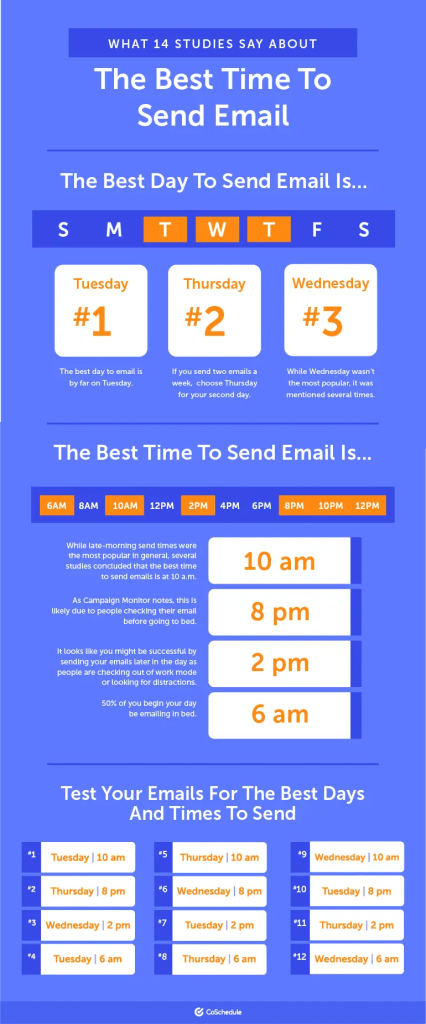
But there are some times that are better for the general person than others. I checked out some findings from mass emailer websites about when people are most likely to open an email based on when you send it.

LEAST LIKELY TO GET CHECKED: Holidays and weekends.

MOST LIKELY TO GET CHECKED: Tuesday, Wednesday and Thursday. Late morning.

See more resources below:

Advice From Literary Agents

Best Time to Send to a Literary Agent? (Literary Agents)

Funny You Should Ask: What are the best times to query a literary agent? (Writers Digest)

Seven Submission Tips From a Literary Agent’s Slush Pile (Well Storied)

Studies on Emails

What’s the Best Time to Send Email? Here’s What the Data Says (2022) (Drip)

Perfect Timing: The Very Best Time to Send Email Newsletters (Wordstream)

What 14 Studies Say About The Best Time To Send Email (Coschedule)

The Best Time to Send an Email [Research] (Hubspot)