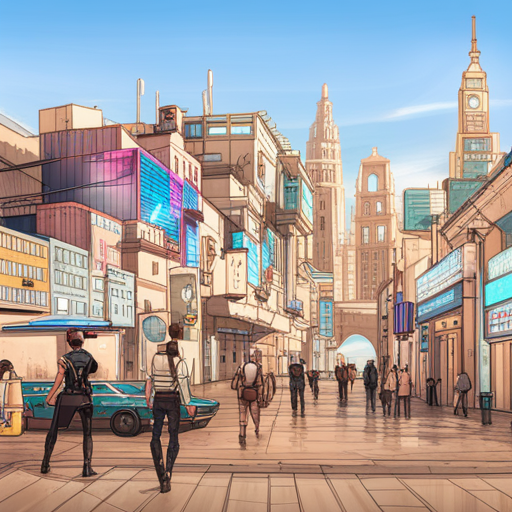
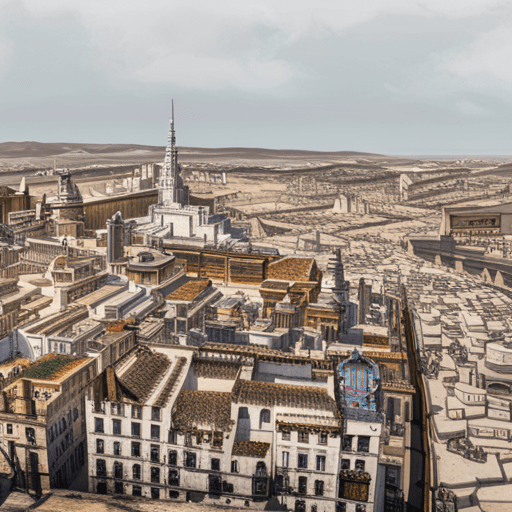
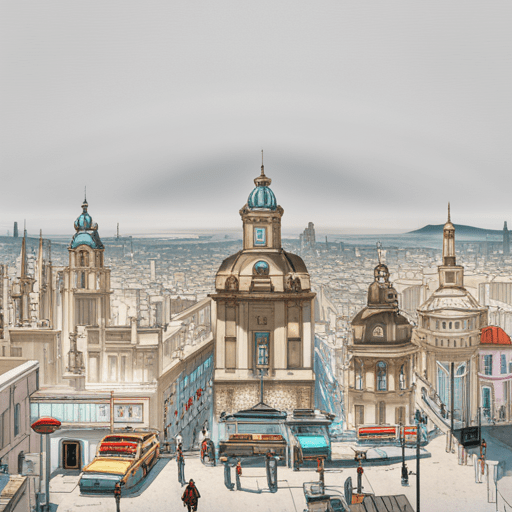
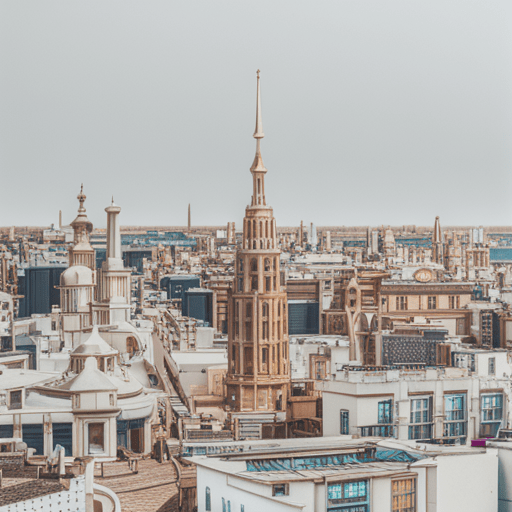
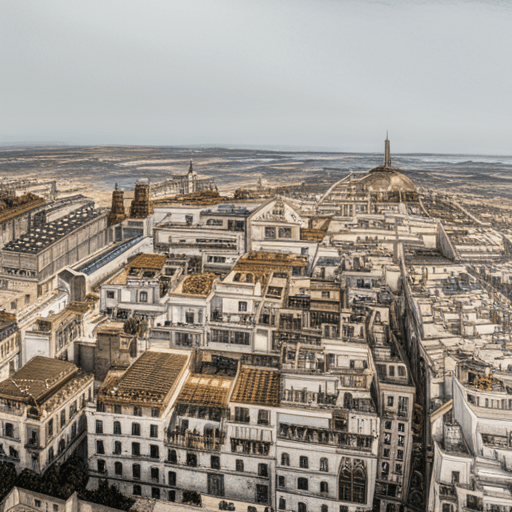
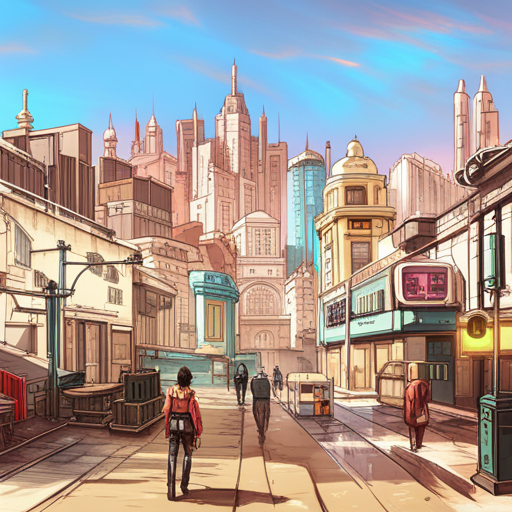
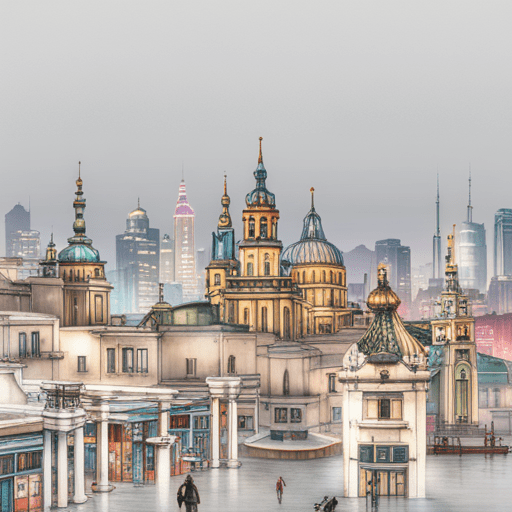
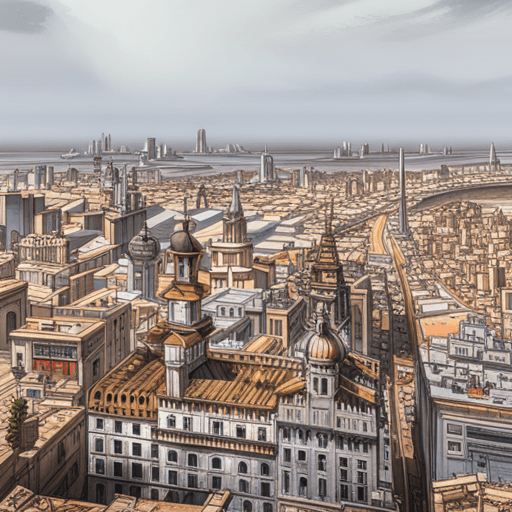
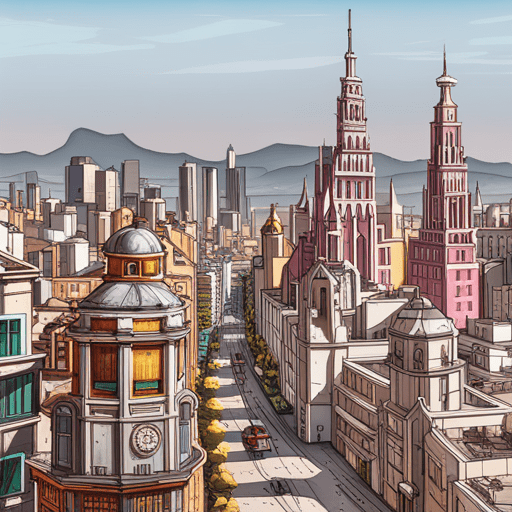
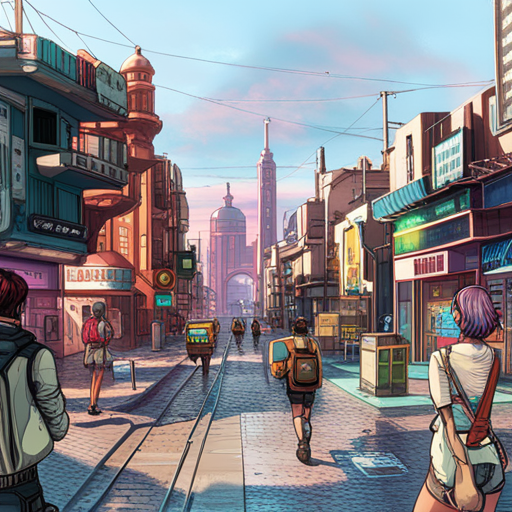
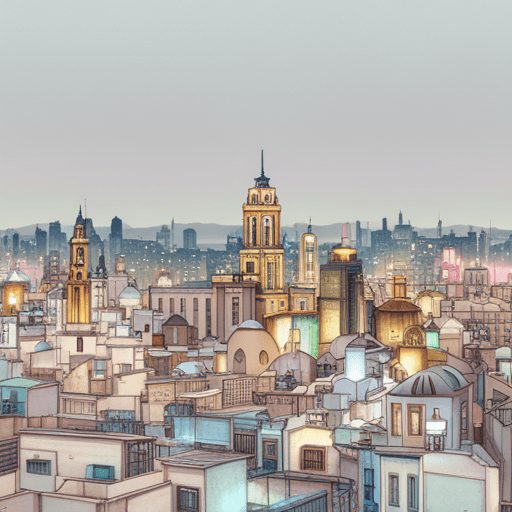
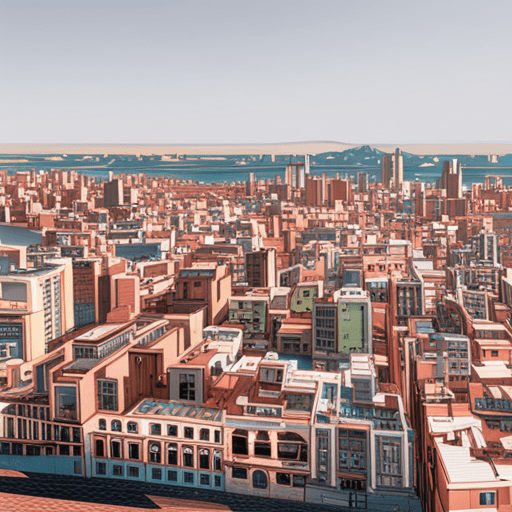
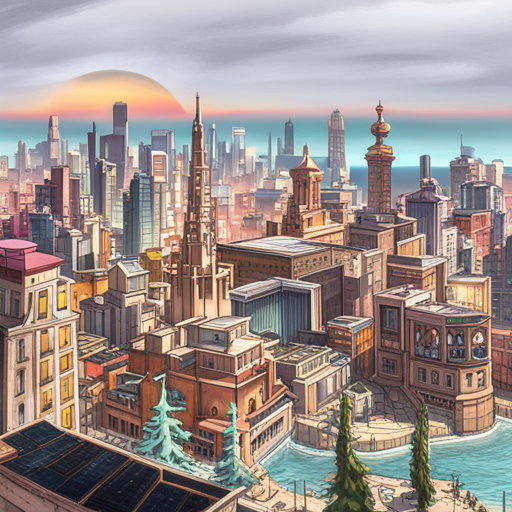
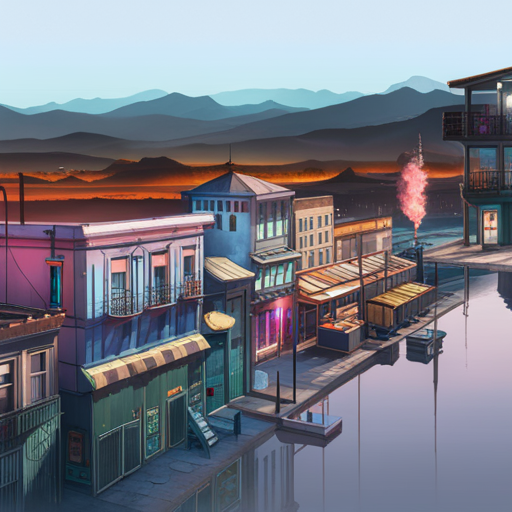
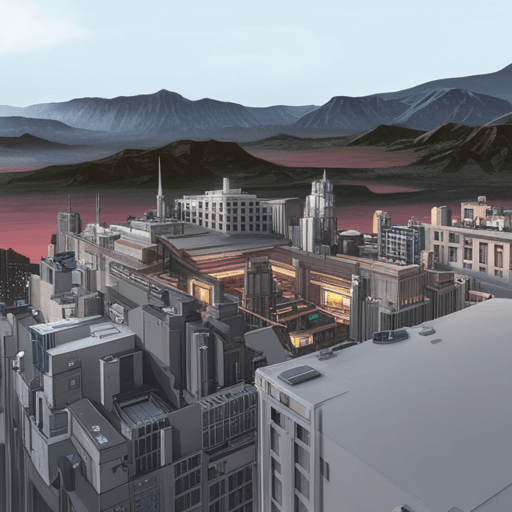
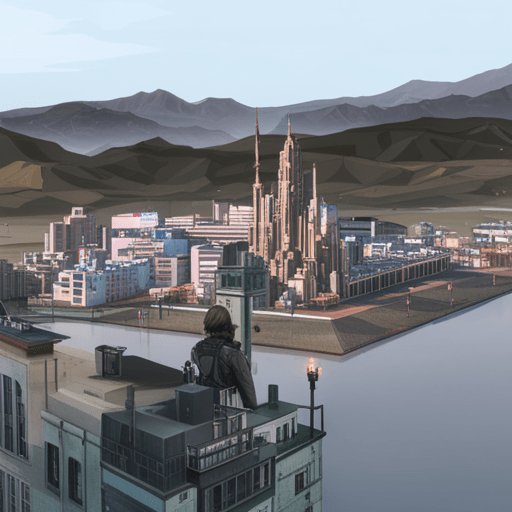
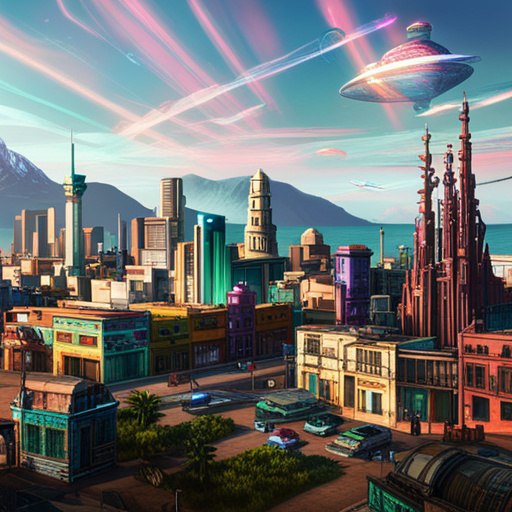
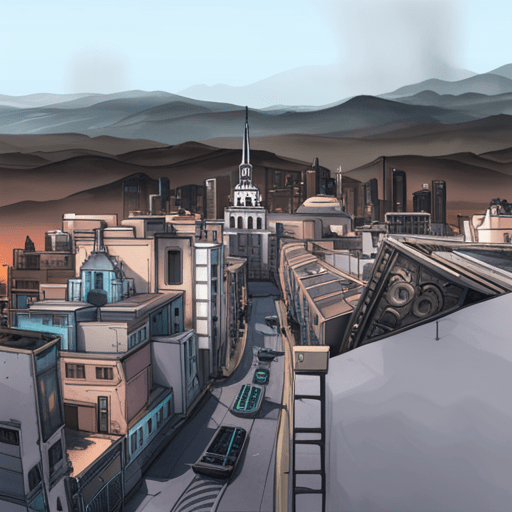
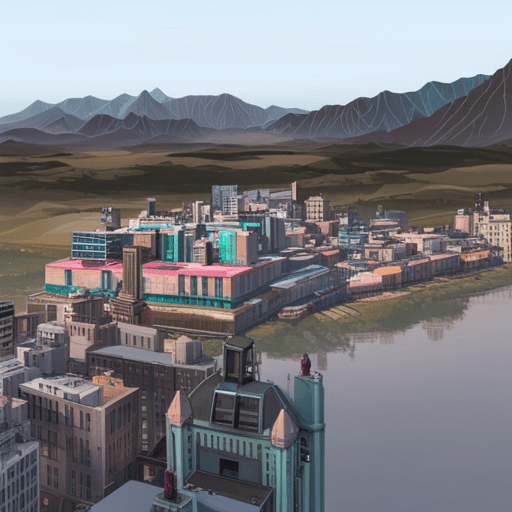
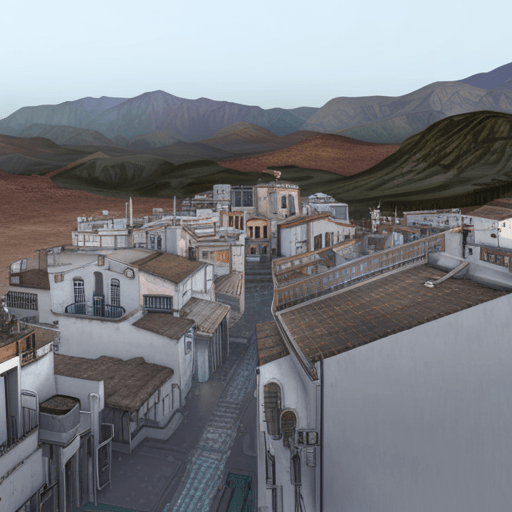
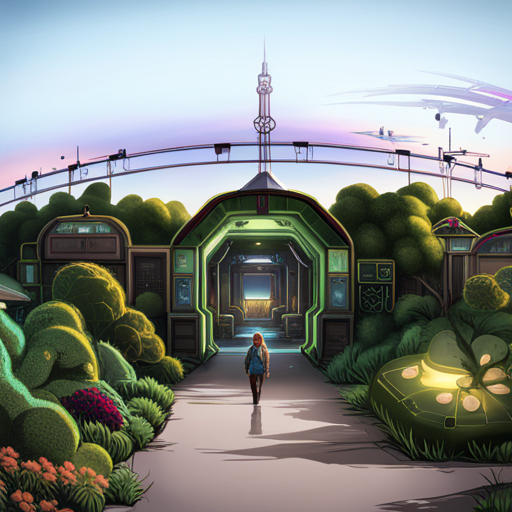
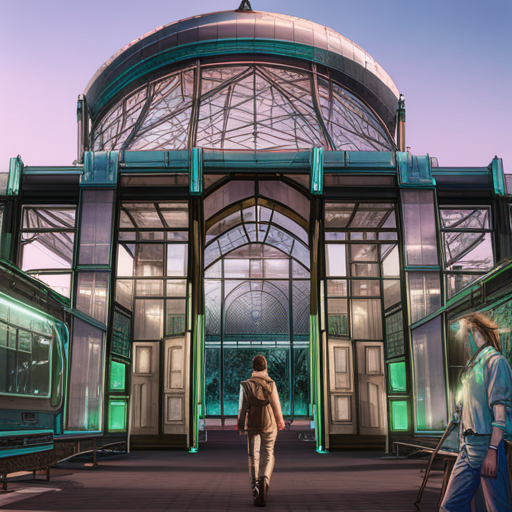
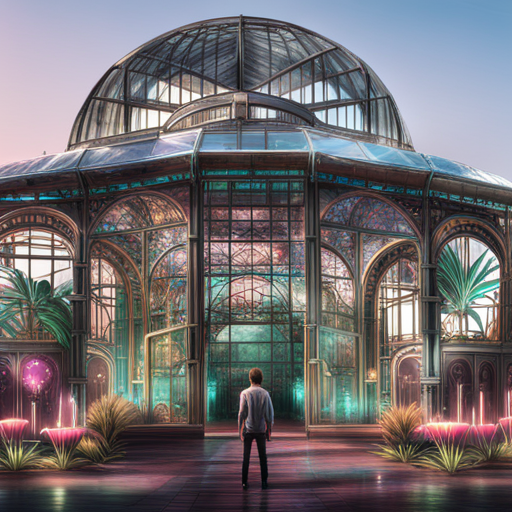
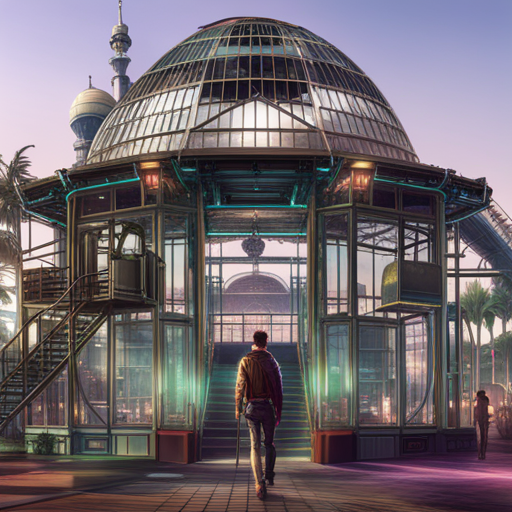
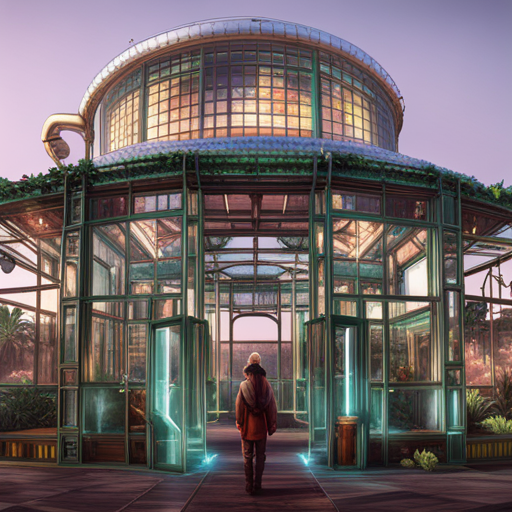
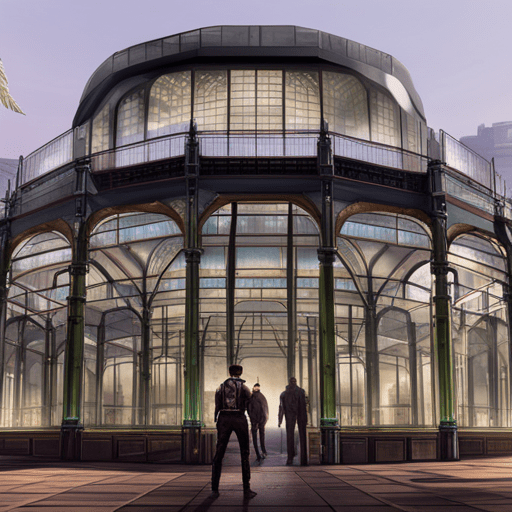
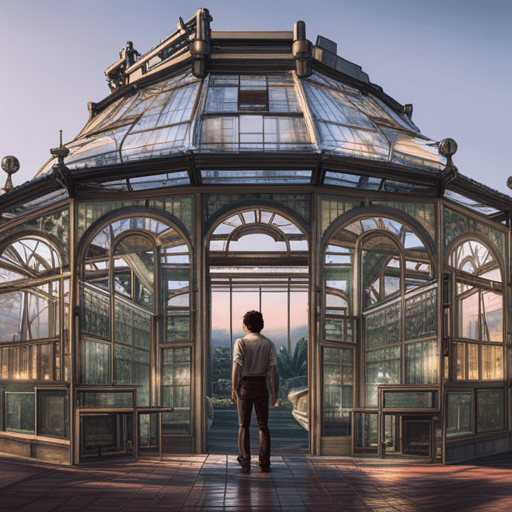
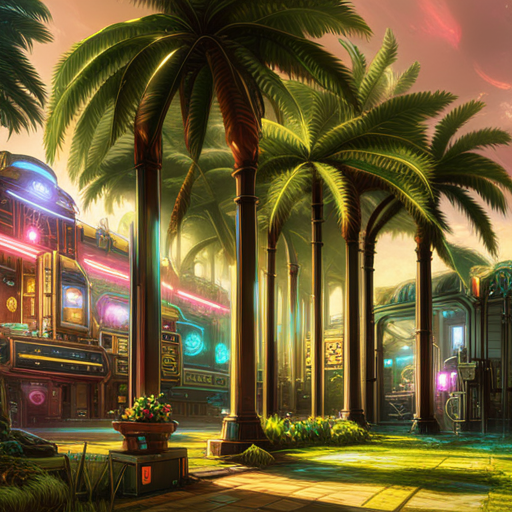
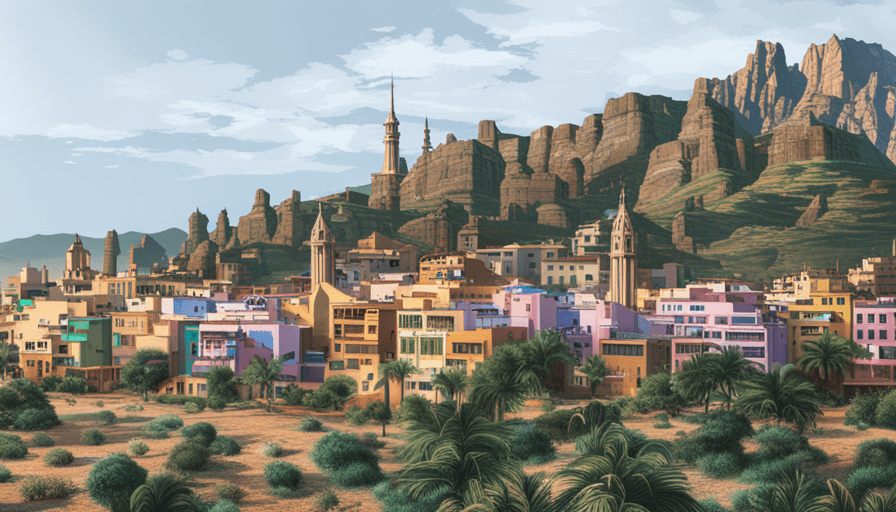
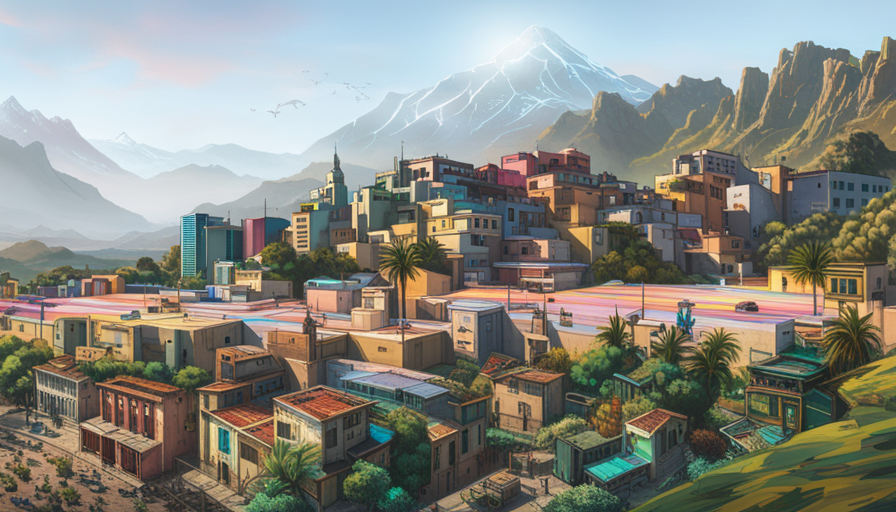
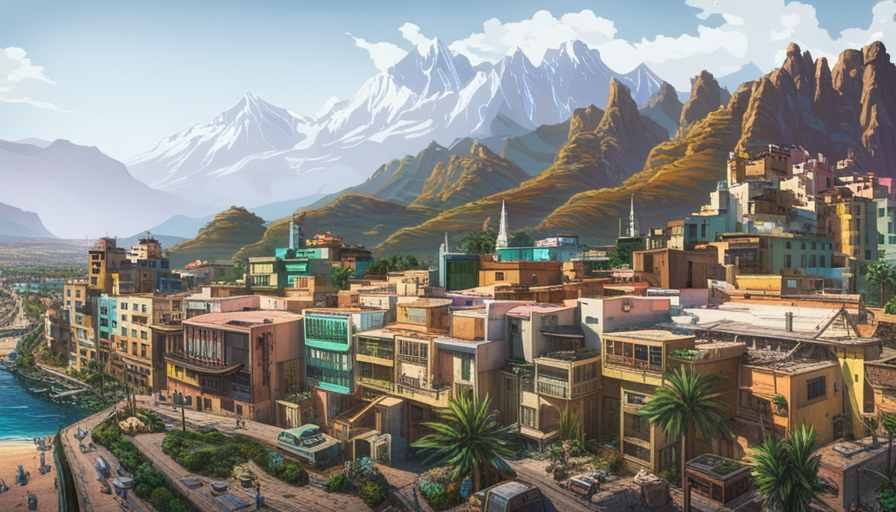
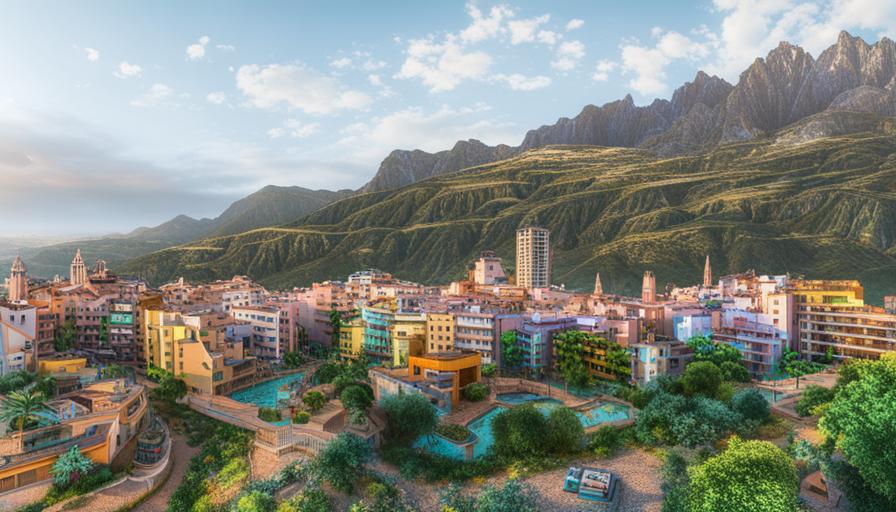
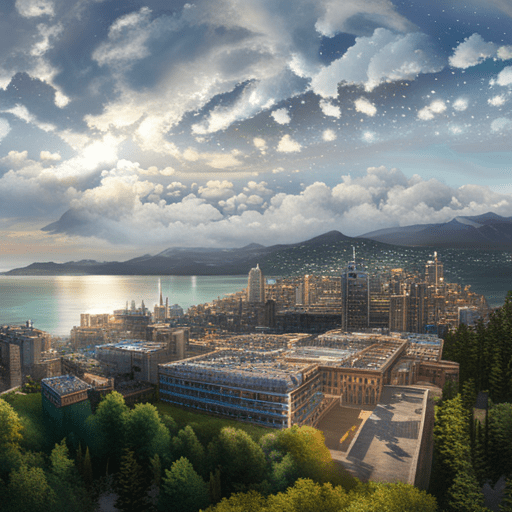
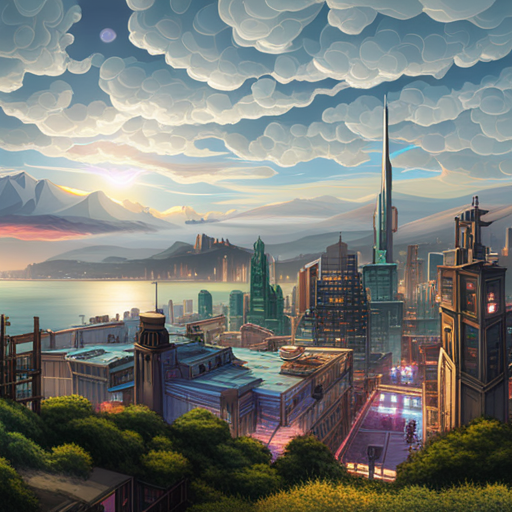
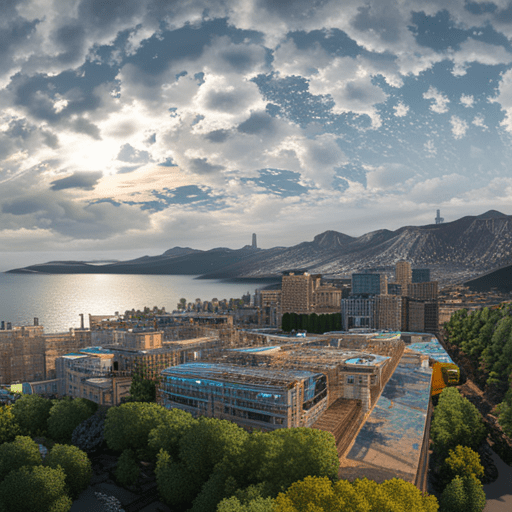
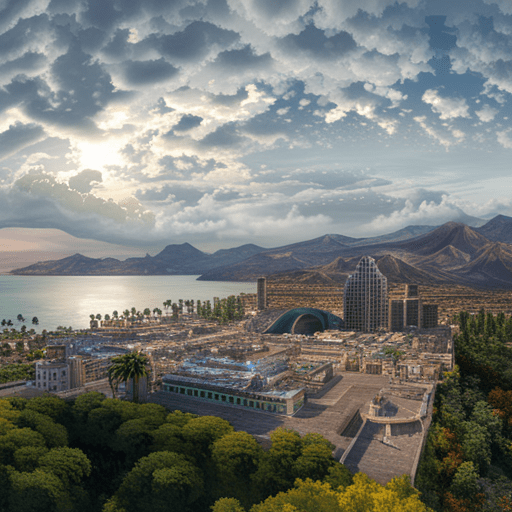
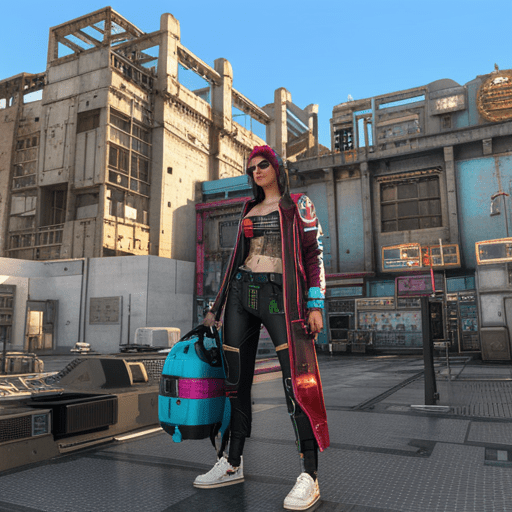
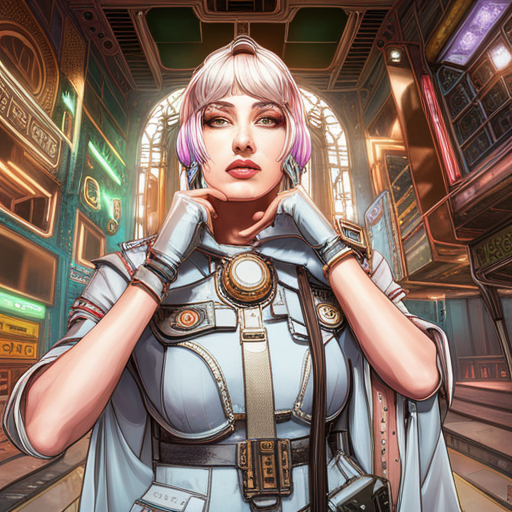
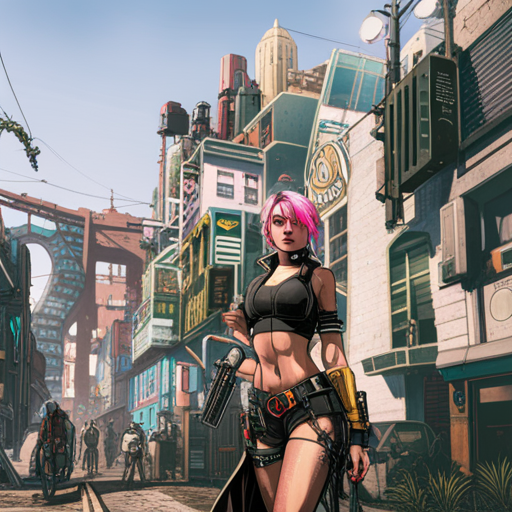
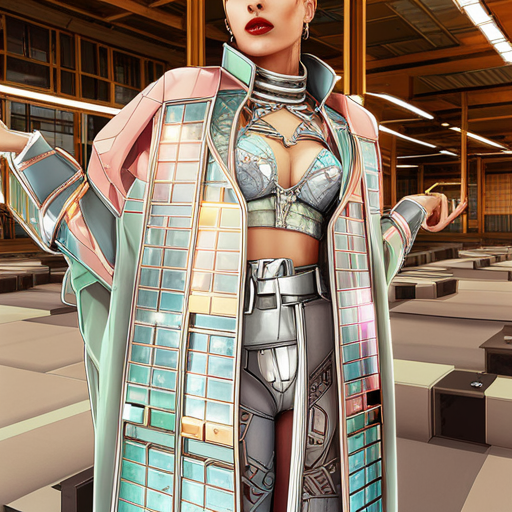
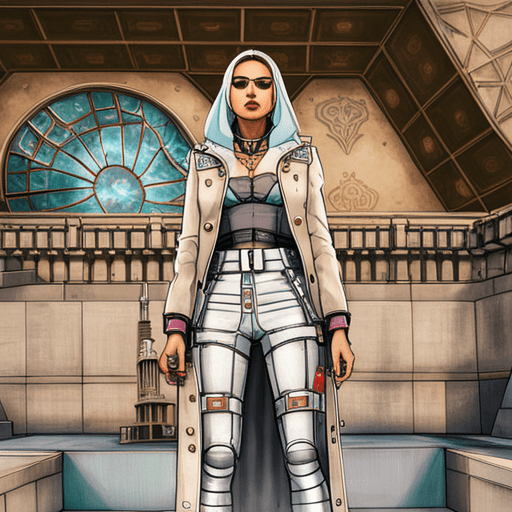
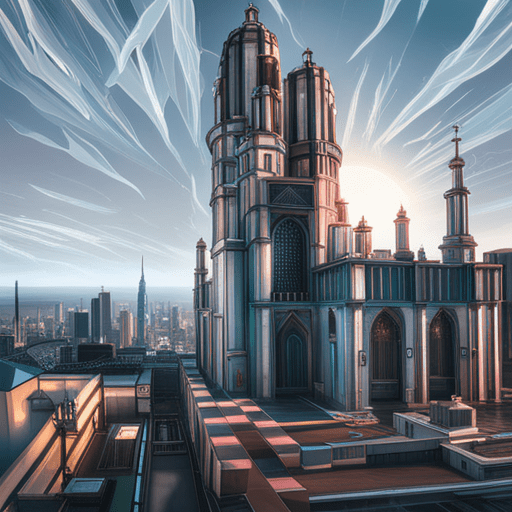
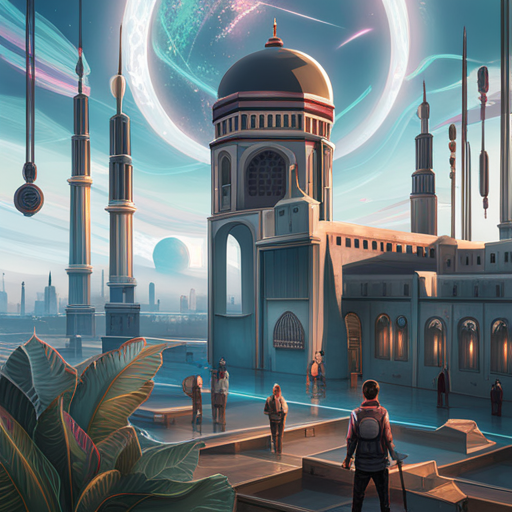
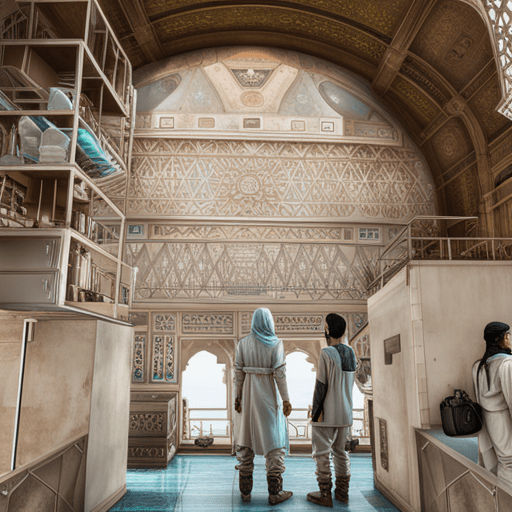
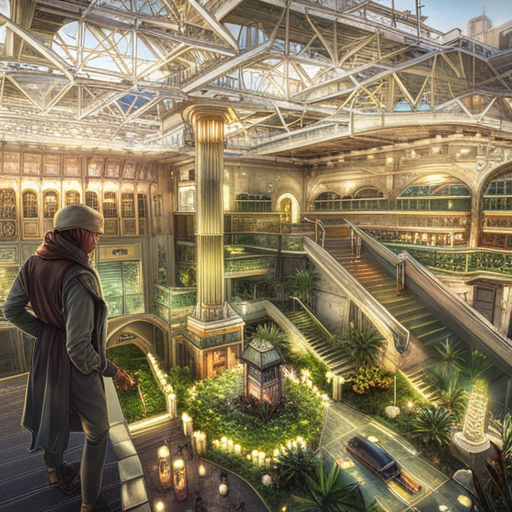
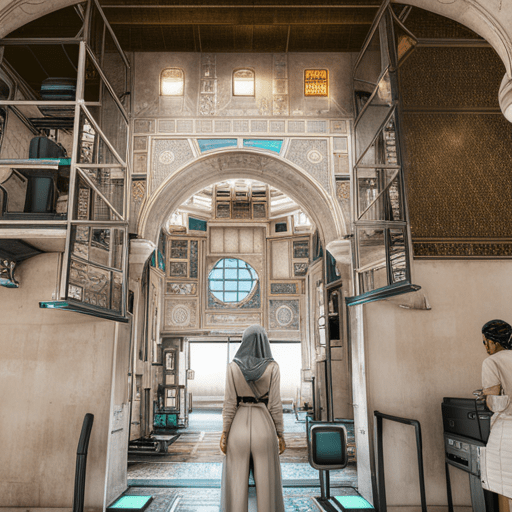
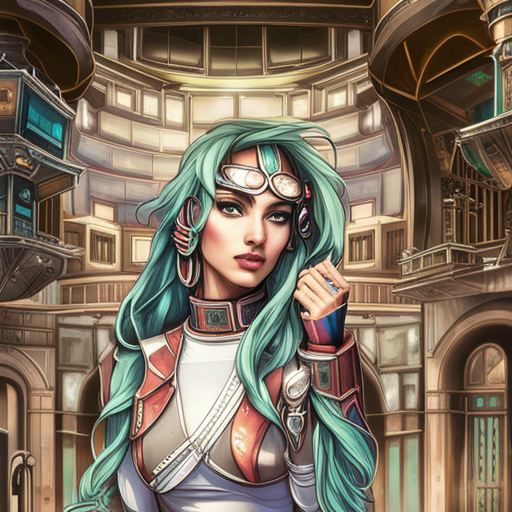
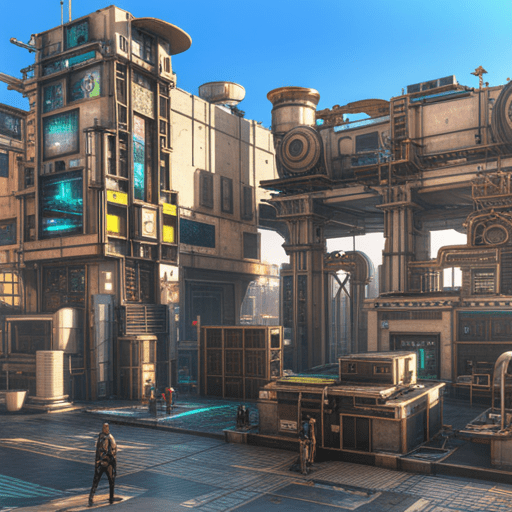
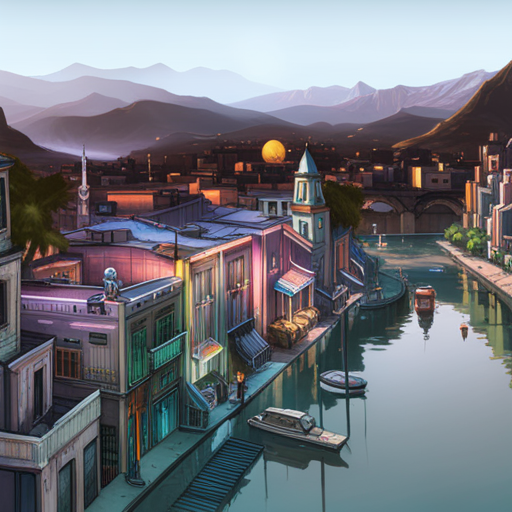
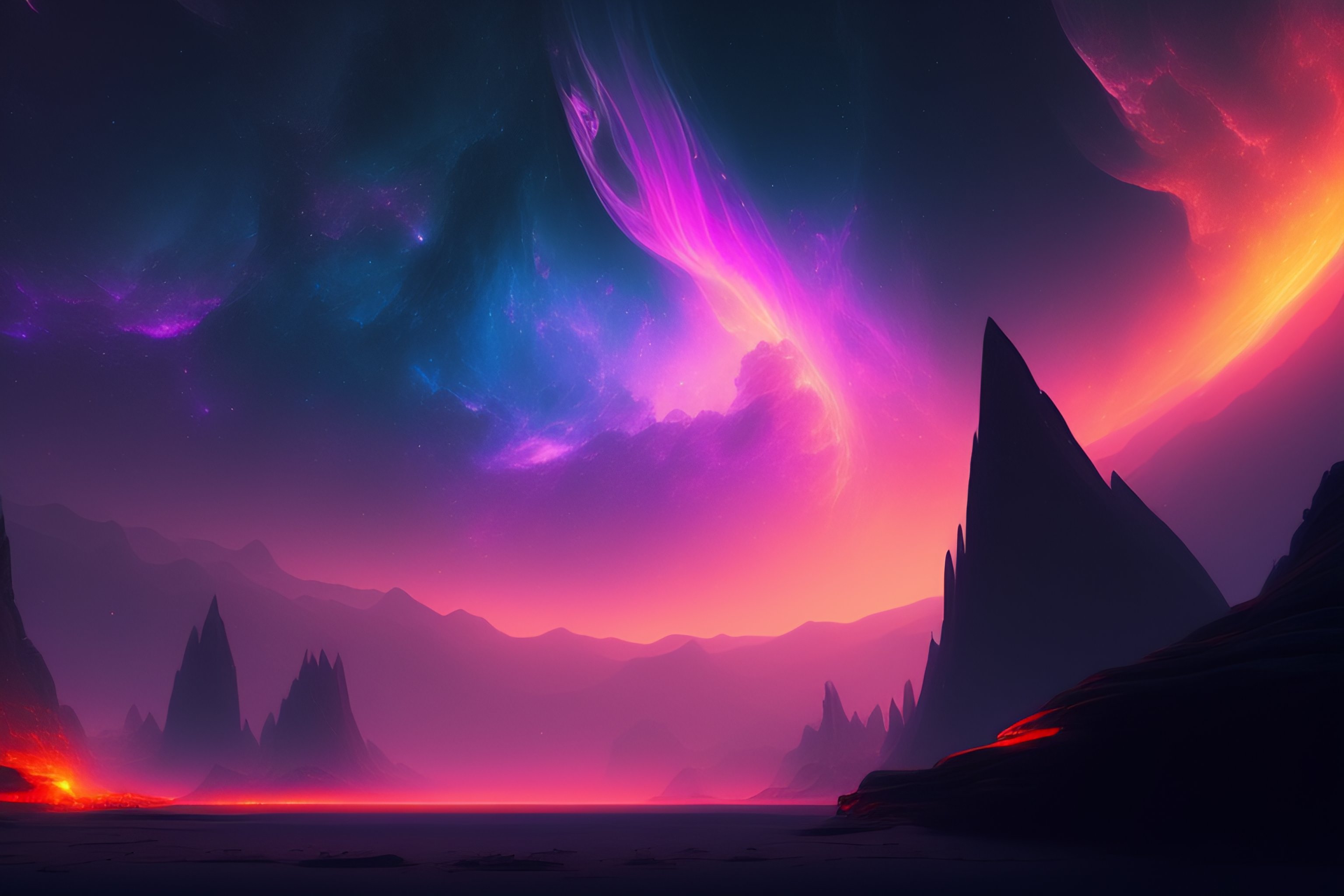
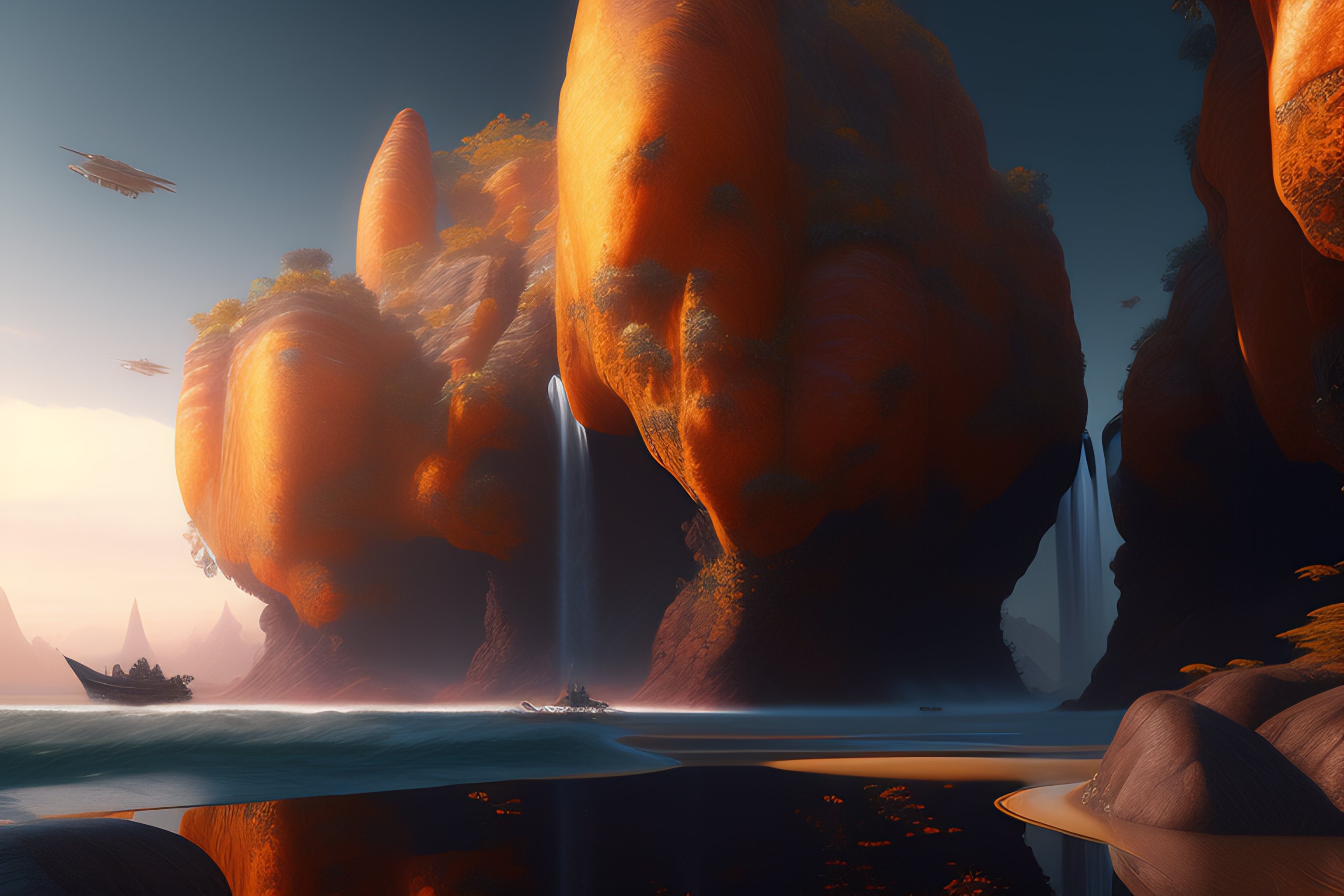
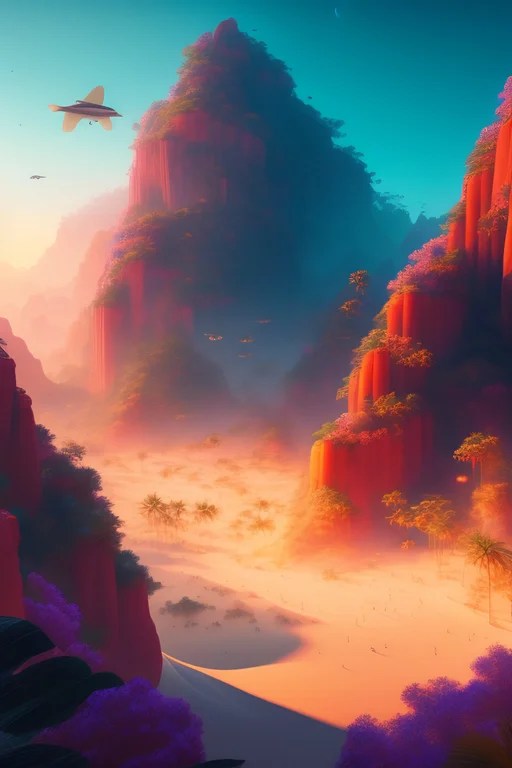
This is a collection of digital art that captures the vision of a solarpunk Spain, along with images of a futuristic Al-Andalus from an alternative timeline in which the Moors were never thrown out.
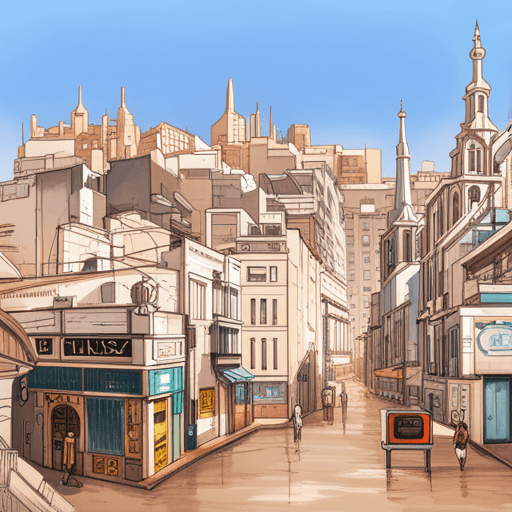
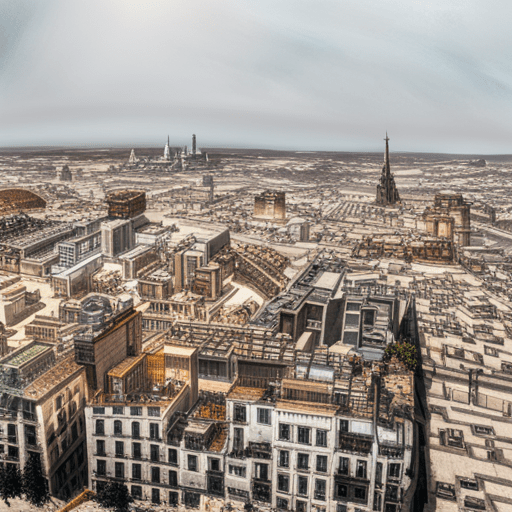
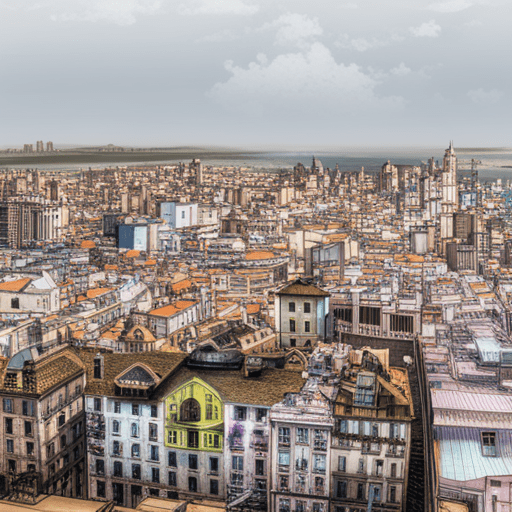
Back in 2022, I visited Madrid, along with Southern Spain, and took hundreds of photos of Moorish architecture, Moorish gardens, picturesque mountain side villages, Granada, and Seville. In this collection of digital art, I used my photos of Spain and enhanced them with Dream Studio, an AI art device. The collection below represents my experiment of enhancing pre-existing art with AI.
SOLARPUNK SPAIN
WHAT IS SOLARPUNK?
Solarpunk is a literary and artistic movement that envisions and works toward actualizing a sustainable future interconnected with nature and community. The artistic genre uses the Art Nouveau style. The aesthetic also makes heavy use of bright colors and is often inspired by Studio Ghibli movies, particularly Castle in the Sky and Nausicaä of the Valley of the Wind.
WORLDBUILDING A SOLARPUNK SPAIN
In a solarpunk story, where renewable energy and sustainable practices shape the world, Southern Spain emerges as an ideal location due to its naturally sunny landscape. Vast solar farms can stretch across the picturesque plains, generating clean and limitless energy to power the cities and communities. This immense solar potential would allow Southern Spain to become a shining example of self-sufficiency and reduced carbon footprint.
The sunny landscape of Southern Spain offers an opportunity for the integration of solar energy into everyday life. Buildings can incorporate advanced solar panels seamlessly into their design, harnessing the sun’s energy for electricity and heating needs. Entire communities can adopt solar-powered infrastructure, including streetlights, public transportation, and charging stations for electric vehicles. The vibrant, sun-drenched streets of Southern Spain can become a hub of clean energy utilization, showcasing a future where sustainable technologies harmonize with the environment.
Southern Spain’s landscape can also inspire innovative agricultural practices. With the right approach, the region can leverage its abundant sunlight to promote sustainable farming techniques. Vertical farms and greenhouses equipped with solar panels can thrive, providing locally grown produce and reducing the need for long-distance transportation. These sustainable agricultural practices would not only contribute to food security but also preserve the region’s natural beauty and biodiversity.
SEVILLE
ANTEQUERA
PARQUE RETIRO AND MADRID
GARDENS
SKYLINES OF MOUNTAINOUS, SOUTHERN SPANISH TOWNS
FASHION
AL-ANDALUS 2077
I used photos of the Alhambra along with Spanish mosques to produce the pictures above. The Alhambra is a palace and fortress complex located in Granada, Andalusia, Spain. It is one of the most famous monuments of Islamic architecture and one of the best-preserved palaces of the historic Islamic world, in addition to containing notable examples of Spanish Renaissance architecture.
ACTUAL HISTORY OF AL-ANDALUS
Al-Andalus was the Muslim ruled area of the Iberian Peninsula. It was a center of learning and philosophy in the medieval world. The city of Córdoba, the second largest in Europe, became one of the leading cultural and economic centers throughout the Mediterranean Basin, Europe, and the Islamic world. Achievements that advanced Islamic and Western science came from al-Andalus, including major advances in trigonometry (Jabir ibn Aflah), astronomy (Al-Zarqali), surgery (Al-Zahrawi), pharmacology (Ibn Zuhr), and agronomy (Ibn Bassal and Abū l-Khayr al-Ishbīlī). Al-Andalus became a major educational center for Europe and the lands around the Mediterranean Sea as well as a conduit for cultural and scientific exchange between the Islamic and Christian worlds.
It was also the home of Ibn Arabi (1165-1240 AD), a scholar, Sufi mystic, and poet who is still extremely influential in Islamic thought and philosophy today.
Ultimately the Christian kingdoms in the North overpowered the Muslims states in the South. Between 1492-1610 massive numbers of Jews and Muslims were expelled from Spain.
ALTERNATIVE HISTORY OF AL-ANDALUS
In an alternative history of Al-Andalus, the Moors were not conquered and driven out. Instead the spirit of knowledge, spirituality, sufi mysticism and philosophy lived on. And once the people of Al-Andalus acquired renewable energy technology in the 21st century, they created a sustainable, post scarcity society where the people advanced beyond the Capitalist grind to create a utopia. In late 21st century, the people spend their days focusing on knowledge, art, culture, spiritual advancement, sufi mysticism, and living in peace with the Earth. They are inspired by the Quran’s description of sumptuous gardens in paradise, along with the command in the Quran not to walk too heavily upon the Earth (17:37).
There are certain things that can turn me into the Orange Jacket Meme Guy/Drake within 5 seconds of seeing a book. Here is the list.
Bad/Mediocre Cover Art: You know what they say, “You can judge a book by its cover.” Trying to save money by making a cover yourself (if you are not a professional artist) is a bad idea. Having a friend make a cover for you is also an equally bad idea. And even if you are a professional artist, it still may be better to have someone else make your cover, as it is hard to be objective about your own artwork. Since the cover is going to be a key thing that sells the book, it’s worth every penny. Even a mediocre or okay cover will not cut it. You need to have a top quality product. Quality art says, “I put time and effort into this.” Otherwise, why should I spend my time and money on something that is not a quality product when there are millions of other books available?
A book cover can cost anywhere from $10-$950. However, the good news is that I have seen decent covers available for anywhere between $80-$250. One way to save money while still getting a quality product is to buy a pre-made rather than custom cover. At the following Facebook page, you can buy quality pre-made covers for around $80. Book Cover Gallery – A Place for Authors and Artists
Bad Summary: After looking at the cover, the very next thing I’m going to look at is your book’s summary (the blurb that is usually on the back cover). A book summary should have at least 1-2 paragraphs. These paragraphs need to tell the reader the following: What is the hook (What is it about this book that will draw the reader into the story)? Who is your protagonist? What is their goal? What are their struggles to reach that goal? What are the stakes? What is a short, summarized explanation of the plot? Tell us about the unique world or situation they are dealing with that makes this different from other books. Read the summaries of popular books to get an understanding of what you should do.
I’ve seen too many self-published books where there are only about 1-2 sentences giving me a vague description like, “This is my book of poems.” Okay, why should I care? Or, “Experience a summer of romance where Bob meets two charming dudes who sweep him off his feet.” Why do I care about Bob or these random dudes? And why should I spend money to see what happens to them? The other problem is writing a summary that is too long. If you can’t summarize your story in under a minute, there’s a good chance that you don’t know the key points of your own story.
Another deal breaker for me in the summary is overdone plots: vampire romance, YA dystopia, and zombies.
Off putting topics: The other day I read a blurb for a self-published book that casually mentioned child torture. That was enough to make me not buy the book. Other hot potato topics are rape, trauma, or anything that relates to cruelty toward animals and children. These topics must be handled with caution if you should decide to mention them.
No Reviews: I’m less inclined to buy a book that has no reviews whatsoever. Definitely beg, bribe, hypnotize, or do whatever you must to get your family and friends to review the book. That will definitely increase the chances of you making a sale.
Grammatical/Spelling Mistakes Within the First Five Pages: With many books, you can read a short sample before you make a purchase. If I see simple mistakes of spelling, punctuation, or grammar in the first five pages, I will definitely not buy this book. What this shows me is that the author couldn’t even be bothered to use a simple spell-check tool. Paying for an editor to review your book is another important investment as a self-published author. Yet it can be expensive, anywhere from $1000-$10,000. However, if you can’t afford an editor, at least pay for a program like grammarly, which will catch most of the basic mistakes for you. This will cost around $144 a year. Yes, it sucks to spend money, but you have to spend money to make money. Few people are going to buy a book with basic grammar errors on the first page.
Bad Writing in the First Five Pages: Of course, writing is a very subjective art. But in terms of the basics I would stay away from, here is a short list:
Cliches such as starting the book with a character waking up and describing their typical day, or the character looking in the mirror.
Nothing happens. It’s just happy people doing happy things.
Too much description about something that is not important.
Too little description. I am not grounded in the world and I have no idea what is happening.
Sexist writing that objectifies women. I get that your male character is attracted to women, but starting out the story with a gratuitous description of her breasts and butt (when this is not erotica) will lose my interest (Yes, I’ve put down books for this reason). And given that 70% of people who buy books are women, this may not be the way to start out.
Too many characters. In many self-published books I’ve bought, I’ve seen the mistake where the author feels a need to introduce all their key characters in the first chapter. Having ten random new people all thrown at me simultaneously makes my head feel like it’s spinning. Try not to introduce the reader to too many people at once.
I would definitely recommend that you pay for a developmental editor if you can afford it. And if not, at least get a friend to read your book and give you feedback before you publish. Also, I would recommend that you join a writers group. A writers group has immense value for developing your skills as a writer and getting free feedback.
I hope this was helpful. Feel free to comment. Now go publish the best book you can!
Until the 1960s, Venus was thought to be a potential location for human colonies and space exploration because it was known that there were clouds on Venus, so there was some speculation that it could have an environment that was similar to Earth. Indeed early pulp science fiction (particularly between the 1930s-1950s) depicted Venus as a lush paradise full of jungles, oceans, swampland, Amazonian warrior women, and even dinosaurs.
It was only in the 1960s, when scientists got a better look, that it was discovered that Venus was super hot and that the clouds are made out of sulfuric acid.
Another problem is that Venus has more volcanoes than any planet in the solar system.
Currently now, much of the discussion of finding another planet for humans to live on focuses on Mars, not Venus. Yet surprisingly, there are many aspects of Venus that could make it a better candidate than Mars, despite Venus being a boiling hot oven of sulfuric acid. So some people are now saying that the original assumption popular before the 1960s was correct. One of the people who has argued that Venus is a better candidate for human colonization than Mars is Geoffrey A. Landis, a NASA researcher who has written much on this topic.
The benefits of Venus are its mass is 82% of Earth’s, and its surface gravity is 90% of Earth’s.
Because of the thick atmosphere, people wouldn’t need a heavy pressure suit, just a simple acid-resistant suit.
Mars, by contrast, has low atmospheric pressure, low temperatures, low gravity, and high exposure to cosmic radiation.
People would not be able to live on the surface of Venus (at least not in its current form). The surface is 900 degrees Fahrenheit (475 degrees Celsius), which means it is hot enough to boil lead.
However, the higher up you get from the surface, the thinner and cooler the atmosphere gets. There’s a sweet spot about 50-55 kilometers up where the atmosphere is down to about normal Earth pressure, and temperatures are similar to the Mediterranean.
As Geoffrey A. Landis says, the surface is hell, but at cloud level, it’s paradise.
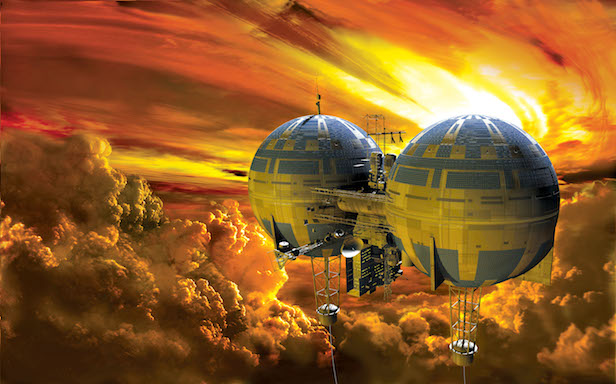
So a possibility is to build floating cities 50-55 kilometers above the ground. But how would one do this?
Venus’s atmosphere may be a vital asset in this endeavor. Venus has an incredibly thick atmosphere, about 100 times that of Earth. Most of the atmosphere is carbon dioxide, with just over 3% being nitrogen, and only trace amounts of other gases. And yet Venus has more nitrogen than Earth, simply because it has so much atmosphere.
There is also a sea of carbon dioxide down on the surface, having characteristics of both a liquid and a gas, which will be important for terraforming the planet, but we’ll get to that later.
Now with regards to the carbon dioxide atmosphere, we must keep in mind that carbon dioxide has a molecular weight of 44, which means that any gas with a lower molecular weight than carbon dioxide can act as a lifting gas, much like helium in balloons on Earth. That means that hydrogen and helium work even better as a lifting gas on Venus than on Earth, but it also means that our normal oxygen-nitrogen air mix could actually make a balloon float on Venus. And you can get hydrogen, oxygen and water out of the sulfuric acid that makes up the clouds.
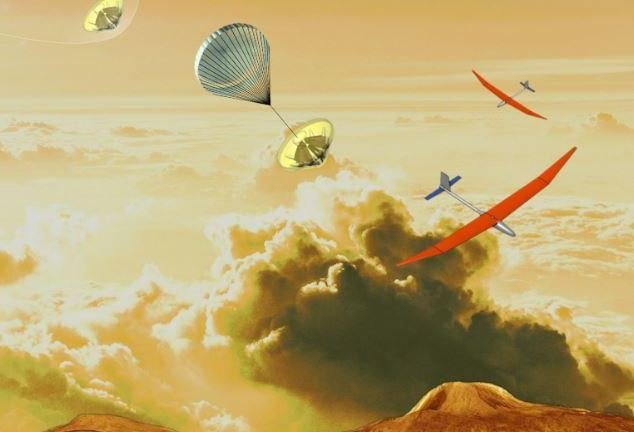
A near-term option for humanity would be to have automated aerostat vehicles in the atmosphere.
But for longer-term habitation, Venus’s colonists could make large, sturdy blimps with the mass manufacture of graphene. What is graphene you may ask? Graphene is the building block of graphite (which is currently used in pencils). This wonder material graphene is the thinnest material known to man, at one atom thick. And yet it is incredibly strong, 200 times stronger than steel. Graphene is also an excellent conductor of heat, electricity and has interesting light absorption properties. Graphene is an exciting material that is getting a lot of attention—especially since the 2010 Nobel prize in physics went to Andre Geim and Konstantin Novoselov, who first isolated Graphene in 2004.
And there is plenty of carbon for making graphene in Venus’s atmosphere. Venus’s colonists could use the carbon to make diamond hard tethers anchoring their blimp cities to the ground. These hard tethers could be possibly strong enough to survive the super-hot, acidic hurricane below. Or the colonists could use them like harpoons with a winch to drag their settlements around like a giant octopus.
Another benefit of Venus, Geoffrey A. Landis points out, is that the super thick atmosphere could provide shielding from cosmic radiation.
Up higher in Venus’s atmosphere, the lighting is a lot like Earth, except that if one stays in the same spot, they’ll have a day-night cycle not of 24 hours but of 243 days. Since the day-night terminator creeps along at a fast walking pace, even at the equator, a colonist could opt to stay in perpetual sunlight, making it handy for solar power or growing plants to help recycle air and water, and to extend food supplies.
In fact, solar arrays can produce just as much energy pointing downward toward the reflective clouds as they can produce by pointing toward the sun.
There is also a superabundance of solar energy to power engines. And all the wind allows colonists to use wings to provide lift for a plane or a kite, not just balloons and buoyancy. So, there are a lot of options for transportation and moving around in the clouds.
The abundance of atmospheric carbon dioxide and nitrogen will also be a useful resource for greenhouses.
The creation of mining robots could allow people in these sky cities to have autonomous sources of production that could give them a good deal of free time for recreation, education, family life, and spiritual reflection.
Venus also has a surface area 3.1 times the land area of Earth. With all this room, a billion habitats, each one with a population of hundreds of humans, could be placed in Venus’s atmosphere.
Floating cities would have their obstacles. Floating cities on Venus would have to be very thin and very lightweight to float. The colonists could also just orbit the planet in conventional rotating habitats. Yet being lower in the atmosphere would protect from meteors and radiation. Geoffrey A. Landis says the thick atmosphere would protect from radiation. But if this is not enough, the colonists could also put their blimps in water shielding to add some protection.
Venus’s surface is way too hot for humans to mine on their own. But they could control mining robots from up in their floating habitats and deliver the goods by going up a tether in the form of a high-temperature fullerine tether. Or the robots could pop compressed gas cartridges to fill balloons and float back up.
A settlement could float over a spot they are mining.
TERRAFORMING VENUS
Terraforming Venus is another option. And given Venus’s mass and gravity, it may be the best candidate for terraforming in the solar system.
Terraforming could be accomplished by constructing a dome or an enclosure on the planet, which would grow to encompass most of the planet’s usable area. This could be part of the process of cooling down Venus.
Part of the reason Venus is so hot is its thick atmosphere. But a major reason for the heat is Venus’s proximity to the sun. If one blocks out the light between Venus and the sun, they could reduce that heat. Colonists could use massive shades that are about as big as a football field but don’t weigh too much. Ideally, they would want to use something very light and strong, like graphene made of carbon. The colonists could manufacture these graphene shades on the cloud cities of Venus and deploy them to the Lagrange point between the sun and Venus by the millions until they shade Venus’s atmosphere. The atmosphere would then begin to cool. The thick atmosphere would start to liquefy and turn into seas of carbon dioxide.
The floating cities would probably not survive the process of liquefying the atmosphere, so the colonists would have to abandon them and retreat to orbital colonies. Or they could modify the floating cities to safely survive the process (like some Johnny Quest car blimp?) and be able to land on the seas of carbon dioxide and survive the changeover of early terraforming. During cooling, there would be a ton of earthquakes and maybe volcanic activity while it snows dry ice. And then, the colonists would have to find a way to export or permanently sequester all that carbon dioxide so they could warm the planet to an Earth-like temperature and an atmospheric composition.
Another possibility for clearing the atmosphere of Venus would be to use solar mirrors instead of shades. This would heat the planet even more and evaporate the atmosphere away.
But if the colonists went with the strategy of cooling the planet, they could keep cooling it until the seas of carbon dioxide froze and turned into surfaces of dry ice. Then they could pave over that and introduce dirt and water.
The trouble is, how to get enough water for oceans?
There is a large amount of water available in Venus’s atmosphere. But it isn’t enough for real oceans. It’s enough for people to drink and to farm food inside greenhouses. But it’s not enough to make a classic biosphere. For that, the colonists would need to come up with somewhere between 10-100 billion megatons of hydrogen.
One possibility is to boil hydrogen off the sun since the sun is a massive source of hydrogen.
Another possibility is to import the hydrogen from Jupiter or Saturn.
However, when it comes to making Venus more Earth-like, there is also the problem with Venus’s day length. Venus’s day is longer than its year. The sun would rise in the sky and stay there for months before setting for more months.
There are three approaches to this:
First, ignore it and adapt to life on a planet like this.
Second, place mirrors in orbit around Venus to bounce light down on the night side and block incoming sunlight on the day side to simulate a 24-hour day cycle.
Thirdly, the colonists could also make a fake sun with lots of mirrors to bounce light to something about the same angular size in the sky as the sun in Earth’s sky. All the mirrors and shades could also protect Venus from radiation. Though colonists would still want to consider an artificial magnetosphere to hold the atmosphere in. They can’t expect the atmosphere to stick around on its own once they make Venus earth-like.
The other alternative is to go all in and adjust Venus’s rotational speed to a 24-hour day, or maybe save some energy and let people sleep in longer with a 26-hour day. Yet the colonists would need massive amounts of energy to change the rotation of a planet. They would need 10^29 joules of rotational energy to do this. To put that in perspective, it’s more than a billion times the amount of electricity 21st century Earth uses each year. It’s also only a few years of energy output from the sun. (Though it would take roughly the same amount of energy to ship in enough hydrogen to create an ocean.)
Accomplishing this task could come in the form of sending a large beam of hydrogen from the sun like a water jet, hitting one side of the planet Venus, injecting hydrogen and spin. If we were getting the hydrogen from gas giants instead, each of those ships and pods would be moving quite fast, carrying a large amount of kinetic energy. The amount of kinetic energy needed for massive transports of hydrogen would be in the same ballpark as rotational energy. So the colonists would need to figure out how much hydrogen they want and how much rotational energy they need and make sure each pod of hydrogen is moving at a speed to deliver that energy. If that were moving too fast, they might ship in comets or massive balls of ice and let the extra mass carry the extra kinetic energy. It would still be very tricky to get this process to work. But a benefit of this is that if the planet is spinning fast enough, it could generate a magnetosphere, so the colonists wouldn’t have to generate an artificial one.
Another possibility is to give Venus a moon and use it as a gravity tractor to impart spin. And the outer planets of our solar system have an abundance of moons, along with excess hydrogen. The colonists could also take the excess carbon from Venus and build a fake moon.
While these are all interesting ideas, the reality is that terraforming Venus would most likely take thousands of years. So this would involve a long-term commitment that would outlast the length of many civilizations. The kind of society willing to do this would either have to be very dedicated, or they might be some form of artificial intelligence with a lengthy lifespan.
The residents of Venus have a few options: The orbital colony route, the floating city route, the para-terraforming route where they use shades to cool the planet down and use orbital mirrors to create a 24-hour day, or go big and start spinning the planet up to a 24-hour day by importing shipments of hydrogen or water to impart that spin momentum.
The colonists also don’t only have to do one option. They could have several phases or multiple options pursued simultaneously.
Carbon in the form of graphene will likely be the preferred building material of the future, so Venus could export gigatons of that.
For export, Venus has lots of carbon dioxide, nitrogen, and solar or wind energy for industrial processes. They could also build solar-powered satellites for export, along with shades and mirrors for terraforming.
Mining the surface (which is primarily a basaltic silicate), will provide silicon, iron, aluminum, magnesium, calcium, potassium, and sodium.
Venus could give Mars pods of nitrogen for their terraforming process, which could get shipped to their atmosphere and shot down. Metal for the pods would come from mining the surface of Venus.
Venus is closer to Earth than Mars. With current propulsion systems, launch windows to Venus occur every 584 days, compared to the 780 days for Mars. Flight time is also somewhat shorter; the Venus Express probe that arrived at Venus in April 2006 spent slightly over five months en route, compared to nearly six months for Mars Express. This is because at closest approach, Venus is 40 million km (25 million mi) from Earth (approximated by perihelion of Earth minus aphelion of Venus) compared to 55 million km (34 million mi) for Mars (approximated by perihelion of Mars minus aphelion of Earth) making Venus the closest planet to Earth.
Then there is the accessibility of asteroids from Venus. In terms of flight time, Venus is closer to the Asteroid Belt than either Earth or Mars. Geoffrey A. Landis argues that the higher orbital velocity of Venus makes transfer orbits somewhat faster and increases the number of transfer opportunities to various asteroids in the Asteroid Belt.
There is also the possibility of tourism on Venus. The appeal is that people can walk around beautiful sky cities without a heavy pressure suit. And with the thick atmosphere, there is the possibility of hang gliding with just a mask and a thin acid proof suit.
As mentioned at the top of this article, Venus was a popular planet in early science fiction before it was known that the surface was hot enough to melt lead. Therefore, there are quite a few examples of humans colonizing Venus, especially in the age of early pulp Science Fiction. But be aware that these examples do not offer accuracy given what we know about Venus today. I mean…especially not with the dinosaurs and Amazonian warriors and so on.
In the early pulp science fiction of the mid twentieth century, there was a lack of agreed upon canon about what Venus was like, given that the stories about life on the planet included everything from thick jungles, to a water world covered in oceans, to widespread deserts. In comparison, the writing about Mars was much more uniform.
Science fiction scholar Gary Westfahl attributes the disparity largely to the image of Mars made popular by Percival Lowell around the beginning of the 20th century. By contrast, very little was known of Venus aside from the fact it had clouds.
Disclaimer: I produced a list below of examples of Venus in science fiction. This list below doesn’t represent all instances of Venus in science fiction, as there are multiple instances. The list simply represents a few examples I have chosen to highlight.
A True Story by Lucian of Samosata – 2nd Century A.D. (One of the earliest known examples of interplanetary travel in fiction. Lucian refers to Venus as the ‘morning star.’)
Voyage à Vénus by Achille Eyraud 1865 (One of the earliest known uses of Venus as the primary setting in fiction)
Last And First Men by Olaf Stapledon -1930 (A book that discusses genetic engineering for interplanetary colonization.)
“The Big Rain” by Poul Anderson – 1954 (Anderson writes about terraforming Venus’s atmosphere.)
Perelandra by C. S. Lewis – 1943 (This is a retelling of the story of Adam and Eve in the Garden of Eden on floating islands in a vast Venusian ocean.)
2312 by Kim Stanley Robinson – 2012 (A very well written novel showing human colonization on multiple worlds in our solar system.)
“The Sultan of the Clouds” by Geoffrey A. Landis in Asimov Magazine – 2011 (I highly recommend this story for anyone who wants a more scientifically sound depiction of what life on Venus could look like. This is written by a NASA researcher.)
The Snows of Venus by G. David Nordley in Analog magazine – 1991 (In this story, G. David Nordley suggests that Venus might be spun-up to a day-length of 30 Earth days by exporting its atmosphere of Venus via mass drivers.
In an unnamed central European country after the Great War, a humble fishmonger gets caught up in a world of espionage and intrigue when he answers the wrong phone call.
This thriller meets absurd comedy of errors is currently on Apple Book’s Best Books of May list. They call it “the most fun spy thriller we’ve read in ages.” And Publishers Weekly calls it “a stellar debut.”
I had the pleasure of discussing this novel with the author himself and have included our chat below. Not only did we talk about the book, but we also discussed the process of writing and publishing with an independent publisher.
Jessica: What inspired you to write Citizen Orlov?
Jonathan: I caught COVID-19 and had some weird fever dreams. In one dream, I was back in my government days and they sent me on an assignment to a strange, foreign country. Somehow I managed to get there without knowing where I was. Anything is possible in dreams, of course. As soon as I arrived, someone started shooting at me. I remember a sense of indignation about this. I was only following orders. Who was trying to kill me and why? In the morning, I wrote down the dream and it became the kernel of CITIZEN ORLOV.
Jessica: What is your process as a writer? When do you find time to write? How long did it take you to write the novel? What was your editing process like?
Jonathan: I’m not an x-words-every-single-day sort of writer. I do a lot of pondering and planning before I get into drafting. On my masters course they called this pre-writing. I like that concept. Once I get into the first draft, then I write every day, but I need to know where I’m going first. CITIZEN ORLOV began life as a novella, but my writing group encouraged me to expand it into a novel. So, the writing process was a little on and off, over about a year.
I was nervous about the editing process because I thought: what if my editor doesn’t ‘get it’? What if they don’t understand what I’m trying to do? Luckily, my editor, Elana Gibson, absolutely got it. It was clear to me in our first meeting that she understood what I was going for and could help me get there. On that first call we spent ages talking about Wes Anderson and Coen Brothers movies and I immediately relaxed. After that, the process was a pleasure. Elana had some great ideas for drawing out and clarifying the themes and tone of the story.
Jessica: Describe the experience of publishing a book through an independent publisher. What made you decide to go indie? How do you think the process might have been different than publishing with one of the big 5 publishers?
Jonathan: I started out pitching agents for a few months but I was getting no feedback aside from some rote rejections. I still don’t know if any of those agents read a single word of my work versus my query letter. So, I switched to pitching small presses and got an offer almost immediately from CamCat Books, an independent publisher based in Nashville, TN.
I was drawn to CamCat because their submission process was way more onerous than most; it was like an exam. I really liked that because I thought: at last, there’s a chance someone is actually going to read my stuff. They loved it and made me an offer. It was an easy decision, because they were so enthusiastic about the novel.
This is my debut novel, so I don’t really know how to compare my experience with the Big 5 process. Of course if you go via an agent there’s an extra step where the book is out on submission. I imagine the editing process is similar, but the marketing process is probably different, given that the Big 5 have bigger budgets.
Jessica: What were some of your favorite moments?
Jonathan: Honestly, the process has mostly been a pleasure. I’m learning new things about publishing every day. Although CamCat is a small team, they have a ton of experience in publishing and so it’s been like a crash course for me in how the industry works.
Jessica: What have been some of your challenges in this process?
Jonathan: One of the most nerve-wracking moments was when they sent me five cover concepts and asked me to make detailed comments about them. I’m not really a visual person, but luckily I’m married to a professional artist and former graphic designer, so I asked my wife to take a look and that was a big help. The concepts were all so different and it felt like a big decision.
Jessica: What was the marketing process like for your book?
Jonathan: Well, the marketing process is still ongoing. I’ve been working with CamCat’s marketing team and also an external publicist. I think the most important part of that process has been the team sending the book out for reviews, which mostly hasn’t involved me as the author. My inputs have been doing interviews with magazines and in some cases writing articles about the books that have influenced my work, and so on.
My publicist is going to continue working with me for about a month after publication, and we’re expecting reviews to keep coming in over that period.
I’m also looking forward to attending ThrillerFest in NYC for the first time. I’m in the International Thriller Writers debut authors program, which means I’ll get the chance to pitch my book to the whole conference, just a week after it’s published.
Jessica: What did you learn in this process of publishing your first book?
Jonathan: The biggest single lesson I’ve learned so far is that publishing a book is a team sport. Writing often feels solitary, but publishing is definitely not. I can’t count the number of people who’ve had a hand in bringing CITIZEN ORLOV to the market, but the process has involved lawyers, finance folks, editors, designers, marketeers, a production coordinator, a publicist, a printing company and a distribution company, as well as reviewers, and the bookstore that’s agreed to host the launch event.
Jessica: What advice would you give other people looking to publish a book?
Jonathan: For those looking to get traditionally published, my advice is: make your work stand out. Find ways to make your work different. And, of course, make sure the quality is good enough to publish. From what I’ve seen so far, it seems that everyone in the publishing industry is awash with manuscripts. No surprise there. So, there’s not much point in pitching work that’s not ready for prime time or—dare I say it—work that’s boring. Publishing folks are run off their feet. Send them something that will stop them in their tracks and make them take notice.
Jessica: Thanks for your time, Jonathan Payne! I highly appreciate your deep dive into the process of publishing with an independent publisher.
For the rest of you, be sure to check out CITIZEN ORLOV. It’s a fun novel and a page turner to be sure.
It is available for pre-order on Amazon right now, and will be published May 23rd.
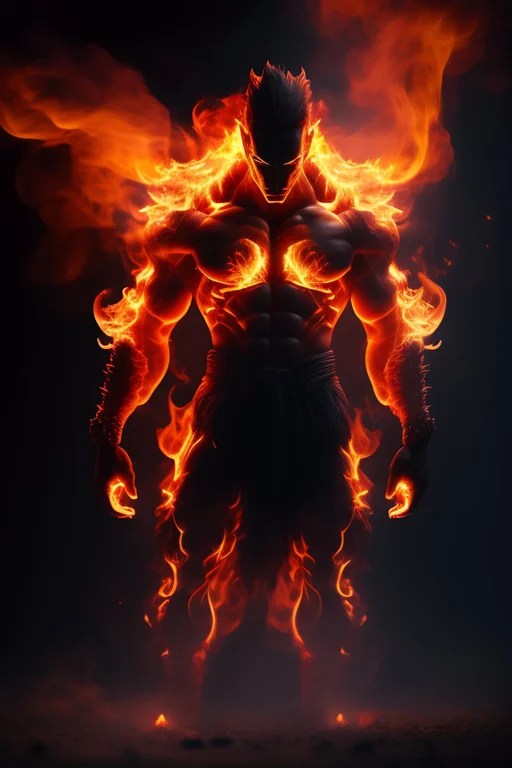
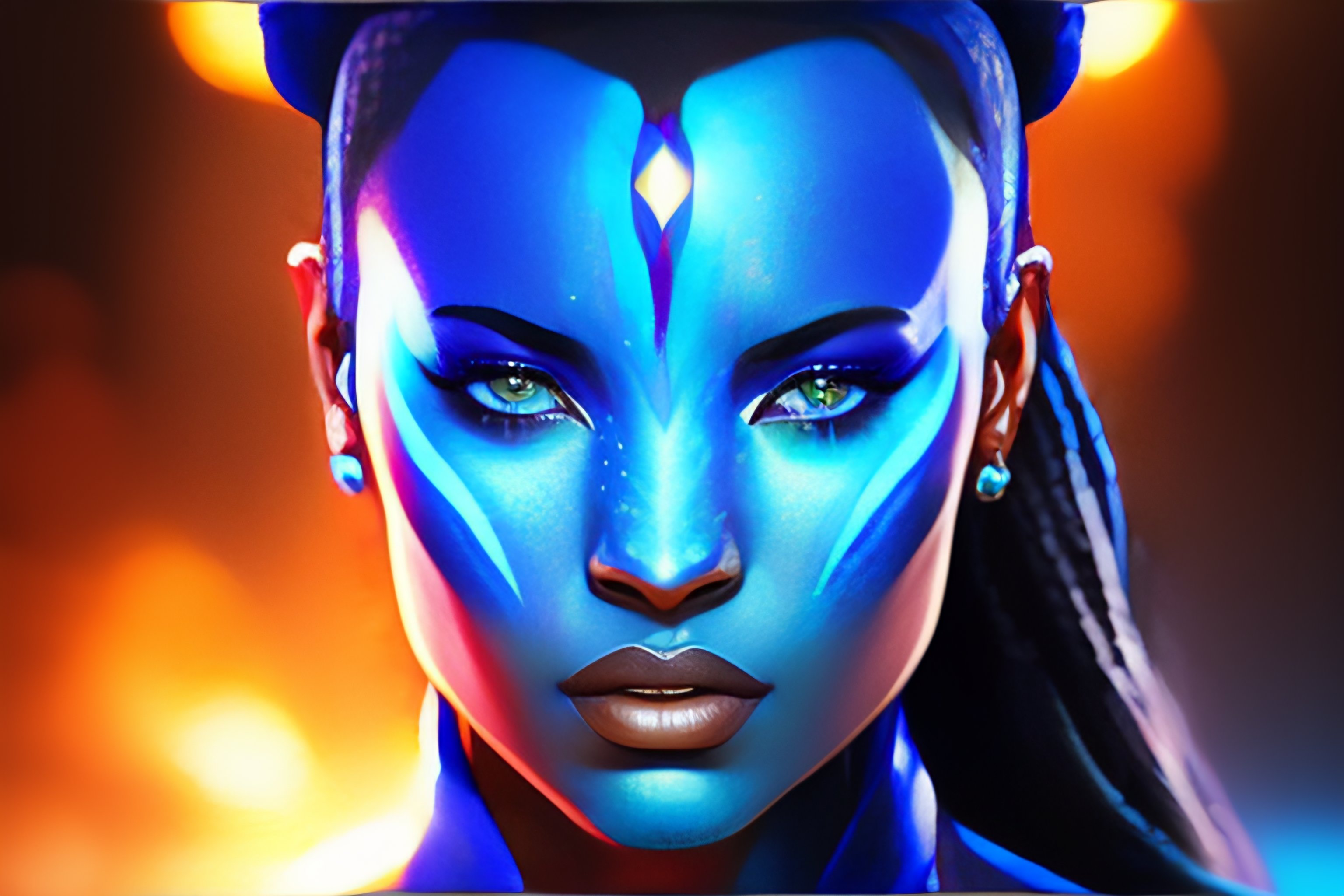
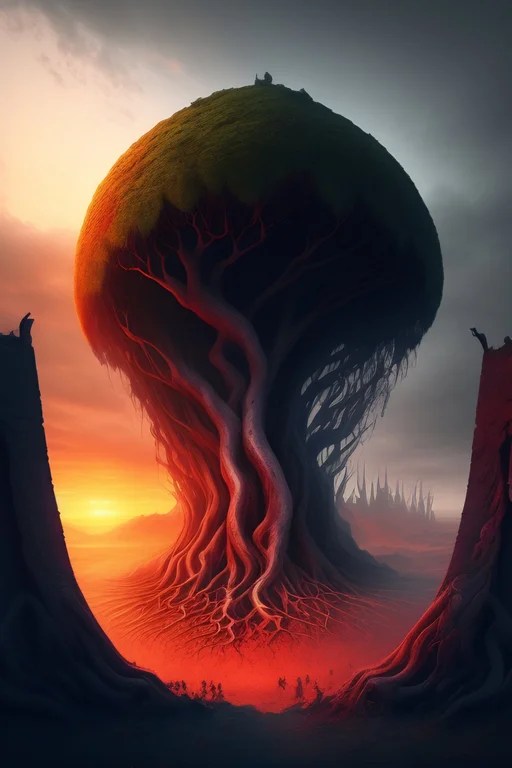
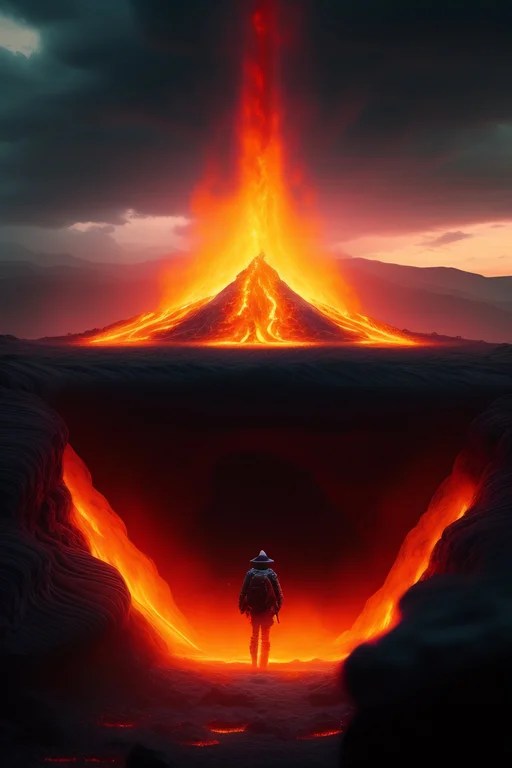
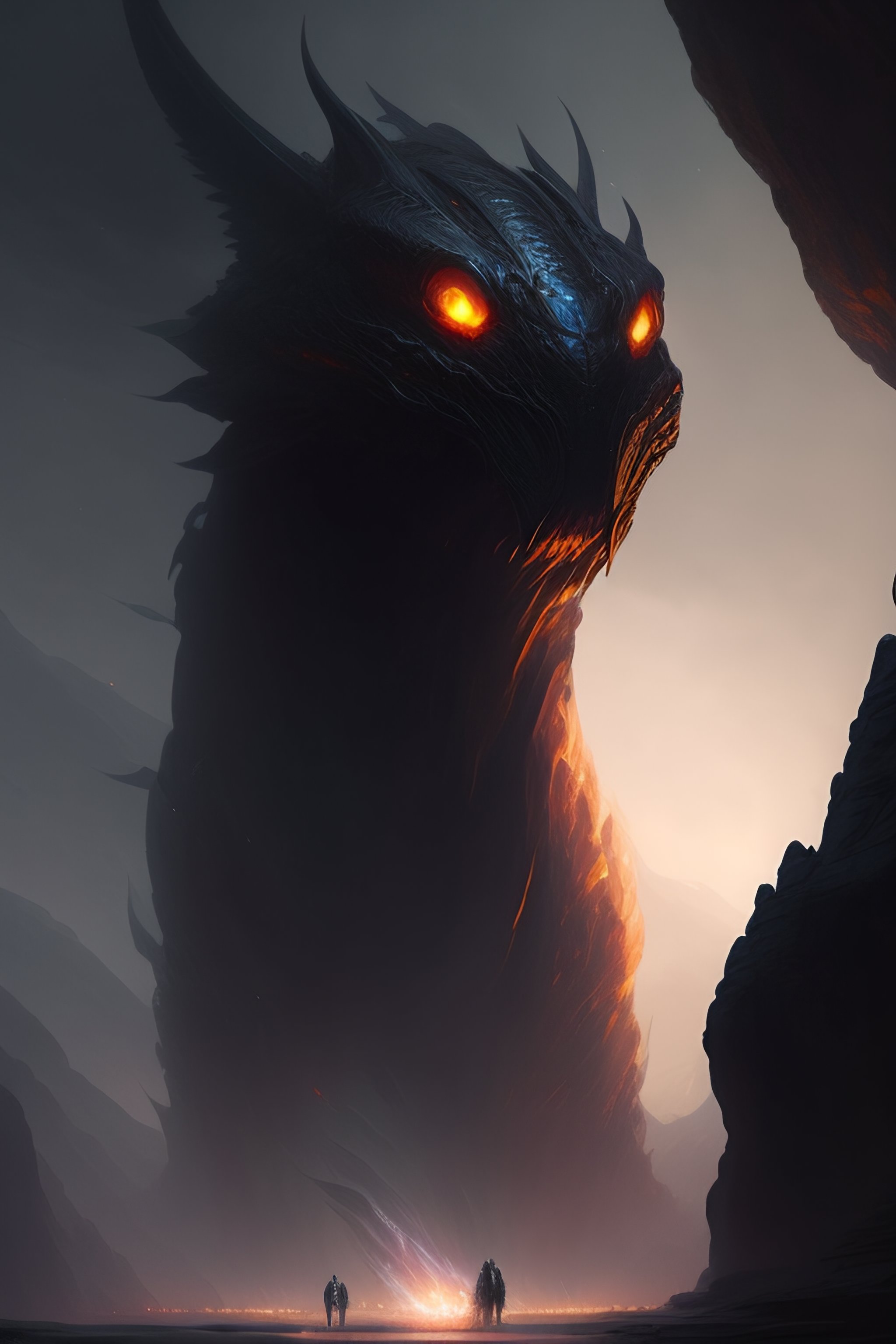
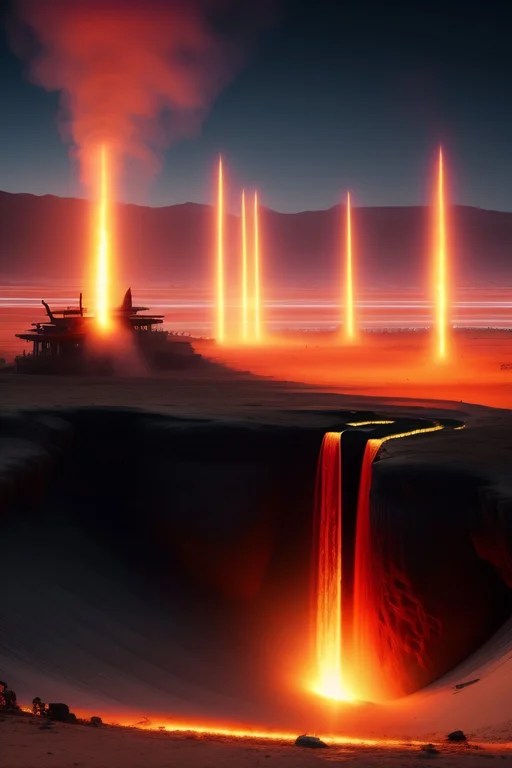
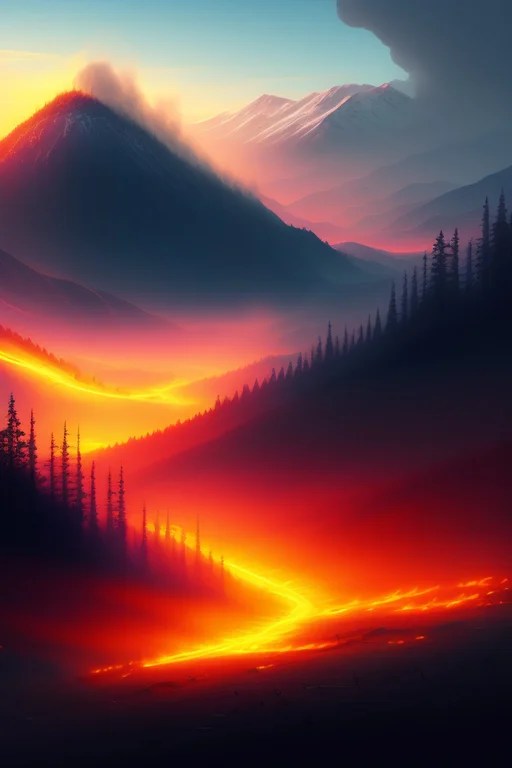
Above is a fan art concept I generated for Varang, the female leader of the Volcanic Na’vi clan of ash people.
After seeing Avatar The Way of Water in 2022, I wondered what other kind of Na’vi lived on the moon Pandora. And my next thought was Fire Na’vi, Desert Na’vi and a Subterranean Na’vi who live in a fungal biome. Above you can see a gallery of fan art based on the fire concept.
I produced the art with Lexica, an AI art generator. See more fan art for Volcanic Na’vi here.
Apparently two of my three Na’vi predictions were correct. According to the Avatar Wiki, there are plans in the works for the third movie to focus on the element of fire. The Na’vi in this movie are supposed to be “ash people,” or an aggressive volcanic clan led by a female Na’vi known as Varang. And unlike the first two movies where the Na’vi are portrayed in a positive light, Avatar 3 will show the opposite.
There are also plans for an additional culture known as the Windtraders who come from the desert and trade items.
World Hijab Day is an annual event founded by Nazma Khan in 2013, taking place on 1 February each year in 140 countries worldwide. Its stated purpose is to encourage women of all religions and backgrounds to wear the hijab (Islamic head covering) for a day and to educate and spread awareness on why hijab is worn.
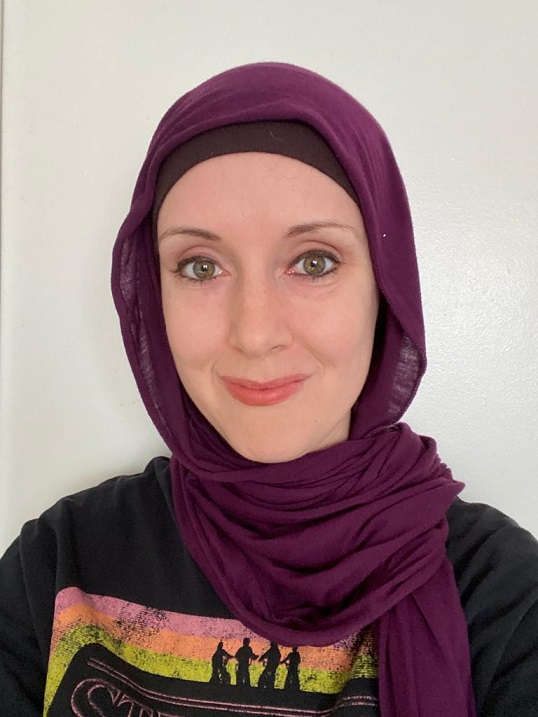
Why do I wear the hijab (the Islamic head covering)?
As I wrote all this out, the content matter actually got a lot darker than I originally intended. This brought up themes about how women are objectified sexually in society, and how this objectification leads to mental and psychological distress. It’s a dark conversation, but I think it’s one that is more relevant today than ever. So if you are willing to read something with a bit of a heavier theme, please continue.
Part of my answer as to why I wear the hijab is an explanation of what I am attempting to leave behind. Of course if any kind of sexual harassment happens, it’s the sexual harasser’s fault. But there are a set of extremely toxic social standards that I no longer wish to associate with or even pretend to accommodate.
If there is one thing that men need to understand about being a woman, it is that we grow up being bombarded constantly with the message that our worth as a human being is directly connected to how sexually attractive we are. This sexual objectification happens everywhere in every culture. Of course attractive men are treated better than unattractive men as well. But I feel that the amount of pressure and attention given to a woman’s appearance is far greater.
A particular enlightening conversation on this issue was one that Dustin Hoffman had about his role in the movie Tootsie. In this movie, they do as much makeup as they can to make him look like a real woman. And yet when he saw his female self on screen, he felt disappointed that he wasn’t more beautiful. He started crying because he realized that he wouldn’t even talk to his female doppelgänger at a party because she didn’t fulfill his own standards of female beauty. And in that moment, he realized how much female attractiveness was tied in with concepts of self worth as a human being.
If I say the name, “Hedy Lamarr,” you may know her for being a beautiful actress. Fewer people know that she was also a brilliant inventor who invented the frequency hopping technology that would lay the foundation for wi-fi. If I mention Kim Kardashian or Paris Hilton, you may think of their sex tapes. You might not think of the fact that Kim Kardashian has done political work to help prisoners, or that Paris Hilton has lobbied for youth home reform. If I mention Dolly Parton, there are two big things about her that may come to mind. Those two things are probably not included in the millions she has donated to charity.
Millions of Americans feel uncomfortable about their bodies. Seven million women and one million men in America have an eating disorder. Women represent 90% of all people with Anorexia.
Women will spend a quarter million dollars on their appearance in a lifetime. And women today are spending thousands on new silicone breasts and new silicone bottoms. They are vacuuming out fat from parts of their bodies to put in other parts of their bodies. They are injecting fillers into their faces that have potential to cause their facial muscles to droop so they have to constantly get more fillers. They get burning hot wax ripped off their skin and private parts. And if a woman simply allows the hair to grow on her body that is natural, complete strangers will loudly and rudely comment that she looks unnatural.
People may think things are getting better today for women with the body positivity movement and new and inclusive beauty standards. But I am not sure if this is the case. Ever since kids have started using social media more in the 2010s, self harm behavior has been spiking severely for young women, while remaining steady for young men. Why is this the case? The theory is that boys are mainly looking at YouTube videos about video games, while the Instagram and Tiktok feeds for young women are overwhelmingly full of beautiful Influencers. The anonymity of the internet is also conducive to bullying. Teens can more easily bully a young woman for not fitting in or not looking “the right way.”
And today it’s no longer just that young women feel as if they must compete with the most beautiful women. Now they also have to compete with digitally enhanced women who look way better on screen than anyone could ever appear in real life. This is a cruel social battleground where a woman’s declining self worth not only leads her to develop health and psychological disorders, but also opens her up to other forms of exploitation and abuse. I’m astounded by how many beautiful women out there think they are ugly. I astounded by how many young men just can’t be attracted to a woman who is clearly attractive. And I am saddened by the women who tell me they feel pressured to dress in a certain way by society in order to be liked or accepted.
I remember one time as a teenager I saw something on television about how Saudi Arabia had a contest to see which woman was the best person. They evaluated a group of women all hidden under their black niqabs, and gave a prize to the woman who spent her time taking care of her elderly parents.
In the West we like to look down our noses at the Muslim countries. We’d like to think we’re so much more enlightened. I’m not saying there aren’t problems in Saudi Arabia. But how likely is it the U.S. would have a beauty pageant based solely on a woman’s personality, and not her appearance? That would happen on a cold day in Hell, right?
I remember the most socially comfortable I’ve ever felt anywhere was when I was dressed in my Mass Effect Quarian costume at AwesomeCon. I was wearing a helmet that hid my face. And the rest of my body was hidden as well. When people interacted with me, they were interacting purely with my personality and the cool costume I constructed. My body and sexuality were a private thing that was just for me.
After a lifetime of enduring weird, inappropriate and sometimes life-threatening statements about my appearance (which started when I was 8), I feel like I’ve finally reclaimed my body for myself as a hijabi. I’m not saying that people are never rude to me. But what I am saying is that I am setting a clear visual boundary. Psychological boundaries are very important for social interaction. For me, visual boundaries are important as well.
Obviously, sexual harassment can happen regardless of what a woman is wearing, but at least dressed like a hijabi I feel like I have some control over what I want to show and what I don’t want to show. I feel like my body is mine, and not some product that exists to be judged by today’s shallow, consumer obsessed, hyper capitalist society.
I feel empowered and free to be me.
Update for 1/31/25:
As I read this post I wrote two years ago. I want to also add that part of the reason I wear the hijab is for Muslim representation. There is frequent and constant misrepresentation, and propaganda that seeks to dehumanize 2.5 billion diverse people on the planet. Unfortunately, it’s common to “other” people who aren’t the predominant demographic.
By wearing a hijab and being myself, I can invite those around me to check their assumptions about Muslims. It may be easy for people to have negative assumptions when they are rarely interacting with Muslims in their day-to-day lives (or are interacting with people who they don’t realize are Muslims, as a large number of Muslims don’t veil and simply dress like the people around them). Many people would be surprised to find out that famous personalities such as Dave Chappelle and Ice Cube are Muslim.
If you read here, you’ll see that there are countless American Muslims who are famous comedians, NFL stars, scientists, musicians, writers, Nobel prize winners, politicians, and civil servants.
I hope you found this to be an interesting read. If you have questions, feel free to comment!
We’re all familiar with the depiction of cancer on TV. Someone goes to the doctor for a couple of tests. In the very next scene, they are in the doctor’s office. The grave faced doctor gives them the bad news. A minute later, they are in the hospital hooked up to an IV in their arm. Shortly after that, they lose all their hair and spend most of their time bed ridden.
This isn’t everyone’s cancer experience. Some of this is also an oversimplification of the whole cancer experience. I will tell you about what I learned from my own experience. However, I encourage you to do your research, because everyone’s cancer experience is different.
Why should you listen to me? Because I had cancer myself and went through a very strong chemotherapy regimen.
Disclaimer: You might not want to read this if you are currently going through chemotherapy or about to start. This article has emotional triggers. It discusses much of the hardship that can happen during chemotherapy.
First, let me go through some of the things fiction often gets wrong.
Chemotherapy is not often delivered through a needle in a vein in the arm.
If someone is getting chemo on a regular basis, they would most likely be given a device called a port.
The port is a device used to draw blood. It is surgically placed under the skin, usually in the right side of the chest. It is attached to a catheter (a thin, flexible tube) that is guided (threaded) into a large vein above the right side of the heart. It is placed there because that is the biggest vein in the body. During chemo sessions, a needle is inserted through the skin into the port to draw blood or give fluids.
The port must be cleaned with a saline flush every few weeks. The port will stay in the patient for many weeks, months or even years. When I had a port, it looked like a bump beneath my skin. My doctors gave me a heart-shaped port–as if the heart shape was supposed to make the whole experience of cancer more cheerful. I was put to sleep when the port was surgically put in me. Yet when it was taken out, they actually did the surgery while I was awake. My doctor simply used a local anesthetic to numb the area.
Getting surgery while awake was a very bizarre experience. Even though it wasn’t painful, the pressure on my chest and the noise of the drill made it all very unsettling. I cracked a lot of jokes with my surgeon to put myself more at ease.
Giving your character a port can serve as a way to dramatize the experience of cancer while also showing the audience that you did your research.
Cancer patients don’t always get their diagnosis right away.
In the movies, a patient gets their diagnosis in like five minutes. In real life, it often takes a month of tests and waiting to hear one’s results. People in the cancer community call the anxiety induced by this waiting period, “scanxiety.” Even though I understand that things can’t happen in real time in fiction, overlooking this waiting period is a missed opportunity. This waiting period is an opportunity to build tension.
Many forms of cancer today are survivable.
Of course this all depends on the type of cancer and the stage. But often in fiction when someone gets cancer, the immediate assumption is that they are going to die. The reality is that for a well researched and well funded disease like Breast Cancer, about 85% of patients will survive. Especially if they are young and have no other pre-existing conditions.
Survival is less certain for people with a Stage IV cancer. So if you want to heighten the drama or the risk of death, give the character a rare form of cancer or a late stage where the cancer has metastasized throughout the body.
Chemotherapy patients can live healthy, normal lives
A common fictional depiction of a chemotherapy patient is that they have lost all their hair, or are stuck in bed for months. While this is the case for some cancer patients, this isn’t the case for all of them. There are many different types of chemotherapy treatment, and different people have different reactions. And not all patients need chemotherapy. For some, surgery or radiation is good enough.
Some chemotherapies don’t cause hair loss. Some chemotherapy only makes a patient sick for a few days, and then they go back to work afterward. Some chemotherapy doesn’t even make the patient nauseous. It really all depends on the person’s diagnosis, treatment plan, as well as their own health.
I did lose my hair and become nauseous. But I was actually able to work throughout the majority of the chemotherapy process. Usually I would be nauseous for a couple of days after treatment, but then feel normal for the next few weeks until I got another infusion. I got one infusion every three weeks.
Overlooked Realities of Cancer:
Below I will list the realities of cancer that are often not captured in fiction. And yet these realities can still make for good drama, characterization and story telling.
Even though there are many forms of cancer that can be survived, there is drama to be found in the struggle after survival.
Many people assume that once the patient is finished with chemotherapy, all the hardship is over and they go off to live happily ever after. Yet the reality is that there are struggles to be found in the aftermath of cancer. Some patients experience a decreased quality of life. Some patients had to make large sacrifices in order to survive their prognosis: giving up a job, leaving an unhealthy relationship, surgically removing a body part or even giving up their own fertility.
Medical Abuse:
While I am sure that most medical professionals have a genuine interest in “doing no harm,” there is the unfortunate reality that medical abuse does happen. Often it’s not out of malevolence. It’s from medical professionals being tired and overworked, or it’s from inept employees keeping their job because the practice is short-staffed.
Regardless of the reason, many people with chronic illness have had a case of their health providers making a mistake, not taking them seriously, not being professional, or causing a problem by trying to rush.
I myself had a chemotherapy nurse who made mistakes on me three times. After the third time, I reported her to the clinic’s supervisor. He said that they basically had an entire book of complaints about this woman, but that there was nothing they could do since they needed the staff. I then even wrote to my state medical board to complain about her, since other patients and nurses privately told me they were unhappy. And yet nothing happened.
Medical Racism:
In the U.S., black women have the highest rates of death from breast cancer and cervical cancer.
Studies have shown that the African American community faces discrimination and implicit bias in the medical setting.
Dayna Bowen Matthew’s book, Just Medicine: A Cure for Racial Inequality in American Healthcare (2015), explores the idea that unconscious biases held by health care providers might explain racial disparities in health.
If there was an author who wanted to highlight this disparity, I think that would make for a compelling and powerful story that needs to be told.
Cancer patients can experience denial about their illness.
Facing the reality that one has a deadly illness is not easy. There are different reactions to threats. Fight, flight, or freeze. Some people choose to ignore the problem and pretend it doesn’t exist. Some people engage in magical thinking or buy into snake oil solutions. Even Steve Jobs (one of the wealthiest men on the planet) refused medical treatment for his cancer, because he thought he had other solutions. He ended up dead.
My doctors have told me sad stories about patients who had entirely treatable cancers, but ended up dead because they refused treatment.
There are people who try to control a cancer patient’s treatment.
When I was undergoing treatment, I had the experience of people pressuring me not to get chemotherapy or surgery. I had to tell these people in the most polite way to leave me alone.
Cancer patients often have to make a series of life altering decisions in a short amount of time.
This is another reality of cancer that could make for good drama in a book. People often have just a few weeks to make choices about their surgery, radiation treatment, chemotherapy regimen, and fertility preservation procedure. Surprisingly, there are many different options to choose from, and doctors often make their patients choose instead of telling them what to do outright. This can definitely lead to decision fatigue, as most people are not used to making a bunch of life altering decisions about their bodies in a matter of weeks.
Romantic partners can become MORE abusive after a diagnosis.
Most people would imagine after a cancer diagnosis that a person’s romantic partner would become more supportive. It’s hard to imagine a person being abusive to a cancer patient. It seems downright rotten in fact. And indeed, many people do have partners that step up and become extra supportive after a diagnosis.
However, this is not the case for everyone.
Unfortunately, what I have learned from being part of the online breast cancer community, is that partner abuse can actually escalate (rather than de-escalate) after a diagnosis. This was something I saw numerous women discuss. They often had stories about how once they started going through chemotherapy and surgery, their husbands would start becoming more distant or abusive.
What explains such horrible behavior? My own theory is that if a person is in a partnership where they are doing much of the housework, child care, or finances, and then they suddenly stop, the other person can become more stressed out as they take on a greater load. Not everyone is capable of taking on this extra load without becoming stressed out and toxic in the process.
There are also people who cheat on their partners or leave them after diagnosis.
After I shared this article, many other people who experienced cancer also mentioned the loneliness of cancer.
On TV they often make it look like cancer patients are constantly surrounded by a large, supportive group of friends and family members. This certainly is the case with some people. But this isn’t always the case. There are often people who go through cancer alone. There are also people who had family members supporting them at first. But then when these family members realized that the ordeal was going to go on for months or even years, they backed off.
Cancer patients have to spend a ridiculous amount of time consoling OTHER people about their own illness.
Cancer is a scary thing. And when the loved ones of a cancer patient find out about their illness, they do a number of things. They freak out, cry, and go into panic mode. Indeed, most people aren’t taught how to deal with the reality of a loved one having a chronic or deadly illness. So unfortunately, many people can start unloading on the cancer patient themselves with the expectation that the cancer patient is supposed to do the emotional labor of dealing with all their fears and woes.
And yet the cancer patient does NOT want to hear someone tell them, “You’re gonna die! I’m so scared you’re gonna die!” People would say this stuff to me all the time. I had enough of my own worries to deal with, I didn’t need other people unloading on me at the same time. I had to tell people in the kindest way possible to STFU.
Some women lose their fertility after their battle with cancer.
The battle with cancer is already traumatic enough. But it’s an extra stab of the knife afterward when a woman may have to give up her dreams of being a mother. This isn’t always the case. If a woman is young, there is still a good chance she could give birth, but it becomes harder the older a woman gets.
There are medical treatments that can potentially preserve fertility, but they are not full proof.
Egg freezing, for example, is ridiculously expensive. It usually costs over $10,000, and most of the time, health insurance won’t cover it. Also, when I did my own research, I found that the results weren’t even that effective. The overall chance of a live birth from a frozen egg is 39%.
Many cancer patients become more spiritual as a result of their struggles.
So far, much of what I said was negative. But, there are some positives as well.
As the old expression goes, there are no atheists in foxholes. When someone has to face their own mortality in addition to going through scary and uncomfortable medical procedures, the belief in a higher power can go a long way.
Many cancer patients end up realizing what is truly important in life.
There’s nothing like confronting your own mortality to make you realize what’s truly important. Many cancer patients change their lives for the better after defeating their illness. This can involve making healthier choices, getting out of a toxic relationship, pursuing a job that they always wanted, prioritizing family and friends, and becoming internally stronger overall.
Despite all the negatives I’ve mentioned, cancer survivors are often very emotionally strong people.
I hope this was helpful to you. Now go write something cool and feel free to share it in the comments.
How far will an influencer go to get likes? In this short story about a post scarcity future, people are literally killing themselves out of boredom. Chemotherapy treatment has become the next edgy fad.
The Avatar sequel, The Way of Water, was overall an enjoyable movie experience. If you want three hours of breathtaking CGI along with action packed scenes, you will definitely be entertained.
However, I will say that a majority of the movie’s plot is moved forward by kids not listening to their parents.
[This review is for people who have already seen the movie. So…yes, there will be spoilers.]
Kids not listening to their parents is a common enough trope in television and movies used to move the plot forward or create tension. And if it happened once or twice in The Way of Water, I wouldn’t mind. But it happened at least 9 times!!! Let me walk you through it below. And some plot holes are detailed as well. Don’t take this as me hating on the film. I liked the film. I’m just having a bit of fun riffing on a recurrent plot problem.
In the beginning of the movie, we’re told that humans now want to colonize Pandora to live there. (Whatever happened to the treaty the humans made in the first movie with the Na’vi to leave the planet? Clearly the humans have violated the treaty, but…this seems to just not get addressed??? At the end of the first movie, did the humans go into cryo, go all the way back to Earth, which probably consumed immense amounts of resources and time, and then just be like…”Wait a minute!”). Anyways, Jake is valiantly leading a guerilla warfare type resistance against the humans. We see him and his people destroying a train and fighting human baddies, who have lots of cool mech armor. However, Jake’s kids are supposed to stay back and function as spotters. Instead, they Leroy Jenkins their way into battle and almost get killed. (My first thought is, if they function as spotters on a regular basis, why did they randomly do that in this battle? Is it because the plot called for it?) Regardless, Jake Sully is now pissed and tells his brood they are grounded from combat for a month.
After being grounded, Jake’s kids decide that this is a perfect opportunity to go wander off without adult supervision. Off in the woods all by themselves, they happen to spy the resuscitated bad guy from the first movie, Stephen Lang’s character Miles Quaritch, along with his squad. (Is there no one else in the Olo’eyktan Clan patrolling the woods?) Instead of running to safety, the kids stick around for a better look (and of course) get captured.
After Jake Sully and Neytiri rescue their wayward children, Jake realizes the threat to his family and abandons his post as leader of the Olo’eyktan clan (sorry not sorry Olo’eyktan clan). He decides to go into hiding . He seeks refuge with the Metkayina clan (a Maori like tribe of Na’vi who live in the water). The NUMBER ONE rule Jake tells his kids is to not get into trouble. But of course, when some of the boys in the Metkayina clan bully Kiri (Jake’s adopted daughter), her brothers step in and get into a fist fight.
After Jake yells at his sons once again for causing trouble, his second eldest son, Lo’ak, decides to smooth things over with the Metkayina boys by going on a excursion with them to…yes…you guessed it…a place they are not allowed to go because it’s dangerous. Lo’ak soon realizes the boys tricked him by leading him to the lair of a giant sea monster (you know, typical harmless teenage pranks, trying to get someone murdered). Lo’ak evades death by being incredibly lucky. He’s rescued by Payakan, a tulkun (a whale-shark looking species revered by the Metkayina).
Lo’ak’s new friendship with Payakan apparently causes tension with the Metkayina clan, because the other tulkun exiled Payakan. But of course Lo’ak doesn’t listen.
Meanwhile, Miles Quaritch is tasked with hunting down Jake Sully and killing him. He discovers that Jake is hiding with one of the water tribes. Miles Quaritch decides to draw Jake out by killing tulkun to anger the Metkayina. Jake Sully recognizes that this is a trap, and thus doesn’t take the bait. But of course of course of course his children don’t listen and take matters into their own devious blue hands, and once again they get captured. (I’m starting to feel like this movie should be called The Way of Not Listening To Your Parents).
When Jake Sully’s kids get captured, he offers to turn himself in. But as he’s making his way to the boat that contains Miles Quaritch, Lo’ak’s tulkun friend, Payakan, attacks the boat. As the humans start fighting against a tulkun, this causes the Metkayina to get angry. They loudly proclaim they are now going to battle the humans and then…valiantly disappear from the movie for the next 45 minutes, leaving Jake and his family to fight against Miles Quaritch’s forces all by themselves. The only reason I can think this happened is that the writers simply forgot that the Metkayina were in the battle.
Once Jake’s kids get liberated from capture, Jake tells them to go to safety, but of course, of course, OF COURSE, they don’t listen, and then get kidnapped AGAIN for a third freaking time! Is this getting repetitive yet?
At the end of the movie, the kids end up helping to rescue their parents by ignoring their orders to flee to safety. And then Spider (the feral human child of Miles Quaritch, rescues him in secret, and doesn’t tell anyone). Which of course opens the possibility to a third movie. I included this example with Spider because he’s like a pseudo adopted child for Jake Sully and Neytiri. It’s not so much him not listening to them, but him going against what they were trying to achieve, which is close enough.
If Jake Sully and Neytiri locked up their kids, or at least found a decent babysitter, the movie would have been about ten minutes long.
Now, despite these silly plot issues, I did legitimately enjoy the movie. I loved the environmental message. And I do think the world building was very cool. I definitely encourage people to go out and see the movie so that James Cameron can make his sequels. The Way of Water was neat because it explored a new biome in the Pandora world we didn’t see in the first movie. I would hope in the sequels we see even more diverse Na’vi and biomes. Perhaps a tundra Na’vi, or a desert Na’vi, or even Na’vi that live in caves with biolumenescent fungus. There’s many fun future possibilities to be explored. I would just recommend that Jake Sully and Neytiri get themselves a reliable babysitter before they go on any future adventures.
A new, controversial idea for saving the climate has been getting press lately. Insect farming.
Well…when I say “new,” I mean new for the western world. Eating insects has been a traditional cuisine in some African, Asian and Latin American cultures. In Ghana, for example, there are people who collect winged termites during the spring rains, fry them, roast them, and make them into bread. See more examples at National Geographic.
Even in Western cultures, the idea of insect farming isn’t completely revolutionary. After all, we eat a delicious, sweet, sticky substance farmed from insects called “honey,” which is basically bee vomit. We wear a comfortable fabric called silk, farmed from worms.
Of course there is that Fear Factor image of people putting writhing spiders or meal worms in their mouths. But realistically, if industries did start selling insect meat on a commercial basis, they’d probably find a way to make it look less disgusting and be more edible. After all, we do love crabs and lobsters, which are basically large sea insects. At one point lobsters were considered disgusting enough to be prison food. Now it’s a luxury cuisine. I imagine with insects, they’d probably be crushed into some kind of protein powder and then blended into things. The less they can look like insects as food, the better.
Despite the controversy, there are environmental benefits to insect farming. Our current animal agricultural systems are destructive for the environment.
“This sector relies heavily on water and carbon-intensive farming of grains at a time when the cost of agrochemical inputs are climbing and freshwater resources are becoming increasingly unreliable. Globally, animal farms consume more than a third of the world’s total grain production. In the U.S. the share is closer to half. Insect-based animal feeds could be this industry’s best shot at building climate resilience, while also helping to manage a food waste crisis.” (Bloomberg)
Meanwhile, insect farming has potential to utilize less land and leave less of a carbon footprint on the planet. “Black soldier fly larvae, in particular, hold promise: Known in the industry by the acronym BSFL, these infant bugs serve as high-quality chicken and fish feed and require 1,000 times less land per unit of protein produced compared to soy production, between 50 and 100 times less water, and zero agrochemical inputs.” (Bloomberg)
The EU has even approved three insects for human consumption: crickets, mealworms and grasshoppers.
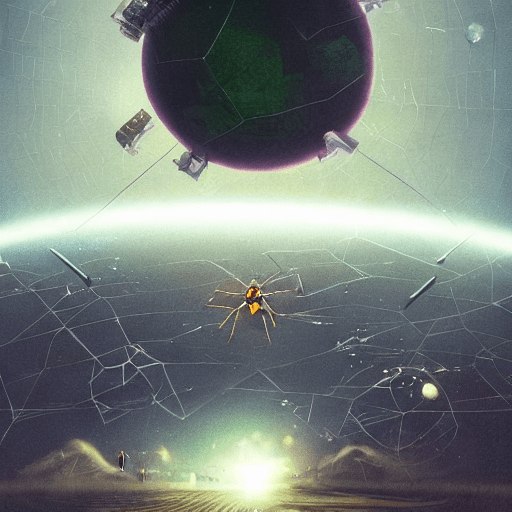
True to the solarpunk genre, the story is focused on themes of ecology and sustainability. DK Mok is truly a talented hard sci-fi writer who immerses the reader into the bright and optimistic world of cyberpunk with much vibrant detail. She brings us such interesting details: tree planting drones, glowing festive solar fairy lights, biogas produced by cheese, cabins built of photovoltaic glass and reclaimed timber, snappily dressed proxy droids, and most revolutionary of all–spiders in space!
She goes into depth about how insect farming would work. And yes, she does tackle the issue of peoples’ inherent disgust and how such a thing could be made palatable.
Like all great science fiction, this story brings up a current world problem and paints a picture of how futuristic solutions would pan out.
I will add that the story also carried my attention with its good sense of humor and a likeable main character, who clearly has affection for her small, multiple legged friends.




























































 Stories From Tomorrow - Jessica Brook's Author Site