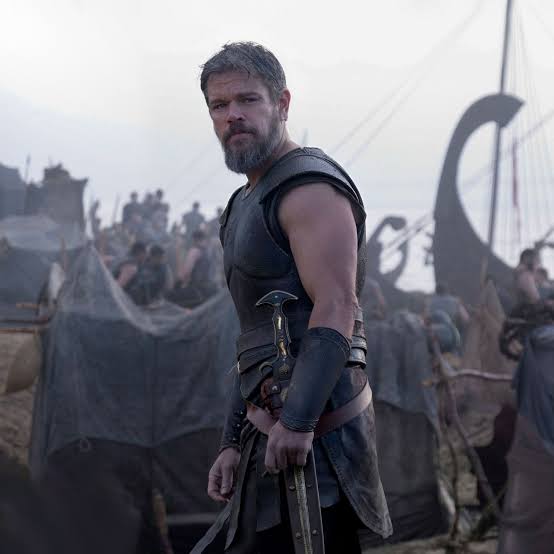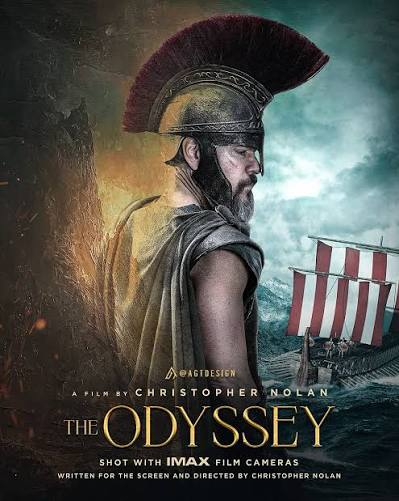
Filmmakers are the bards of the modern age. And Christopher Nolan, love him or hate him, is one of the most successful bards of our era, releasing cinematic tales to the globe that rake in more profits than the GDP of Fiji.
Now The Odyssey is Nolan’s highest-grossing film to date, (a literal billion-dollar global box office success surpassing The Dark Knight Rises with a 94% rating on Rotten Tomatoes).
And for the first time since I can remember, I went to a movie that actually moved me—and no, it wasn’t just the a thunderous, room-shaking, immersive surround sound experience blasting me from one seat to the next as my eardrums bled into my popcorn (Chris, your movie was a tad too loud.)
I laughed, I cried, and I felt like I went on an odyssey myself. Which was kinda the point.
But not everyone was a fan of Nolan’s historical or artistic liberties with the Homeric epic.
SPOILERS AHEAD FOR ALL YE WHO ENTER HERE!
Reviews from classicists were mixed. Emily Wilson, whose acclaimed translation of The Odyssey was a major influence on Nolan’s adaptation, called the writing in the film ‘abysmal.’
Some complained about historical inaccuracies, such as the use of Viking Age ships instead of Greek ones.
Others said the American accents broke their immersion into an Ancient Greek world. A whole series of memes have even popped up about Odysseus having a Boston accent despite being from Ithaca (New York). *Bu-dum-tss*
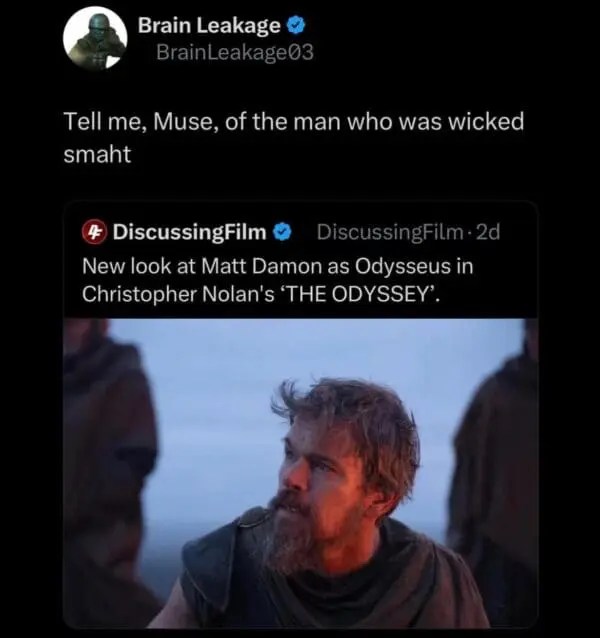
Yet as one Redditor glibly responded to this demand for historical accuracy to a fantastical myth, “I was disappointed they didn’t cast a real cyclops.”
It’s important to understand that a filmmaker as successful as Nolan is making intentional choices. I doubt he’s going against convention because he’s too lazy to read the original epic or pick up a history book.
It also needs to be pointed out that the time in which The Odyssey is said to take place (12th century B.C.) is shrouded in much mystery.
Yet there are still critics who would reply, “Okay, but why is he using Viking ships, which appeared roughly 2,000 years later? Can’t he at least stick to Greek things?”
Why the Viking Longship in an Ancient Greek Tale?
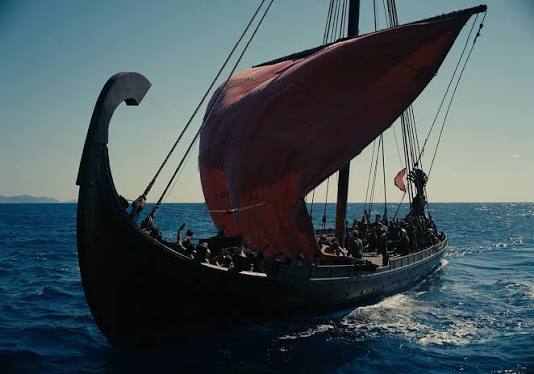
The use of a Viking longship in the movie was an intentional choice that made it easier to film the scenes on the water in real life, rather than relying on digital special effects. Specifically, Matt Damon and the rest of the crew were in the Draken Harald Hårfagre, a real-life completely functional Viking longship.
“We needed something wooden-hulled, built with ancient technology that could be out there in open ocean water, in giant swells,” Nolan told the Los Angeles Times’ Kenneth Turan. “And the Draken has crossed the Atlantic.”
So there you have it! An example of one of Nolan’s well-thought-out anachronistic choices.
Understanding Nolan’s Approach to Storytelling

In order to understand why Nolan made the choices he did, we have to understand his approach to storytelling, and the story he was trying to tell in his version of The Odyssey.
There’s a great interview where Nolan discusses these concepts in depth: Christopher Nolan talks narrative decisions, film critics and whether he Christianized The Odyssey.
He was interviewed by political philosophy lecturer and doctoral student Zhong Shu in Beijing. She asked him challenging questions about the liberties he took with the Bronze Age epic.
Did he Christianize The Odyssey?
Did he add concepts of atonement and guilt that weren’t present in what was originally a poem quite celebratory of war?
Was this Oppenheimer’s Odyssey?
“When you talk about storytelling, you’re always in conversation with the expectations of the audience,” said Nolan. “It’s an energy that’s brought from the audience and it’s an energy that’s brought from the story itself.”
“…When we create a heroic figure as storytellers, we have to be mindful of the energy that the audience brings forward and the interaction between our intention and the way the audience receives that…Coming from a democratic or idealized philosophical state in the modern world where we want to view people as equal, do we have to apologize for greatness? Yes we do, or the audience rejects the greatness.”
In the interview, Nolan does not say that he “Christianized” The Odyssey, but that he was focused on creating a story that modern audiences wouldn’t reject. Given that our society places a high value on equality, whether that’s racial equality, gender equality, or the equality of all humankind, a hero who glories in plundering and pillaging his enemies through trickery would not be well received by modern audiences.
Bringing Timeless Archetypes to a 21st-Century Audience:
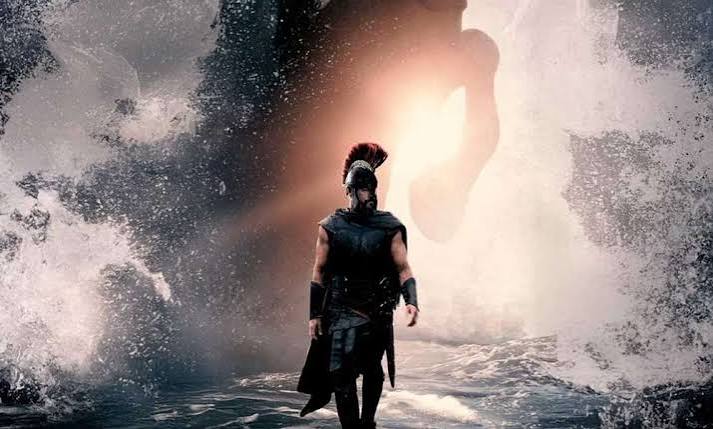
In Nolan’s interactive approach to storytelling, he’s interested in themes and archetypes that will resonate with modern viewers. Even if that means sacrificing historical accuracy on the altar of thematic impact.
It is important for us to understand the nature of archetypes and myths themselves for us to understand what Nolan was trying to do. Carl Jung viewed myths and archetypes as psychological maps: innate, universal templates residing in the collective unconscious that shape how we humans structure, interpret, and navigate reality.
In other words, archetypes are a sort of psychological shorthand to help us understand concepts that may be too complex or profound to articulate in words alone. Such as Mother Nature. Or Father Time.
Thus, more than being interested in Bronze Age historical veritas alone, Nolan is using this 3,000 year-old epic as a vehicle to transport 21st-century folks on an immersive journey through a tale of hubris, ambition, heroism, and tragedy that not only is deeply human, but resonates powerfully with our world today.
A world where politicians and billionaires are openly proud of using deception rather than decency to get ahead. Let it be known that a certain trillionaire didn’t appreciate Nolan’s “woke” Odyssey and says he’s going to use Grok to make a better one. If this strikes your fancy, similar inspiring titles you may enjoy are Paint Drying in My Basement, and Love Ballads from ChatGPT to My Fridge.
A-List Celebrities as Archetypes?
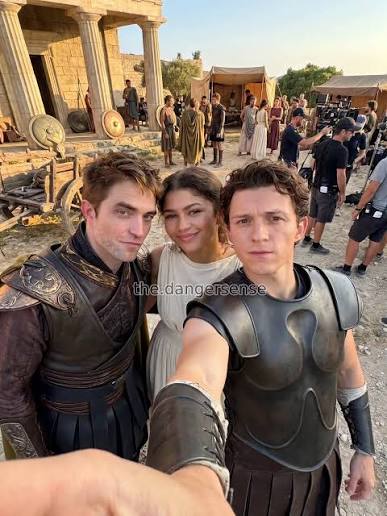
Some complained that the use of all these A-list actors with their American accents was distracting. We’re well aware that the trick the film industry uses to depict the past is British accents. Never mind the fact that Bronze Age Greeks didn’t have British accents either.
Regardless, the use of A-list actors and other celebrities who are household names with their American accents may be an intentional choice by Nolan when communicating to a 21st-century audience that lives in a world dominated by American media and has come to view many of these actors as iconic archetypes themselves. (Or maybe I’m just reading too much into this and these people all have really good representation, such as Charlize Theron, who got paid to chill on an island dressed in Survivor chic the whole time).
So what archetypes do our A-list actors represent?
Matt Damon (Odysseus) has the cinematic specialty of being trapped extremely far from home and making everyone spend enormous amounts of time and money to get him back.
Anne Hathaway (Penelope), who has also ridden off into the sunset with Matt Damon in other movies, is our archetypal smart, capable woman in an enormous situation.
Travis Scott, a world-famous rapper, is our bard who opens the movie.
Tom Holland (Telemachus) is our earnest young guy who is in way over his head but keeps going anyway.
Jon Bernthal (Menelaus) is our dangerous but damaged man who looks like he might beat you to death with his cutlery at that banquet.
Etc.
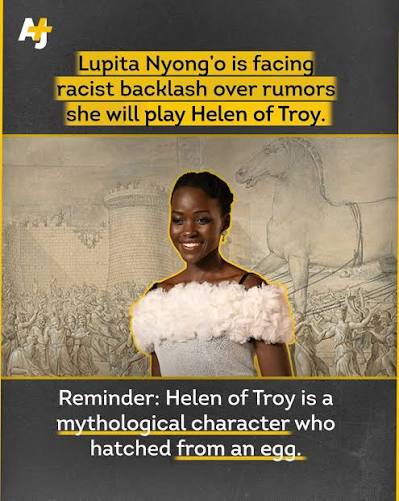
Lupita Nyong’o, recipient of People Magazine’s 2014 Most Beautiful Person award, was our Helen (our archetypal beautiful person)—much to the chagrin of Elon Musk and other perpetually online grifters who didn’t appreciate having a Black Helen. (Never mind all these pale, pasty Northern European-looking dudes who are supposed to be our swarthy Greeks).
But I digress. To me, Lupita Nyong’o as Helen was depicting someone who in addition to being physically beautiful, is also a beautiful person internally, much like Lupita Nyong’o herself who is well-known for her advocacy for women’s health and wildlife conservation.
When we see her in the banquet hall, reunited with her husband, Menelaus, he points to her face—which he’s clearly scarred half of—and, in acerbic tones, declares while this face might have once launched a thousand ships, it will now only launch five hundred.
In the movie it’s heavily signaled that Helen wasn’t “kidnapped” by Paris but went off with him to Troy as a willing lover. And that Agamemnon’s campaign to get her back was less a rescue mission than an act of political opportunism aimed at controlling Troy’s lucrative trade routes. This plays well with modern audiences who would prefer to see women as agents of their own destiny rather than mere war booty.
And here we have a thematic message that the rank opportunism and greed of Agamemnon’s war machine is scarring beauty and goodness itself. Once again, not in the original poem, but a message that resonates powerfully for the modern viewer. A message that even plays out in real time as Elon Musk decides to take time out of his day to insult Lupita Nyong’o, who never did anything to him, for the purpose of creating more outrage, gaining more views thanks to algorithms that prioritize outrage, and ultimately gaining more money at a nice woman’s expense.
What a world…
Anyways…that brings us to our next archetype.
Agamemnon—Our Aura-Maxing, Faceless Depiction of the War Machine
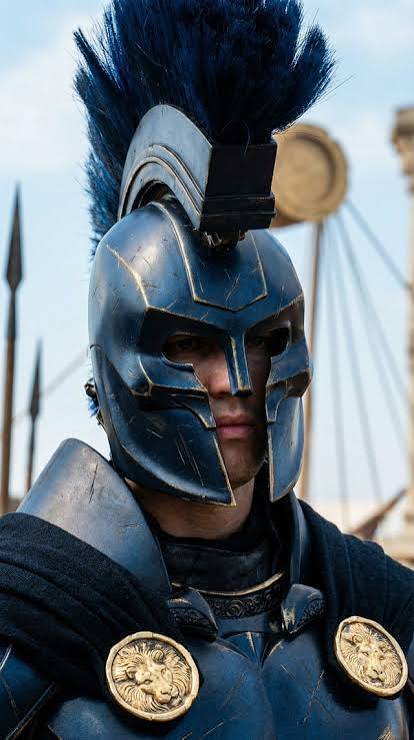
Many Reddit users noted that Agamemnon seemed to spend a good chunk of his screen time aura-maxing in his f&$king enormous black armor—mostly just standing around and making sure we got a good look at his cool fit.
Why was his face covered most of the time?
The theory is that he was supposed to represent the ominous, depersonalized face of war and the greed that can destroy entire societies (like Troy)—like some kind of Bronze Age Darth Vader.
Keeping his face covered also made him more ominous than…this guy.
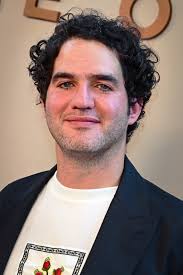
Does that look like the face of a guy who would sack Troy? I don’t think so.
Circe—The Creepiest Character I Couldn’t Help But Rooting For As a Woman
When I read The Odyssey in high school, the actions of Circe and many other divine or semi-divine characters seemed capricious and cruel. And that tracks, because much of Greek myth is s$@t happens because the Greek gods are petty, horny, bored, or some combination of the three. In many ways, KAOS on Netflix with Jeff Goldblum is more thematically on-brand with Greek myth than Nolan’s movie.
And yet in Nolan’s Odyssey, once we see the whole movie and understand the extent of what Odysseus’s men did in Troy (pillage and plunder and other sordid stuff), the series of horrors they experience afterwards comes across as a sort of comeuppance, rather than divine capriciousness. You know, like with those annoying children in Willy Wonka and the Chocolate Factory? Except instead of someone turning into a blueberry and getting a bunch of Oompa Loompas to make a song and dance about it, we get body horror with Circe cramming her fist down a man’s throat and physically sculpting him into a pig.
Although maybe when a certain trillionaire uses AI to remake his Odyssey, he’ll insert a bunch of Oompa Loompas who will sing and dance for us every time Odysseus’s men get wrecked on another island.
Interestingly enough, when Circe turns the men back into humans, she tells them to “go back to their disguises.”
The Golden Rule and Christian Morality in Bronze Age Greece?
Here’s our most prominent theme, in case you missed it after the first hundred times Zeus’s Law was mentioned.
In ancient Greece they had a concept called “Xenia,” or sacred hospitality, guest-friendship, and the moral obligation to care for travelers. This custom was overseen by Zeus, and simplified by Nolan for modern viewers as “Zeus’s Law.” In a pre-modern world where travelers were completely at the mercy of the whims of nature, which were as capricious as the Greek gods themselves, being able to rely on the decency of strangers was key to survival.
In Nolan’s interview with Zhong Shu mentioned in the beginning of this article, Nolan explains that he sees Zeus’s Law as comparable to the Golden Rule.
But wait? Isn’t the Golden Rule a Christian idea issued by Jesus who said, “Treat your neighbors as you would want to be treated?” Does this get back into the argument that Zhong Shu made that Nolan was Christianizing The Odyssey?
To paraphrase, Nolan responds that he’s not too interested in drawing a clear dogmatic line but is interested in commonality across cultures and time periods, because every civilization has had some version of the Golden Rule.
What the Greek epic poem is saying to Nolan is that civilization depends on the Golden Rule and more than that—is defined by it. He believes this ancient text speaks directly to the modern world because we live in a time where the concept of Xenia, or mutual respect, is more challenged than it’s ever been and in more obvious ways than it’s ever been, and we see the negative effects of that in terms of what defines us as a civilization and what binds us together.
What Was With the Focus on The Collapse of Civilization and the Sea Peoples? Was Nolan Making Oppenheimer’s Odyssey?
The collapse of civilization isn’t one of the central themes of Homer’s Odyssey. Nolan brings that preoccupation to the story himself. This feeds into the argument from critics that he was making “Oppenheimer’s Odyssey,” because the collapse of civilization was a key theme in that movie as well. And both movies deal with clever men who had to live with the guilt of manufacturing weapons of mass destruction—whether that weapon was an atomic bomb, or a bunch of warriors hiding in a wooden horse.
Indeed, Zhong Shu states that the time Homer’s epic poem was said to be composed (around the late 8th or early 7th century BC), Ancient Greece was experiencing quite the opposite of a collapse. This was a time of revival, when ancient Greek city-states had booming economies, populations, and even a cultural rebirth. Thus lending itself to the celebratory nature of Homer’s epic.
But in the interview, Nolan counters that while the story was composed during a celebratory period, the events that inspired the tradition of the Trojan War are generally placed around the 12th century B.C., during the Late Bronze Age collapse—a period of widespread destruction, abandoned cities, and upheaval involving mysterious groups collectively known as the “Sea Peoples.”
This is part of why the structures we see in Nolan’s Ithaca look like collapsing castles.
But who were the Sea Peoples?
Much of the 12th century B.C. is shrouded in mystery. But the theory is that the Sea Peoples represented different groups of seafaring raiders and migrants who attacked the Eastern Mediterranean and Egypt around 1200 B.C., contributing to the Late Bronze Age Collapse.
Historians aren’t certain who the Sea Peoples were, but Egyptian records name several groups that scholars have tried to identify. Some may have been Bronze Age Greeks, while others appear to have come from places around the Mediterranean, including Anatolia, Sardinia, Sicily, and possibly Crete. One group, the Peleset, is generally associated with the Philistines, who eventually settled in Palestine.
Nolan takes an interesting liberty with this mystery of history (which definitely was not mentioned in Homer’s epic) to call Odysseus’s men “the people of the sea.”
Here, Nolan is stating a thematic truth more than a historical one. Odysseus’s men became “the people of the sea” when they violated the divine law of hospitality that kept civilization functioning. Odysseus was clever and came up with the idea of giving the Trojans a “gift” that would result in their civilization’s demise, but then he had to spend the rest of the movie living with the guilt and aftermath of this action.
Interestingly enough, it’s Robert Pattinson’s weaselly Antinous who makes the thematic statement, “Hunting is just fighting but with sneaking. Clever, but your cleverness will get you killed.” (Can we also just take a moment to appreciate what a great job Robert Pattinson did of making us hate him?)
So Were the Historical and Artistic Liberties Worth It?
For me, Nolan’s Odyssey took me on a profound emotional three-hour journey. It was raw, visceral, and you truly felt the hopelessness of Odysseus’s men lost at sea, along with the full catharsis of Odysseus’s guilt as he confesses to his wife his true actions in Troy, a confession which was made more powerful via the visuals of a burning city and the cries of its terrified citizens. And of course few of us missed the irony of Odysseus wearing Athena as a brooch while sacking her temple and killing her priestess.
Yes, Nolan did take many historical and artistic liberties with the epic for the purpose of telling a powerful story, but for me, I loved it!
Nolan turned an ancient story into a modern question about the cost of self-interest: What happens to us and to the world around us when deception becomes easier than decency and personal gain matters more than what we owe one another?