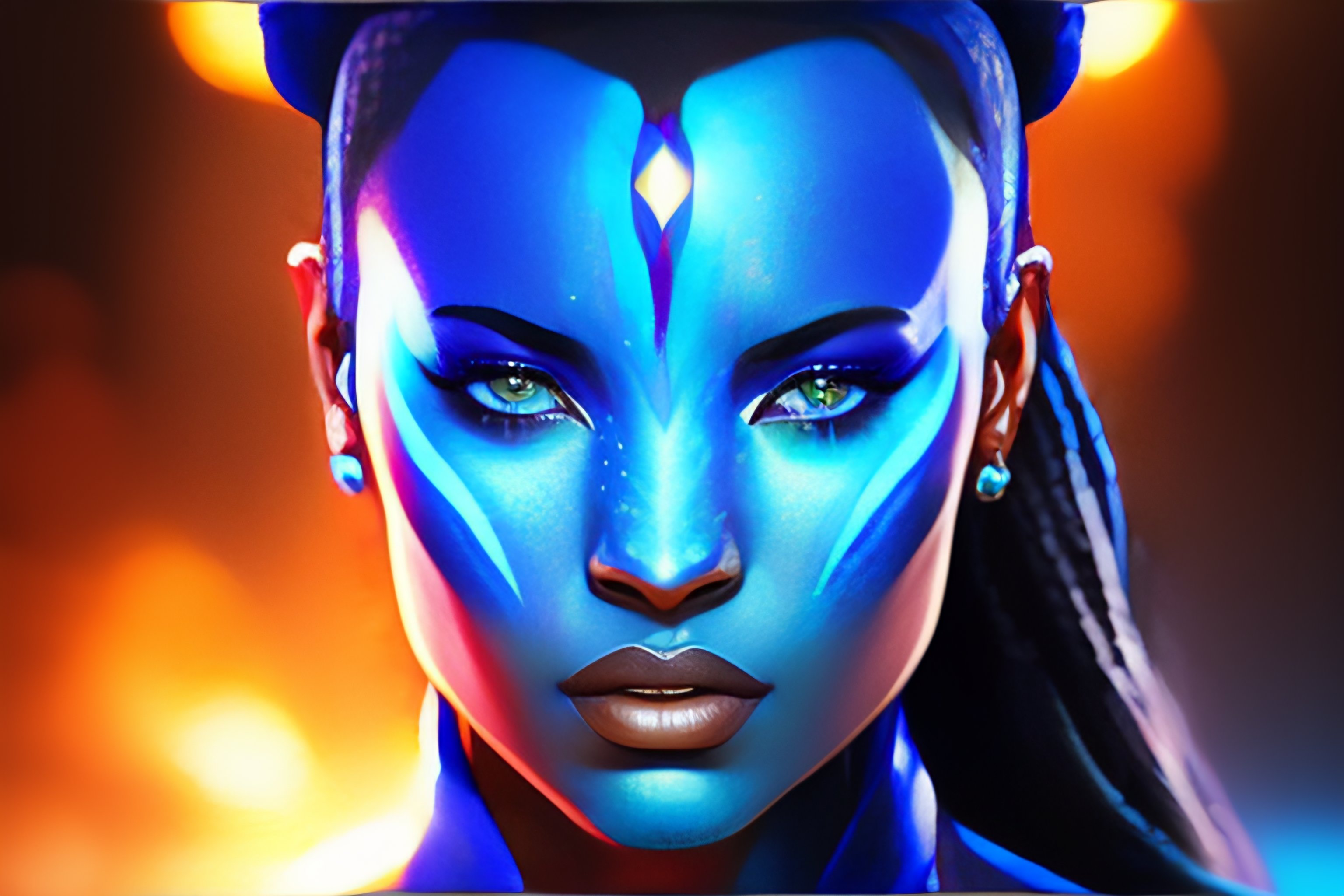
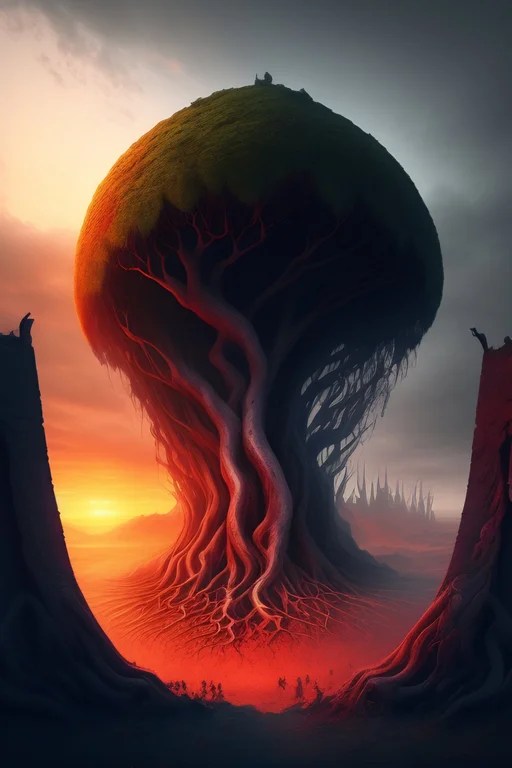
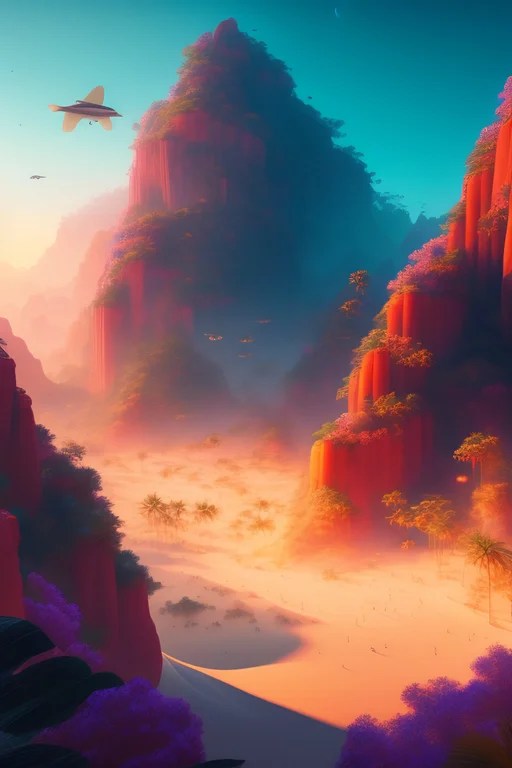
Above is a fan art concept I generated for Varang, the female leader of the Volcanic Na’vi clan of ash people.
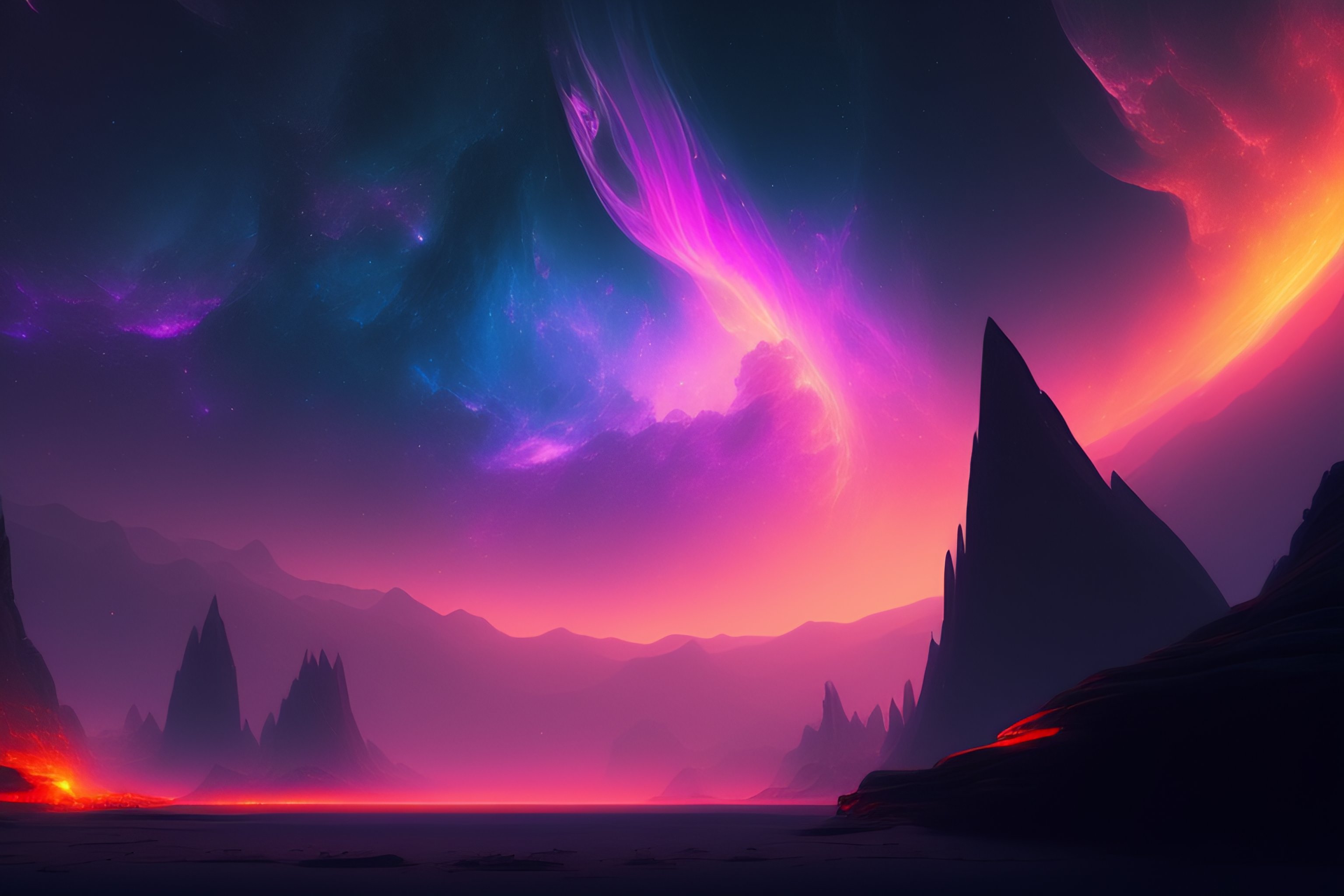
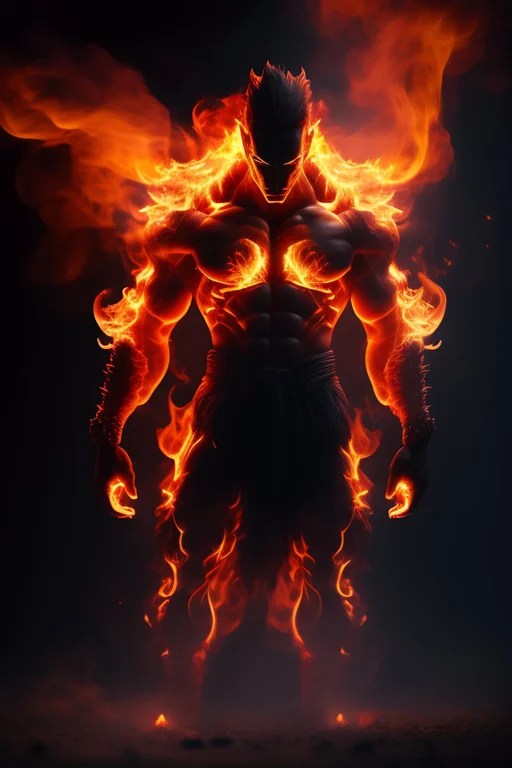
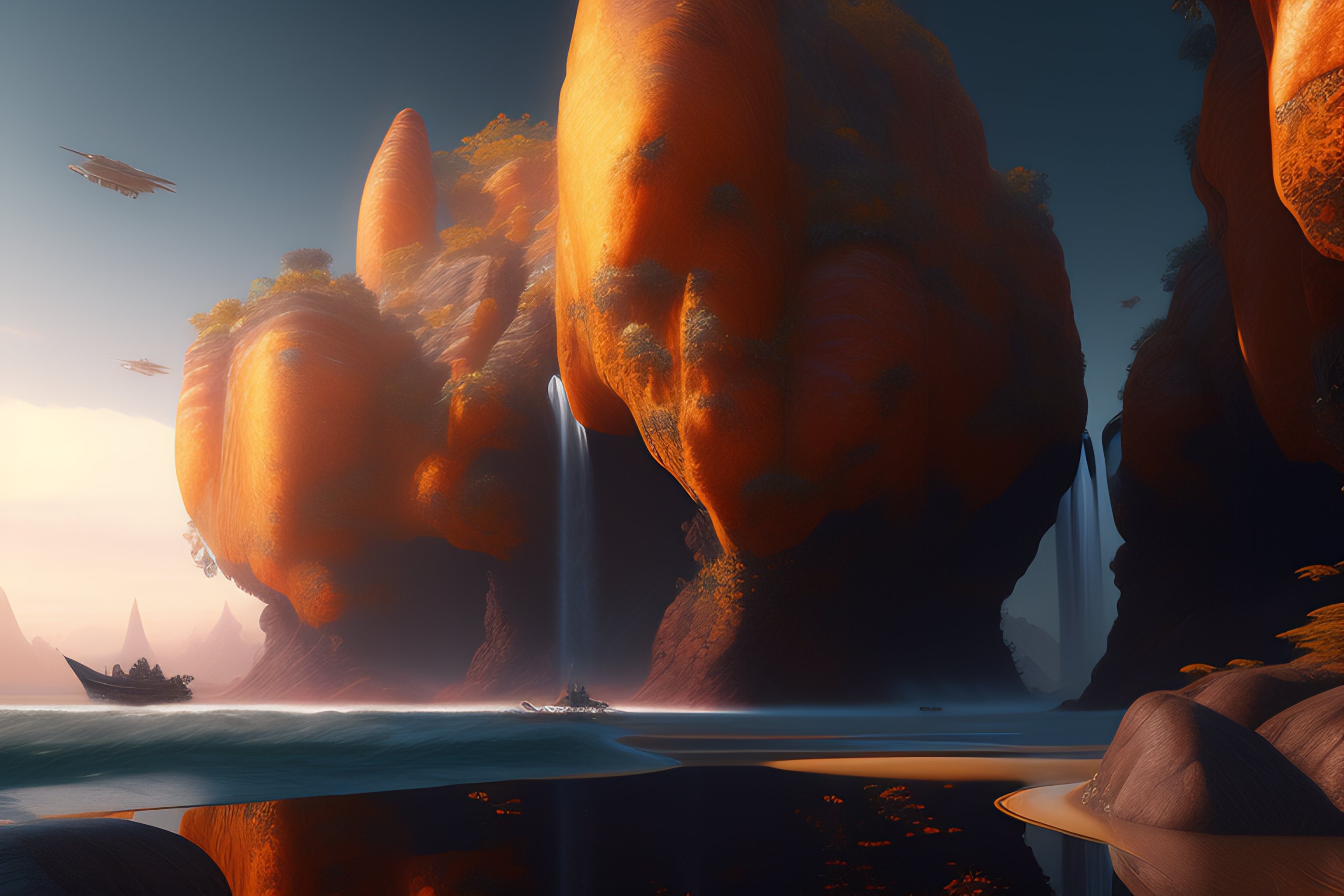
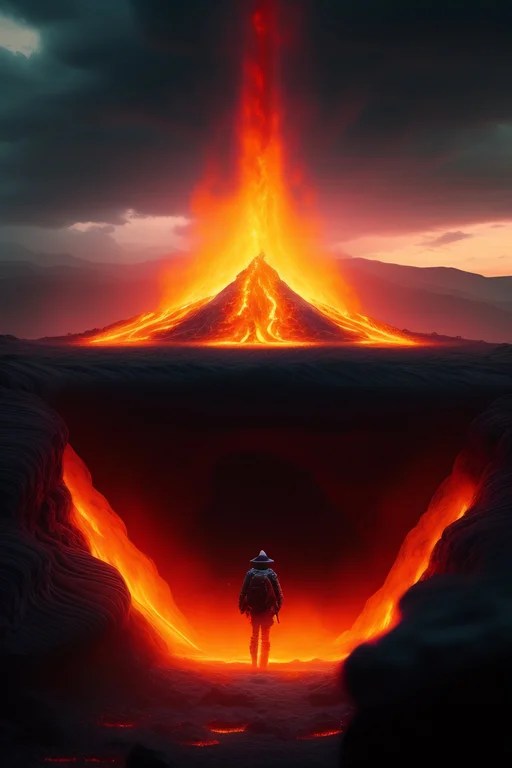
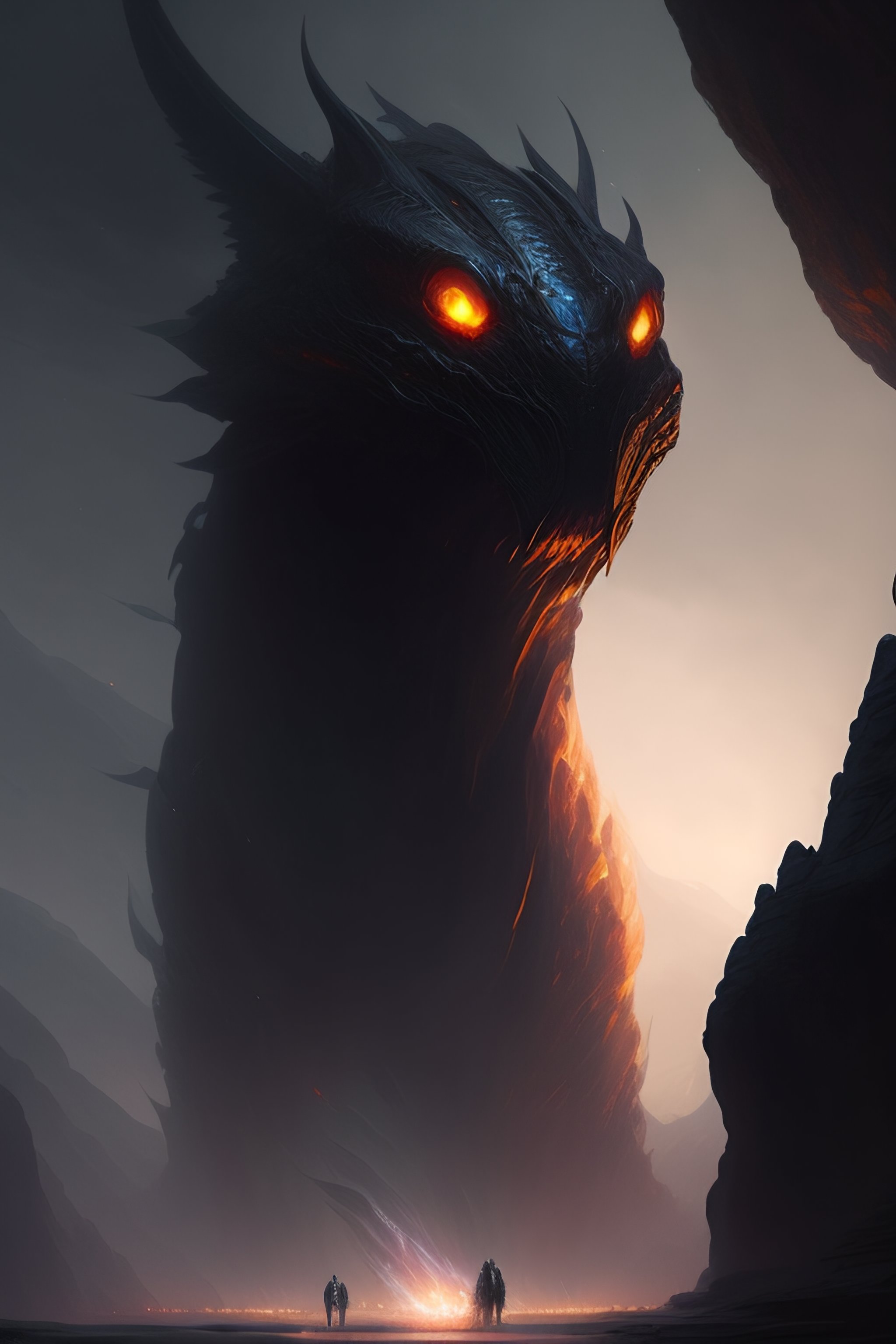
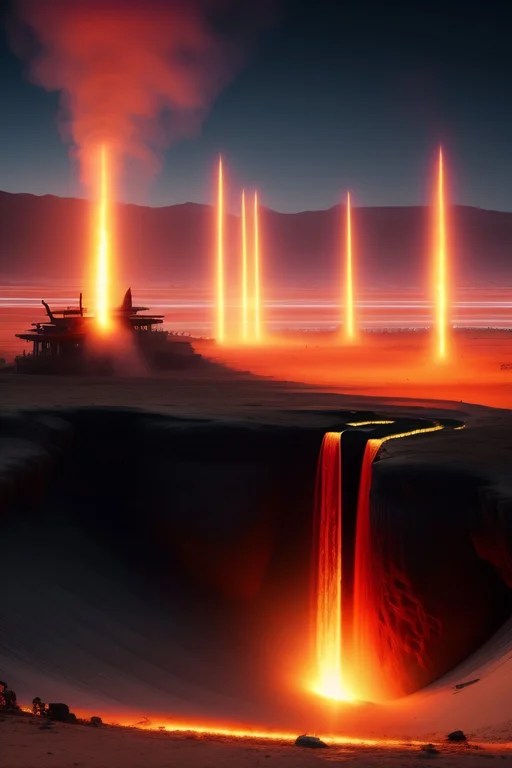
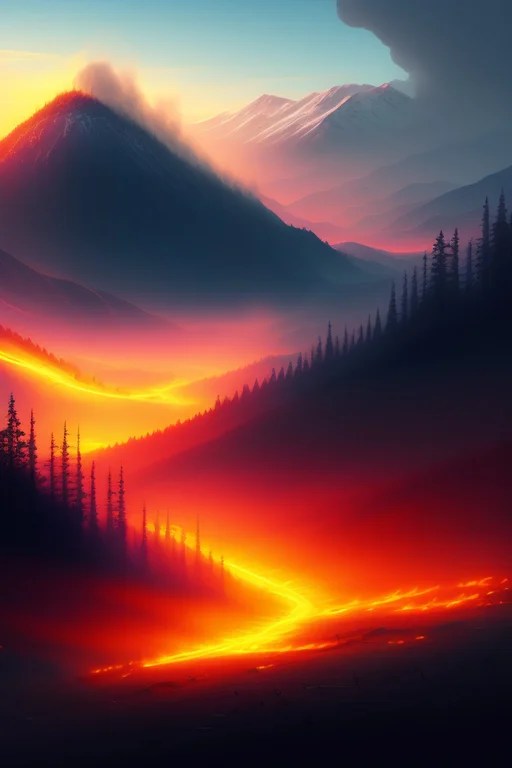
After seeing Avatar The Way of Water in 2022, I wondered what other kind of Na’vi lived on the moon Pandora. And my next thought was Fire Na’vi, Desert Na’vi and a Subterranean Na’vi who live in a fungal biome. Above you can see a gallery of fan art based on the fire concept.
I produced the art with Lexica, an AI art generator. See more fan art for Volcanic Na’vi here.
Apparently two of my three Na’vi predictions were correct. According to the Avatar Wiki, there are plans in the works for the third movie to focus on the element of fire. The Na’vi in this movie are supposed to be “ash people,” or an aggressive volcanic clan led by a female Na’vi known as Varang. And unlike the first two movies where the Na’vi are portrayed in a positive light, Avatar 3 will show the opposite.
There are also plans for an additional culture known as the Windtraders who come from the desert and trade items.
Some of you may have noticed several plot holes in the most recent season of The Mandalorian.
ScreenCrush on YouTube does a great job of explaining possible answers to these plot holes. For the video, watch here. There’s also the bonus of seeing a cute dog.
I wrote down some of what was said below for those who don’t feel like watching a video.
SPOILER ALERT! If you do not want to see spoilers. Leave this page now.
Plot Hole #1: How did Grogu catch up and rescue Din Djarin in the final episode of the season?
Answer: It’s possible that Grogu fled to safety with the other Mandalorians, but then turned around and went looking for Din. And how did he find him? It has been established in Star Wars that one can use the force to find people, especially if they have a strong connection. Princess Leia used the force to find Luke at the end of The Empire Strikes Back. So it’s possible that Grogu used the force to find Din Djarin.
Plot Hole #2: How did a piece of glass prevent Grogu from using the force to save Din when he was captured? When Din was captured, we see Grogu behind glass trying to save him but unable to do so.
Answer: One theory is that it might be more difficult to connect to the force through objects. Another point connected to this one, is the following: How come a piece of glass blocks Grogu’s connection to the force, but he is powerful enough to use the force to protect himself, along with Din Djarin and Bo-Katan from a powerful, fiery explosion? A possible answer to this is that Grogu did spend time with Luke learning how to use the force. But it seems like Grogu mainly knows how to use the force for defensive, rather than offensive capabilities. In the battle scenes we see Grogu using the force to knock sabers out of the way, rather than using them for harm. That may be how Luke taught him.
Plot Hole #3: Why was Moff Gideon so ridiculously strong in the final battle scene? He was even able to crush the dark saber, the hilt of which is made out of high quality beskar armor.
Answer: One potential answer is that Moff Gideon’s armor is also made out of beskar. And not only is it beskar, but if you listen to him walking, the suit itself sounds robotic, as if he is wearing the equivalent of an Iron Man suit made out of beskar. The suit probably augments Moff Gideon’s strength.
Plot Hole #4: How did Axe Woves have enough fuel in his jet pack to blast into space, when a crux of a previous episode (The Foundling) is that the Mandalorians couldn’t pursue the child stolen by the pterodactyl-like-alien-thing because they ran out of jet fuel?
Answer: We don’t know how long the Mandalorians were actually pursuing the pterodactyl-like-alien-thing before they ran out of fuel. They could have been pursuing this creature for hundreds of miles before they ran out. Granted, the lowest satellites in orbit above the Earth are 160 km above the surface. However, when we see Axe Woves on the bridge of the ship, we can also see the planet’s atmosphere. So it’s likely that the ship is at the distance of an airplane, which is about 6 miles above the surface. It’s conceivable that Axe Woves would have enough jet fuel for 6 miles.
Plot Hole #5: It’s been established that Mandalorian second names are surnames, like Kryze, Fett, and Vizla. So why is Grogu named Din Grogu and not Grogu Djarin?
Answer: On one hand, it could be a silly mistake made by the writers. But on the other hand, Din Djarin is possibly not a native Mandalorian name. Din is from a planet called Aq Vetina. It is possible that when Death Watch took him in, he kept his original name, and his people may have a different naming convention.
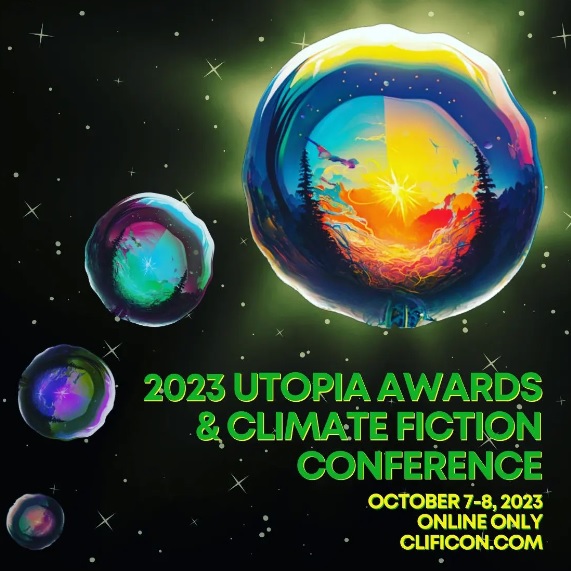
Explore and learn with paradigm shifting CliFi authors, artists, film makers, and world-builders.
The 2nd annual Utopia Awards will highlight and honor authors, artists, and other creators producing works focused on hopeful outlooks, solutions to climate change and related social problems, and building a better future.
The Climate Fiction Conference will host panel discussions and workshops on a range of related topics, including but not necessarily limited to
climate fiction (as well as poetry, nonfiction, art, games, and film)
writing craft development
climate change, climate tech, and climate solutions
sci-fi punk genres such as solarpunk, hopepunk, ecopunk, biopunk, cyberpunk, and steampunk
Writing is a field where you can do everything right and still (most likely) get rejected. Even having a well written character, setting, and plot is not always enough.
Many writers are aware of why bad stories get rejected: grammatical errors, boring, cliche, weak passive language, confusing plot, too much or too little description.
But why does a good story get rejected?
The Sci-fi magazine, Fusion Fragment, has a really helpful twitter thread on this topic.
I’ll summarize their reasons here:
Not a good fit for the particular publication: This is the “It’s not you, it’s me,” of publishing. But it is true. Someone can submit a really well written story that just doesn’t fit in to a particular publication, whether due to style, tone, humor, or other reasons. That’s why it’s a good idea to familiarize yourself with the style of a particular publication before you submit your work.
Controversial Content: There are certain topics that some publishers are hesitant to handle. This can include suicide, bigotry, sexual assault, etc. If you are writing about a touchy subject, proceed with caution. Certain publishers are edgier than others. So if you want to be edgy, do your research.
Topic Frequency: You may have written an excellent story about alien abduction, for example. But the problem is that the magazine may have already accepted a bunch of stories on this topic and is looking for something else. This is why it’s a good idea to study what particular publishers are looking for, or what they would like more of. Also be aware of what topics have been done so much that editors are sick of reading about them. As far as I am aware, zombies, vampires, and young adult dystopia can be a hard sell for this reason.
Aside from the reasons Fusion Fragment gave, I’ll also add a few of my own.
Luck: Luck unfortunately is a component of publishing. It’s not everything, but it is a factor. And this factor is out of your control (unless you have a magical lamp somewhere).
Timing: Your submission may have arrived at a time when perhaps the editor wasn’t in the best mood, or doesn’t like your topic because of something else they recently read that left a sour taste in their mouth. Who knows? But much like luck, you can’t control this.
I hope this was helpful for you. Remember. You can’t control the outcome of who publishes your work. But you can commit to the process. If you commit to getting better and submitting content on a regular basis, you will increase your chances of success.
If you have any comments on this topic, feel free to leave them here.
“Beth lay in bed looking out the window, listening to Mr. and Mrs. Miller arguing in the house across the street. Suddenly she heard a scream and saw a spray of red splash across their curtains…”
Erica Verrillo on Medium was kind enough to put together a list of over 7 dozen calls for submissions. These are paying markets and none are charging submission fees. Every genre, style, and form is wanted, from short stories to poetry to essays.
Have you ever wondered if the people in a world like that of Altered Carbon ever downloaded into the wrong body by accident? Maybe after a few too many drinks?
An instance of, “Dude, where’s my body?”
Check out my short, 100 word story on the premise below:
BODY SHARE MICRO FICTION
“Shit. Not again.” The body Avery woke up in this time had BO that smelled like moldy onions. But that wasn’t the worst part. The worst part was the little black hairs protruding from every pore, like a forest of sweaty spider legs.
What was that phrase they taught you in college? Don’t body share while intoxicated? Next time she’d be more responsible. She’d only have one, or two drinks max before she downloaded.
Avery called Body Share tech support. She went straight to voicemail. That’s right. It was Sunday.
She rubbed her face. She did like the beard though.
NOTES FROM THE AUTHOR
Originally the story was published here on Martian Magazine’s website with non-exclusionary publishing rights (meaning I can also publish it elsewhere). However, the site unfortunately is not around anymore, hence me posting my story above. Many people started asking how to access it or were trying to see it, so I finally posted it here on my author website.
Getting traditionally published is an uphill battle which is getting harder and harder each year. Several factors have made the game harder for authors, including increased competition from self-publishers, less people reading, and increased financial risks for mainstream publishers.
Thus as writers, it’s important for us on a grass roots level to support publishers who are helping to promote new authors and diverse forms of fiction.
Martian Magazine is doing what they can to publish quality sci-fi microfiction. They share great works from both new and experienced authors from around the world.
Micro-fiction (fiction of 100 words or less) doesn’t get much attention in the world of fiction, let alone sci-fi micro-fiction. It needs more support. Martian Magazine may not survive if they don’t get the funding they need.
More funding equals more micro-fiction, and more publishing opportunities for authors such as yourselves.
I am going camping so I can get—hold on, I just got a text. Okay. It wasn’t important. What was I saying?
Oh yeah. I want to be—wait. Another notification.
Hah! That’s a cute dog video. Have you seen this one? Let me show you.
Crap. Now there’s an ad. It’s for a new sleeping bag. Wow! That’s right. I do need that.
My phone really knows me better than I know myself. It’s kinda creepy.
That’s why I need to get unplugged. I just need to take some time to be in nature. No screens. No notifications. Just me, the trees, the autumn air, and the crackle of the campfire. It’ll be nice to finally be alone with my own thoughts. But first, I need to buy a new sleeping bag. Oh look. Here’s an email with a special offer.














 Stories From Tomorrow - Jessica Brook's Author Site